

Avoiding certain pitfalls on the keto diet is crucial for its success. Many individuals unknowingly sabotage their progress by incorporating foods or habits that can hinder their results. To effectively navigate the keto lifestyle, it is essential to be aware of common mistakes that can impede success. This article will guide you through these pitfalls, providing insights on how to sidestep them and achieve your health goals effectively.
Understanding the Keto Diet Basics

The keto diet emphasizes high fat, moderate protein, and very low carbohydrates, typically consisting of around 70% fats, 25% protein, and only about 5% carbohydrates. This macronutrient distribution is designed to shift the body’s primary energy source from carbohydrates to fats, a state known as ketosis. Understanding these ratios is essential; if you consume too many carbohydrates, your body will revert to burning glucose for fuel, thereby disrupting ketosis. To maintain this metabolic state, it is important to familiarize yourself with the carbohydrate content of various foods, as even small amounts can impact your progress. Regularly tracking your macronutrient intake using apps can provide valuable insights and help keep you accountable.
Common Foods to Avoid
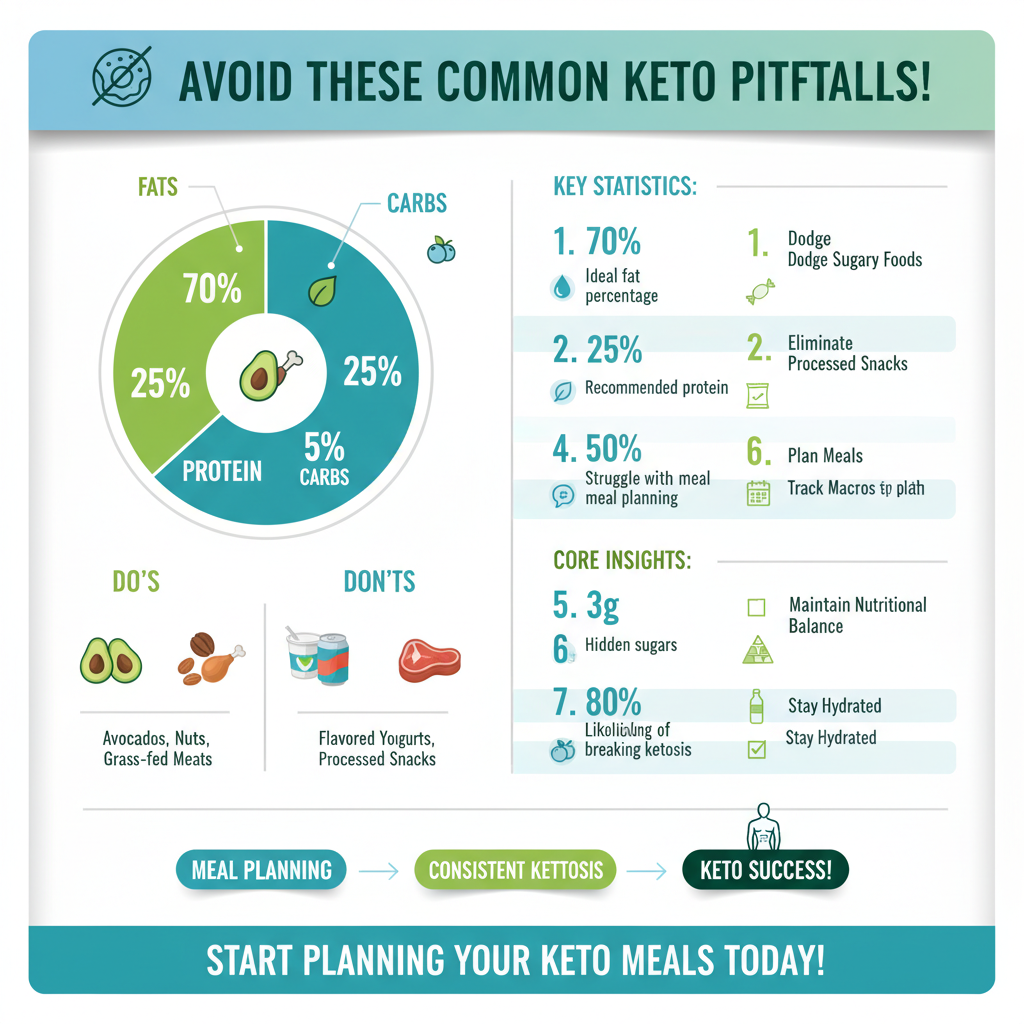

One of the most critical aspects of the keto diet is avoiding sugary foods and drinks, which can quickly kick you out of ketosis. This includes not only obvious culprits like candy and soda but also seemingly benign items such as flavored yogurts or dressings that may contain hidden sugars. Processed foods are another area to be wary of. Many processed snacks, even those marketed as “low-carb,” often have added sugars or refined carbohydrates. For instance, certain protein bars may contain more carbs than you realize. Instead, focus on whole, unprocessed foods such as avocados, nuts, and grass-fed meats to keep your carb intake low while maximizing nutrient density.
Mistakes in Meal Planning
Failing to plan meals can lead to poor food choices, which is a common mistake that can derail your keto journey. Without a structured meal plan, you may find yourself reaching for convenient but high-carb options when hunger strikes. To combat this, take the time to prepare meals in advance, ensuring you have keto-friendly snacks on hand. Additionally, skipping meals can exacerbate cravings for high-carb foods, making it more challenging to stick to your dietary goals. A well-thought-out meal plan not only helps maintain ketosis but also ensures a variety of nutrients, helping you feel satisfied and energized throughout the day.
Ignoring Nutritional Balance
While the keto diet encourages a high-fat intake, it is crucial not to overlook overall nutritional balance. Not consuming enough vegetables can lead to nutrient deficiencies, particularly in essential vitamins and minerals. Incorporating a variety of low-carb vegetables such as leafy greens, broccoli, and zucchini is vital for providing fiber and antioxidants, which support overall health. Furthermore, relying heavily on unhealthy fats, such as processed oils or high-fat dairy, may negatively impact heart health. Instead, prioritize healthy fats from sources like olive oil, avocados, and fatty fish, which can enhance your heart health while keeping your meals enjoyable and satisfying.
Neglecting Hydration and Electrolytes
Hydration is often overlooked on the keto diet, yet it is essential for maintaining optimal health. The initial phase of the keto diet can lead to rapid water loss, resulting in dehydration. To mitigate this, make it a habit to drink plenty of water throughout the day. In addition to hydration, low electrolytes may lead to the “keto flu,” a collection of symptoms that can include fatigue, headaches, and muscle cramps. To prevent this, consider electrolyte supplementation, particularly with sodium, potassium, and magnesium. Foods such as bone broth, avocados, and leafy greens can also help replenish your electrolytes naturally, ensuring you feel your best while adapting to this new dietary approach.
Overlooking Portion Control
Even keto-friendly foods can contribute to weight gain if overconsumed, making portion control an essential aspect of the diet. Many people underestimate the caloric density of high-fat foods and may inadvertently consume more than their body needs. Keeping track of your food intake can help maintain appropriate portions and prevent unnecessary weight gain. Using a food diary or tracking app can provide insights into your eating patterns and help you adjust accordingly. Remember that moderation is key, even with healthier fat sources like nuts or cheese, as they can quickly add up in calories.
Lack of Adaptation Period
Finally, expecting immediate results can lead to frustration and disappointment on the keto diet. It is important to acknowledge that transitioning to a ketogenic lifestyle takes time, and each individual’s adaptation period may vary. Give your body the necessary time to adjust to burning fat for fuel instead of carbohydrates. This period can last anywhere from a few days to a couple of weeks, during which you may experience temporary side effects. Patience is essential; staying committed to the process will ultimately yield long-term benefits, including improved energy levels and weight loss.
By avoiding these common pitfalls, you can enhance your experience on the keto diet and achieve better results. Staying informed, planning your meals, and maintaining a balanced approach to your nutrition are key elements to fully benefit from this lifestyle change. Implement these tips today for a smoother keto journey, and remember that success is a gradual process that requires dedication and patience.
Frequently Asked Questions
What common mistakes should I avoid on a keto diet?
Common mistakes to avoid on a keto diet include not tracking your macronutrient intake, which can lead to consuming too many carbs and not reaching ketosis. Additionally, neglecting to stay hydrated and replenish electrolytes can result in symptoms often referred to as the “keto flu.” It’s also important to avoid processed keto products, as they may contain hidden sugars and unhealthy ingredients that can derail your progress.
How can I prevent nutrient deficiencies while following a keto diet?
To prevent nutrient deficiencies on a keto diet, focus on incorporating a variety of low-carb, nutrient-dense foods such as leafy greens, avocados, nuts, and seeds. Consider supplementation for vitamins and minerals that may be lacking, such as magnesium, potassium, and omega-3 fatty acids. Regularly rotating your food choices and paying attention to your body’s signals will also help ensure you’re getting a balanced intake of essential nutrients.
Why is it important to avoid high-carb snacks on a keto diet?
Avoiding high-carb snacks on a keto diet is crucial because these snacks can quickly increase your carbohydrate intake, pushing you out of ketosis. Staying in a state of ketosis is essential for your body to burn fat for fuel instead of carbohydrates. Instead, choose snacks that are high in healthy fats and moderate in protein, such as cheese, nuts, and jerky, to maintain your keto state and support your overall health.
Which foods should I eliminate to stay on track with my keto diet?
To stay on track with your keto diet, you should eliminate foods high in carbohydrates, such as bread, pasta, rice, and sugary snacks. Additionally, avoid starchy vegetables like potatoes and corn, as well as most fruits, except for small portions of berries. Focus on consuming healthy fats, lean proteins, and low-carb vegetables to ensure you’re meeting your dietary goals without compromising ketosis.
What are the best practices to ensure long-term success on a keto diet?
To ensure long-term success on a keto diet, establish a sustainable meal planning routine that includes a variety of keto-friendly foods to prevent boredom. Regularly monitor your carbohydrate intake and ketone levels to maintain ketosis, and prioritize hydration and electrolyte balance. Lastly, listen to your body; if you experience any adverse effects or symptoms, consider adjusting your diet or consulting a healthcare professional for personalized advice.
References
- https://www.healthline.com/nutrition/keto-diet-mistakes
- https://www.webmd.com/diet/ss/slideshow-keto-diet
- https://www.mayoclinic.org/healthy-lifestyle/nutrition-and-healthy-eating/expert-answers/keto-diet/faq-20444553
- President’s Council | odphp.health.gov
- https://www.ncbi.nlm.nih.gov/pmc/articles/PMC6520667/
- https://www.verywellfit.com/keto-diet-mistakes-to-avoid-5183840
- https://www.health.harvard.edu/blog/the-keto-diet-2018111515308