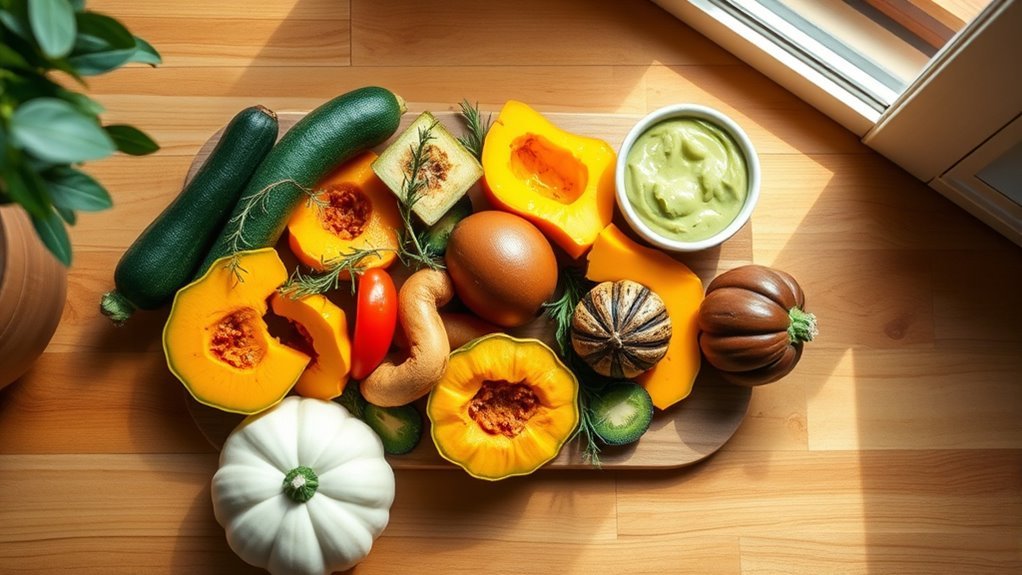

Yes, squash can be keto-friendly, but it depends on the variety you choose. Zucchini and yellow squash are low in net carbs, making them great options. However, butternut squash has higher carb content, so portion control is key. Incorporating lower-carb squash can boost your meals with nutrients like vitamins A and C. Understanding their carb content is essential for maintaining ketosis. There’s more to learn about how to incorporate squash effectively into your diet.
Understanding the Carbohydrate Content of Different Squash Varieties
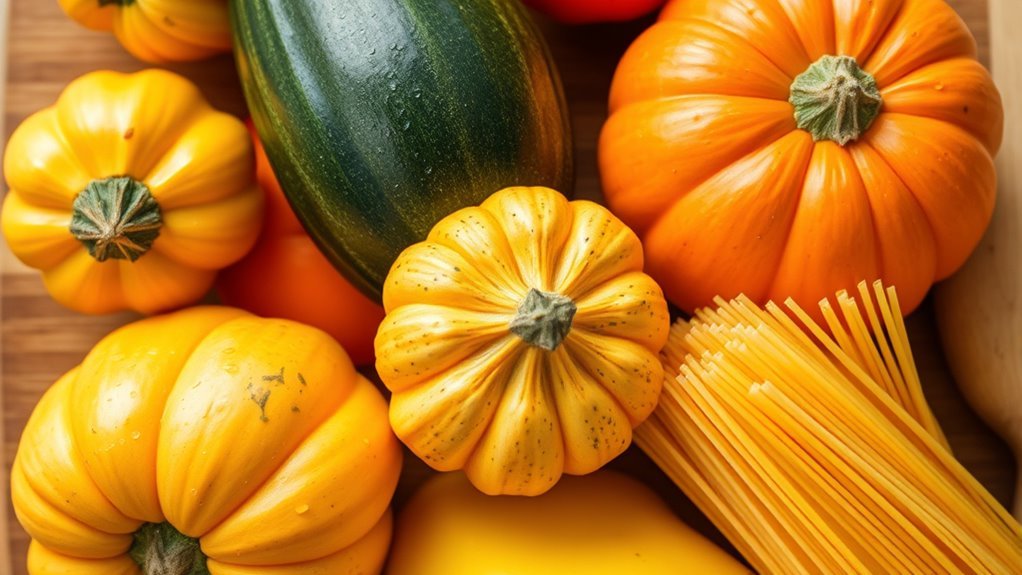
When you’re considering whether squash fits into your keto diet, it’s essential to understand the carbohydrate content of different varieties. Squash comes in numerous types, each with its unique carbohydrate breakdown. For instance, zucchini typically contains about 3 grams of net carbs per 100 grams, making it a great choice for keto. In contrast, butternut squash has around 12 grams of net carbs in the same serving, which can be a concern for strict keto followers. When making variety comparisons, focus on lower-carb options like spaghetti squash or acorn squash. Knowing these details helps you make informed decisions, ensuring you enjoy the freedom of incorporating delicious, keto-friendly meals without exceeding your carb limits.
Nutritional Benefits of Squash on a Keto Diet
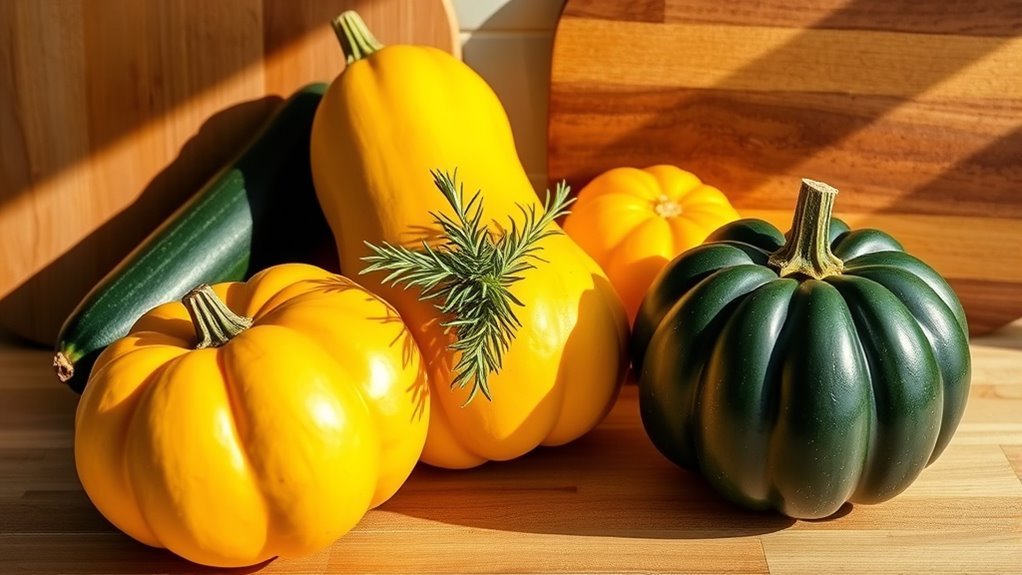
Incorporating squash into your keto diet can offer various nutritional benefits beyond just its carbohydrate content. Squash is known for its impressive nutrient density, providing essential vitamins and minerals while keeping calories low. For instance, varieties like zucchini and butternut squash are rich in vitamins A and C, which support immune function and skin health. Additionally, squash boasts a notable fiber content, aiding digestion and promoting feelings of fullness. This can be particularly beneficial on a keto diet, where maintaining satiety is essential for success. Including squash not only enhances the flavor and texture of your meals but also guarantees you’re getting valuable nutrients that can support your overall health while enjoying the freedom of a lower-carb lifestyle.
How to Incorporate Squash Into Your Keto Meal Plan
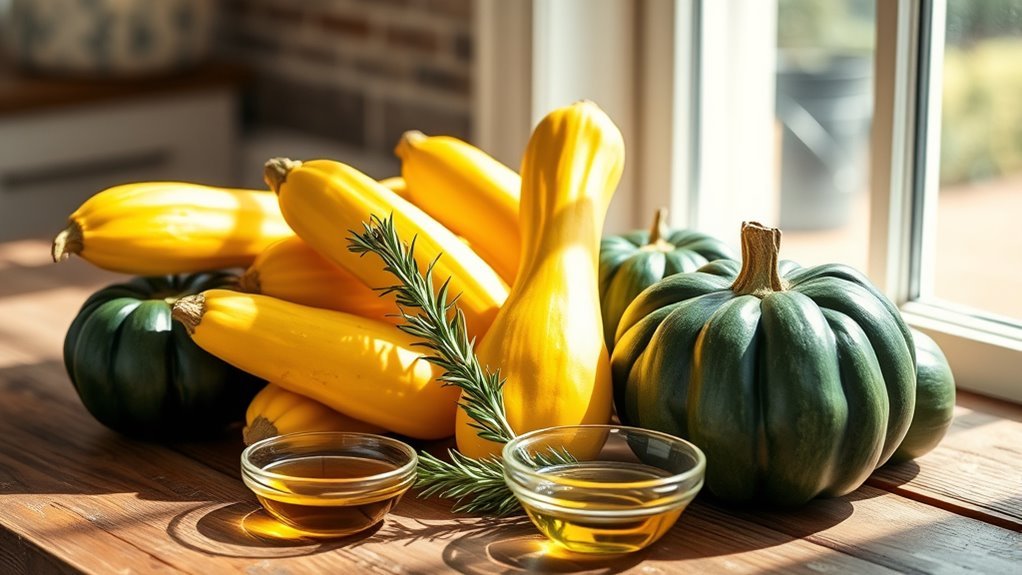
To make the most of squash in your keto meal plan, consider its versatility in various dishes. You can create rich squash recipes that fit your carb limits and satisfy your taste buds. For meal prepping, roasted butternut squash, zucchini noodles, or stuffed acorn squash can be great options. Here’s a simple table to guide you:
| Squash Type | Recipe Idea | Keto-Friendly Tips |
|---|---|---|
| Butternut | Roasted with herbs | Use olive oil, limit sugar |
| Zucchini | Zucchini noodles | Pair with low-carb sauces |
| Acorn | Stuffed with cheese | Add spices for flavor |
| Spaghetti | Spaghetti squash bake | Avoid heavy sauces |
| Yellow | Sautéed with garlic | Use butter for richness |
Incorporate these ideas into your week for delicious, satisfying meals!
The Impact of Squash on Ketosis
While squash can be a nutritious addition to your diet, its impact on ketosis depends largely on the type and quantity consumed. Different squash varieties have varying carbohydrate content, which plays a vital role in your keto compatibility. For instance, zucchini and yellow squash are lower in carbs compared to butternut and acorn squash. If you’re mindful of portion sizes, you can enjoy these lower-carb options without jeopardizing your state of ketosis. It’s essential to track your overall carb intake when incorporating squash into your meals to maintain that delicate balance. By choosing the right squash and consuming it in moderation, you can enjoy its health benefits while staying committed to your keto lifestyle.
Potential Pitfalls of Eating Squash While Keto
Although squash can be a tasty addition to your meals, there are potential pitfalls to ponder when trying to stay keto. Misunderstanding the carb content in squash can lead to keto misconceptions. While some varieties are lower in carbs, others can add up quickly if you’re not careful. Portion control is essential; eating larger servings might kick you out of ketosis.
Here’s a quick reference to help clarify:
| Squash Type | Net Carbs per 100g |
|---|---|
| Zucchini | 2.1g |
| Butternut Squash | 12g |
| Acorn Squash | 15g |
| Spaghetti Squash | 7g |
Keeping these factors in mind helps you enjoy squash without derailing your keto journey.
Alternatives to Squash for Low-Carb Diets
If you’re looking for low-carb alternatives to squash, zucchini noodles, cauliflower rice, and spaghetti squash are excellent options. Zucchini noodles provide a similar texture and can easily absorb flavors, while cauliflower rice is a versatile substitute for grains. Spaghetti squash also offers a unique twist with its stringy texture, making it a great base for various sauces.
Zucchini Noodles Benefits
Zucchini noodles, often referred to as “zoodles,” offer a fantastic low-carb alternative to traditional pasta and can fit seamlessly into a ketogenic diet. One of the primary zucchini benefits is its low calorie and carbohydrate content, making it an ideal choice for those seeking to maintain or lose weight. Zoodles are also rich in vitamins A and C, providing essential nutrients while helping you feel full. They’re incredibly versatile, easily absorbing flavors from sauces, allowing for a satisfying meal without the carb overload. Plus, they’re quick to prepare, making them a convenient option for busy individuals. By choosing zucchini noodles as noodle alternatives, you can enjoy your favorite dishes guilt-free while staying on track with your low-carb lifestyle.
Cauliflower Rice Alternatives
When searching for low-carb alternatives to squash, cauliflower rice stands out as a popular choice that fits well within a ketogenic diet. It’s versatile, easy to prepare, and can be used in various dishes, from stir-fries to grain bowls. With only about 5 grams of carbs per cup, it allows you to enjoy a hearty meal without compromising your carb limits.
Additionally, cauliflower mash offers a creamy, satisfying substitute for traditional mashed potatoes, making it a fantastic option for comfort food cravings. Both cauliflower rice and mash provide essential nutrients while keeping your meals low in carbohydrates. So, whether you’re looking to replace squash or simply want a fresh take on a classic dish, these alternatives can help you maintain your keto lifestyle.
Spaghetti Squash Options
What are some tasty alternatives to spaghetti squash for those following a low-carb diet? While spaghetti squash is a great option, you might want to explore other choices for variety in your meals. Here are some alternatives that won’t compromise your low-carb lifestyle:
| Alternative | Carbs per 100g |
|---|---|
| Zucchini Noodles | 3.1g |
| Shirataki Noodles | 0g |
| Cabbage Noodles | 2.9g |
| Palmini Noodles | 4g |
These options provide lower carb counts compared to traditional pasta while offering unique flavors and textures. Incorporating these alternatives into your spaghetti squash recipes can enhance your spaghetti squash nutrition, allowing you to enjoy a fulfilling meal without guilt. Explore these choices and discover new favorites!
Frequently Asked Questions about Squash and Keto
1. Is squash considered keto-friendly?
Squash can be considered keto-friendly, but it depends on the type of squash and the portion size. Some varieties like zucchini and yellow squash are lower in carbs, making them suitable for a ketogenic diet when consumed in moderation. However, other types, such as butternut squash, are higher in carbohydrates and may need to be limited to maintain ketosis.
2. How many carbs are in different types of squash?
The carbohydrate content varies by type. For example, 1 cup of cooked zucchini has about 4 grams of net carbs, while 1 cup of cooked butternut squash contains around 20 grams of net carbs. Therefore, if you’re following a strict keto diet, it’s essential to choose lower-carb options like zucchini, spaghetti squash, or yellow squash.
3. Can I eat squash on a keto diet in large quantities?
While you can include squash in your diet, eating it in large quantities, especially higher-carb varieties, may hinder your ability to stay in ketosis. It’s crucial to monitor your total daily carbohydrate intake and balance it with your overall diet. Moderation is key, and incorporating a variety of low-carb vegetables will help maintain nutritional balance.
4. What are some keto-friendly recipes that include squash?
There are numerous keto-friendly recipes that feature squash. For example, you can make zucchini noodles (zoodles) tossed with pesto and grilled chicken, or bake stuffed spaghetti squash with cheese and vegetables. You can also make a creamy zucchini soup or sauté yellow squash with garlic and herbs for a delicious side dish.
5. Are there any health benefits to eating squash on a keto diet?
Yes, squash is rich in vitamins A and C, antioxidants, and fiber, which can support overall health. Incorporating squash into a keto diet can help prevent nutrient deficiencies while offering a variety of flavors and textures. Additionally, the fiber content can aid in digestion and promote a feeling of fullness, which is beneficial for weight management.
References
- https://www.healthline.com/nutrition/keto-diet-foods#vegetables
- https://www.ncbi.nlm.nih.gov/pmc/articles/PMC6520897/
- https://www.webmd.com/diet/what-to-eat-on-keto-diet
- https://www.mayoclinic.org/healthy-lifestyle/nutrition-and-healthy-eating/expert-answers/keto-diet/faq-20437116
- https://www.verywellfit.com/keto-diet-foods-to-eat-and-avoid-5113864
- https://www.dietitiansofcanada.ca/Your-Health/Nutrition-Resources/Keto-Diet
- https://www.health.harvard.edu/staying-healthy/the-ketogenic-diet
- https://www.cdc.gov/healthyweight/healthy_eating/index.html
- https://www.vegetarianresourcegroup.org/faq/keto-diet.html