

Understanding whether the ketogenic diet focuses on net carbs or total carbs is essential for anyone looking to achieve effective results. The answer is that many keto practitioners prefer tracking net carbs, which are calculated by subtracting fiber and certain sugar alcohols from total carbohydrates. This distinction is vital for maintaining ketosis and optimizing one’s diet. In this article, we’ll explore the differences between net and total carbs, their impact on ketosis, and how to choose the right approach for your keto journey.
What Are Total Carbs?

Total carbohydrates refer to the complete amount of carbohydrates present in a food item, which includes sugars, starches, and dietary fiber. When analyzing food products, total carbs provide a holistic view of carbohydrate content, allowing individuals to gauge the overall carbohydrate intake. For those not following a ketogenic diet, understanding total carbs is crucial for setting daily intake limits and making informed dietary choices.
For instance, a slice of whole-grain bread might contain 15 grams of total carbs, which includes both sugar (around 2 grams) and fiber (about 3 grams). Recognizing this total carbohydrate count aids in understanding how a food fits into a broader nutritional framework, especially for those managing their weight or blood sugar levels. However, on a ketogenic diet, the focus shifts from total carbohydrates to how these carbs affect ketosis, which leads us to the next important concept: net carbs.
What Are Net Carbs?
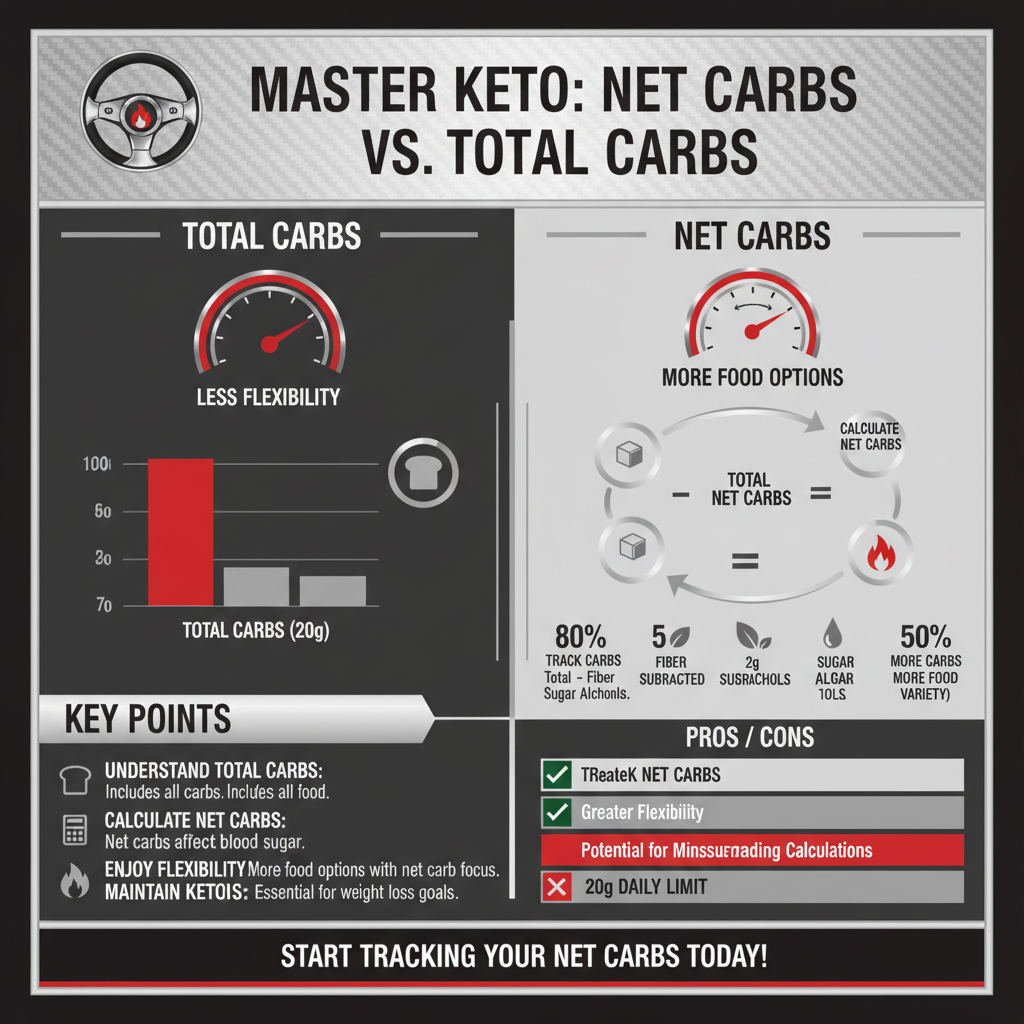

Net carbs are calculated by subtracting fiber and certain sugar alcohols from total carbohydrates. This formula reflects the carbohydrates that significantly impact blood sugar levels and ketosis. Since fiber is not digested and does not result in a spike in blood sugar, it is generally exempt from the net carb count. Sugar alcohols, like erythritol and xylitol, also play a role in this calculation, as they can have a minimal effect on insulin levels depending on the type used.
The formula for calculating net carbs is straightforward:
Net Carbs = Total Carbs – Fiber – Sugar Alcohols.
For example, if a food item contains 20 grams of total carbs, 5 grams of fiber, and 2 grams of sugar alcohols, the net carbs would be calculated as follows: 20 – 5 – 2 = 13 grams of net carbs. This calculation enables keto dieters to enjoy a wider variety of foods while still maintaining a low carbohydrate intake that is conducive to achieving and sustaining ketosis.
Why Net Carbs Matter for Keto
Focusing on net carbs can offer greater flexibility in food choices without sacrificing the benefits of ketosis. Many advocates of the ketogenic diet suggest that tracking net carbs can help in managing hunger and cravings more effectively than a strict total carb approach. By allowing fiber and certain sugar alcohols to be excluded from the net carb count, dieters can enjoy nutrient-dense foods that are high in fiber, such as vegetables and nuts, which can aid digestion and improve satiety.
Moreover, reducing insulin levels is a fundamental goal of the ketogenic diet, as low insulin is critical for fat burning. By monitoring net carbs rather than total carbs, individuals can strategically include foods that are high in fiber, which can help in controlling insulin spikes while still keeping carbs low enough to remain in ketosis. This approach supports metabolic flexibility, allowing the body to efficiently switch between burning fat and carbohydrates for energy.
How to Calculate Net Carbs
Calculating net carbs requires careful attention to nutrition labels. Start by identifying the total carbohydrates listed on the label. Next, look for the fiber content and any sugar alcohols included in the ingredients. Use the formula: Net Carbs = Total Carbs – Fiber – Sugar Alcohols.
When reading labels, it’s important to be cautious with sugar alcohols, as their effects can vary significantly. For instance, erythritol has a negligible effect on blood sugar and is often excluded from the net carb count, while others, such as maltitol, can have a more pronounced impact. Consulting reliable resources or databases can help clarify the carbohydrate impact of various sugar alcohols.
For practical application, consider tracking your net carb intake using food diary apps or simple spreadsheets, which can help you monitor your dietary patterns over time. This approach not only keeps your carb intake in check but can also enhance your awareness of overall nutrition.
Popular Keto Foods: Net Carbs vs. Total Carbs
Understanding the distinction between net and total carbs is crucial when selecting keto-friendly foods. Foods low in net carbs that are commonly embraced in the keto community include leafy greens (like spinach and kale), avocados, nuts, and seeds. For instance, one avocado contains about 12 grams of total carbs, but with approximately 9 grams of fiber, the net carbs come to just 3 grams.
Conversely, some foods may appear low in total carbs but contain high sugar content. For example, certain types of low-carb snacks may list a total of 5 grams of carbs but could have added sugars that elevate their effective carb count. Therefore, always check both the total and net carb content to ensure you are making informed choices that align with your dietary goals.
Meal planning can greatly benefit from this understanding. By selecting foods that are low in net carbs and high in fiber, you can create satisfying meals that keep you within your carbohydrate limits while promoting overall health.Common Misconceptions About Carbs in Keto
Several misconceptions surround the role of carbohydrates in the ketogenic diet. A common belief is that all carbs are inherently bad; however, it is important to recognize that fiber is a crucial component of a balanced diet and offers numerous health benefits, including improved gut health and reduced risk of chronic diseases.
Additionally, confusion often arises regarding sugar alcohols and their impact on net carbs. Not all sugar alcohols are equal; some can affect blood sugar levels more than others. Therefore, it is essential to research and understand which sugar alcohols are suitable for your keto lifestyle.
Another prevalent myth is that you can consume unlimited net carbs as long as you stay under your overall carb limit. This approach can lead to weight loss plateaus or hinder progress, as excessive net carb intake can still lead to increased insulin levels and potentially kick you out of ketosis.
Finding the Right Approach for You
Every individual’s body responds differently to carbohydrate intake, making it crucial to determine your personal carb limit based on your health goals and lifestyle. Consider starting with a general guideline of around 20-50 grams of net carbs per day and adjusting based on your responses and results.
Experimenting with both total and net carb tracking can help you discern which method works best for your body. Some may find that they can comfortably include more total carbs while remaining in ketosis, while others may need to be stricter with their intake.
Consulting with a healthcare provider or nutritionist can provide tailored advice, particularly if you have underlying health conditions or specific dietary needs. Professional guidance can help you navigate the complexities of the ketogenic diet while ensuring you maintain nutritional balance.
Understanding the difference between net and total carbs is crucial for success on the ketogenic diet. By focusing on net carbs, you can enjoy a wider variety of foods while still achieving your health goals. Start tracking your carb intake today to find the approach that best suits your needs!
Frequently Asked Questions
What is the difference between net carbs and total carbs in the keto diet?
The primary difference between net carbs and total carbs lies in how they affect blood sugar levels. Total carbs refer to all carbohydrates in a food item, while net carbs are calculated by subtracting fiber and certain sugar alcohols (like erythritol) from the total carbs. This is important for those on the keto diet because the goal is to minimize carbohydrate intake while still enjoying fiber-rich foods that support digestive health.
How do I calculate net carbs for my meals on a keto diet?
To calculate net carbs for your meals on a keto diet, start by looking at the nutrition label for the total carbohydrate content. Then, subtract the grams of dietary fiber and any sugar alcohols that do not impact blood sugar. The formula is: Net Carbs = Total Carbs – Fiber – Sugar Alcohols. This calculation helps you stay within your daily carb limit while adhering to the principles of keto.
Why is net carbs preferred over total carbs in the keto community?
Net carbs are preferred in the keto community because they provide a more accurate representation of the carbs that affect blood sugar levels and ketosis. Since fiber and certain sugar alcohols do not significantly impact insulin levels, calculating net carbs allows individuals to enjoy more nutrient-dense foods without exceeding their carb limits. This approach aligns with the keto diet’s goal of promoting fat burning while maintaining energy levels.
Which foods should I focus on for low net carbs on a keto diet?
When aiming for low net carbs on a keto diet, focus on high-fiber vegetables like leafy greens, cruciferous vegetables (such as broccoli and cauliflower), and avocados. Additionally, look for protein-rich foods like meat, fish, and eggs, as well as healthy fats like nuts and seeds. Always check the nutritional information to ensure you are tracking net carbs effectively and making informed choices that support your keto goals.
What are the common misconceptions about net carbs in the keto diet?
One common misconception is that all carbohydrates need to be eliminated on the keto diet, which is not true. While it’s essential to lower carb intake, understanding net carbs allows for the inclusion of healthy, fiber-rich foods that can enhance your diet. Another misconception is that all sugar alcohols can be subtracted from total carbs; however, some sugar alcohols can impact blood sugar, so it’s crucial to know which ones are safe for your keto journey.
References
- Ketogenic diet
- https://www.healthline.com/nutrition/net-carbs-vs-total-carbs
- https://www.ncbi.nlm.nih.gov/pmc/articles/PMC6832410/
- Popping joints: Why does it happen?
- https://www.dietitians.ca/news/what-is-the-ketogenic-diet
- https://www.cdc.gov/healthyweight/assessing/bmi/adult_bmi/english_bmi_calculator/bmi_calculator.html
- https://www.webmd.com/diet/obesity/what-is-keto-diet
- https://www.ncbi.nlm.nih.gov/pmc/articles/PMC6320452/