

While honeydew is relatively low in calories and provides some nutritional benefits, it is not considered keto-friendly due to its carbohydrate content. In a ketogenic diet, maintaining low carb intake is crucial for achieving and sustaining ketosis. This article will explore the carbohydrate count in honeydew, its nutritional profile, and alternatives for those following a keto diet.
Understanding Carbohydrates in Honeydew

Honeydew melon contains about 9 grams of carbohydrates per 100 grams. This might appear low compared to many other fruits; however, in the context of a ketogenic diet, which typically limits daily carbohydrate intake to around 20-50 grams, this amount can hinder ketosis, especially if consumed in larger portions. For example, a standard serving of honeydew, which is approximately one cup (about 170 grams), could deliver around 15 grams of carbohydrates, making up a significant portion of your daily allowance. This carbohydrate load can quickly add up if you’re not careful, potentially stalling your state of ketosis.
Moreover, the glycemic index of honeydew is relatively moderate, meaning it can cause a noteworthy spike in blood sugar levels for some individuals, which is something those on a ketogenic diet typically aim to avoid. Therefore, while honeydew’s carbohydrate content may seem manageable, its potential impact on blood sugar and ketosis must be carefully considered when planning meals.
Nutritional Benefits of Honeydew
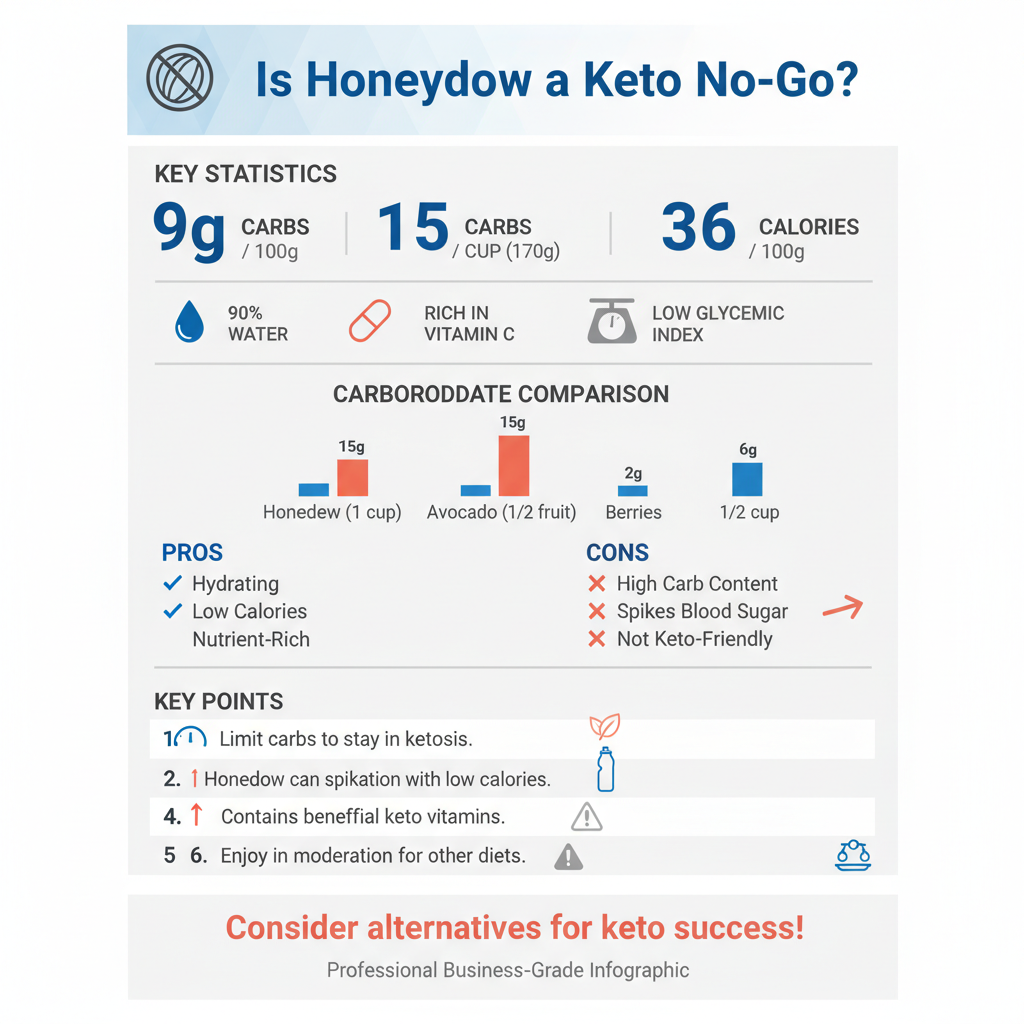
Despite its limitations for keto dieters, honeydew offers several nutritional benefits that make it a valuable addition to general diets. It is rich in vitamins, particularly vitamin C, which plays a vital role in supporting immune function and promoting healthy skin. Additionally, honeydew contains B vitamins, which are crucial for energy metabolism and overall wellness.
The fruit is also composed of about 90% water, making it an excellent choice for hydration. Low in calories, with roughly 36 calories per 100 grams, honeydew can be an ideal snack for those looking to maintain or lose weight while still enjoying something sweet. Additionally, honeydew contains antioxidants such as flavonoids and carotenoids, which may help reduce the risk of chronic diseases by combating oxidative stress in the body.
Incorporating honeydew into a balanced diet can provide various health benefits, especially for those who are not strictly adhering to a ketogenic lifestyle. However, for those monitoring their carbohydrate intake closely, these benefits must be weighed against the fruit’s carb content.
Comparing Honeydew with Other Fruits
When it comes to choosing fruits on a keto diet, it is essential to compare the carbohydrate content of different options. Many fruits are significantly lower in carbs and therefore more suitable for those following a ketogenic lifestyle. For instance, berries such as strawberries, raspberries, and blackberries contain only about 5-7 grams of carbohydrates per 100 grams, making them a preferred choice for keto dieters.
Avocados are another excellent alternative, offering healthy fats with just 9 grams of carbohydrates per 100 grams, of which a significant portion is fiber. This high fiber content means that the net carbs (total carbs minus fiber) are much lower, allowing for greater flexibility within the daily carb limit.
Understanding which fruits are keto-friendly can help maintain dietary goals more effectively. Incorporating lower-carb fruits into your diet can satisfy sweet cravings without the risk of exceeding your carbohydrate limits.
How to Incorporate Honeydew in Moderation
If you choose to include honeydew in your diet, moderation is key. Limiting portion size is crucial to avoid exceeding daily carb limits. A good strategy is to enjoy honeydew as an occasional treat rather than a staple. For example, you might consider including a small slice of honeydew in a fruit salad that is primarily made up of lower-carb fruits like strawberries and blueberries.
Another approach is to use honeydew in small amounts as part of a balanced meal. For instance, blending honeydew into a smoothie with spinach and a low-carb protein powder can create a refreshing drink that still adheres to your keto goals. Additionally, using honeydew as a garnish or flavor enhancer in savory dishes can add a touch of sweetness without overwhelming the dish with carbs.
It’s also beneficial to keep track of your overall carbohydrate intake throughout the day. By doing so, you can better manage how much honeydew you can afford to indulge in without compromising your ketogenic goals.
Keto-Friendly Alternatives to Honeydew
For those strictly adhering to a ketogenic diet, exploring alternatives to honeydew is advisable. Options such as cucumber and zucchini provide a similar refreshing taste and texture while offering significantly lower carbohydrate counts. For example, cucumber has about 3.6 grams of carbohydrates per 100 grams, making it a perfect hydrating snack for keto followers.
Berries, as previously mentioned, are another fantastic alternative. They are low in carbs and rich in antioxidants, making them not only keto-friendly but also highly nutritious. Incorporating these fruits into your diet can help satisfy sweet cravings, providing the enjoyment of fruit without the high carbohydrate content associated with honeydew.
Additionally, incorporating nuts such as macadamia nuts or pecans can provide a satisfying crunch and healthy fats, contributing to your overall nutrient intake without compromising your carb limits. These alternatives can help you maintain a diverse and enjoyable menu while staying committed to your keto lifestyle.
In summary, while honeydew offers several health benefits, its carbohydrate content makes it less than ideal for a strict ketogenic diet. If you’re aiming for ketosis, consider enjoying honeydew in moderation or opting for more keto-friendly fruit alternatives. For further guidance on maintaining your keto lifestyle, explore our resources on low-carb recipes and meal planning.
Frequently Asked Questions
Is honeydew melon keto-friendly?
Honeydew melon is not typically considered keto-friendly due to its higher carbohydrate content. A 100-gram serving of honeydew contains approximately 9 grams of carbohydrates, which can quickly add up and exceed the daily carb limit for those following a strict ketogenic diet. If you’re on a keto plan, it’s best to consume honeydew in moderation or opt for lower-carb fruits like berries.
How many carbs are in honeydew melon?
A standard serving of honeydew melon (about 100 grams) contains roughly 9 grams of total carbohydrates. This includes around 0.9 grams of dietary fiber, leading to a net carb count of about 8 grams. For individuals on a low-carb or ketogenic diet, monitoring these carb numbers is essential to stay within your daily allowance.
What fruits can I eat on a keto diet instead of honeydew?
If you’re looking for alternatives to honeydew melon on a keto diet, consider fruits that are low in carbohydrates, such as strawberries, raspberries, blackberries, and avocados. These fruits not only fit within your carb limits but are also rich in vitamins, minerals, and antioxidants, making them healthy choices for your keto lifestyle.
Why is honeydew melon not recommended for a ketogenic diet?
Honeydew melon is not recommended for a ketogenic diet primarily due to its relatively high carbohydrate content, which can hinder the state of ketosis that many keto dieters aim to achieve. Consuming too many carbs from fruits like honeydew can lead to increased blood sugar levels, making it difficult to maintain the low-carb threshold required for effective fat burning on a keto diet.
Can I incorporate honeydew into a keto diet occasionally?
While honeydew melon is not ideal for a strict ketogenic diet, it can be incorporated occasionally in small amounts if it fits within your daily carb limit. For example, a few bites of honeydew can be enjoyed as a part of a balanced meal or snack, but it’s crucial to account for its carbs in your daily intake to avoid exceeding your limit and disrupting ketosis.
References
- Honeydew
- https://www.healthline.com/nutrition/keto-diet-foods
- https://www.medicalnewstoday.com/articles/health-benefits-of-honeydew
- https://www.ncbi.nlm.nih.gov/pmc/articles/PMC6464914/
- https://www.webmd.com/diet/obesity/honeydew-nutrition-facts
- https://www.livescience.com/honeydew-nutrition.html
- https://www.cdc.gov/healthyweight/healthy_eating/fruits.html