

Eating bacon is not only permissible on a keto diet, but it can also be beneficial due to its high fat content and low carbohydrate count. Bacon, when sourced thoughtfully, offers a delicious way to incorporate healthy fats into your meals while maintaining a state of ketosis. In this article, we’ll explore how bacon fits into a keto lifestyle, its nutritional benefits, potential drawbacks, and some delicious ways to enjoy it.
The Keto Diet: A Brief Overview
The ketogenic diet, commonly referred to as the keto diet, is a low-carbohydrate, high-fat dietary approach designed to shift the body into a metabolic state known as ketosis. In ketosis, the body predominantly burns fat for fuel instead of carbohydrates, leading to potential weight loss and improved energy levels. Typically, a keto diet consists of approximately 70-75% fat, 20-25% protein, and only about 5-10% carbohydrates. This drastic reduction in carbohydrate intake helps to deplete the body’s glycogen stores, prompting it to utilize fat as its primary energy source. For those who enjoy bacon, this dietary framework allows for its inclusion, making it a popular choice among keto enthusiasts.
Nutritional Profile of Bacon
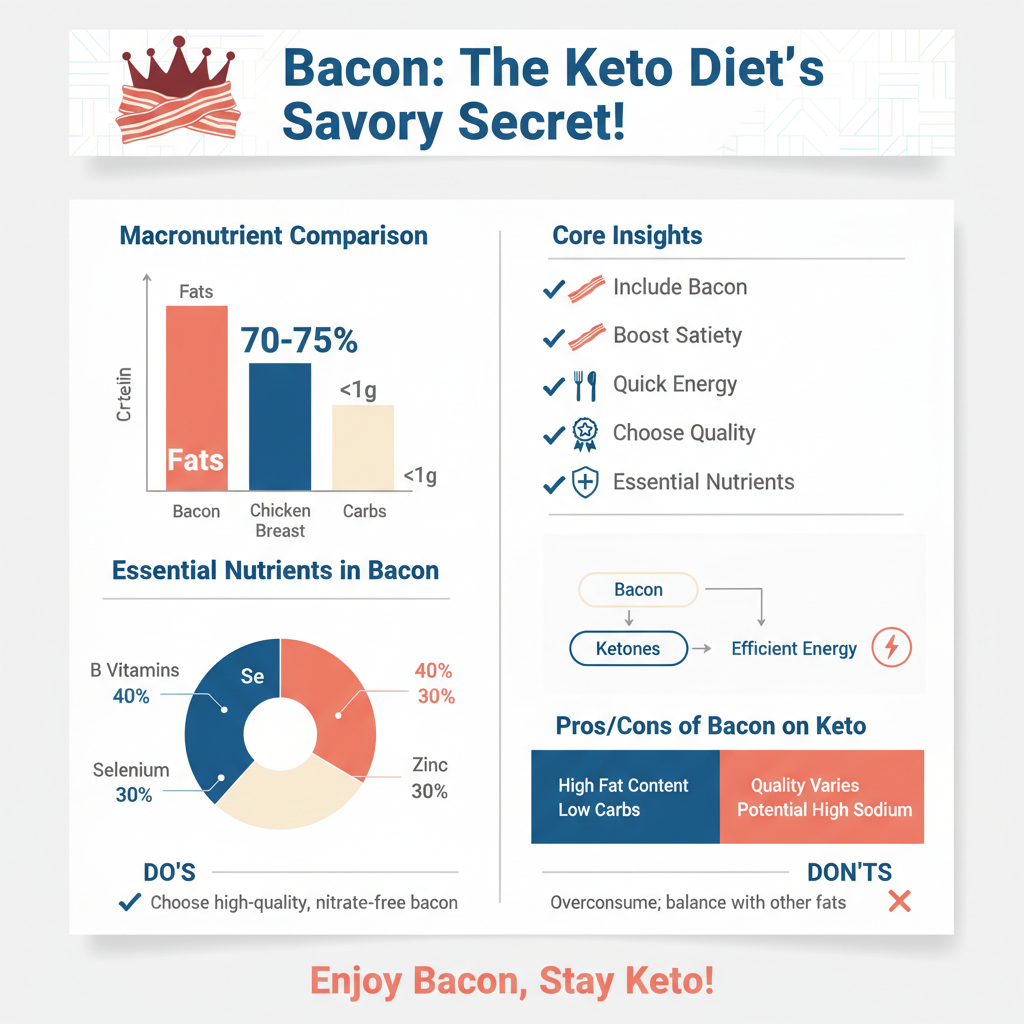

Bacon is primarily composed of fat, particularly saturated and monounsaturated fats, with minimal carbohydrates—typically less than 1 gram per slice. This macronutrient profile makes bacon an ideal choice for those adhering to a keto diet. Beyond its fat content, bacon also provides essential nutrients, such as B vitamins (including B1, B3, and B12), selenium, and zinc. These nutrients play vital roles in metabolism, immune function, and overall well-being. Additionally, bacon contains conjugated linoleic acid (CLA), a fatty acid that has been linked to various health benefits, including improved body composition and reduced inflammation. However, it is essential to consider the quality of bacon consumed, as not all varieties are created equal.
Health Benefits of Including Bacon in Keto
Incorporating bacon into a keto diet can yield several health benefits. First and foremost, the high-fat content in bacon can enhance satiety, meaning that it can help you feel fuller for longer periods. This increased feeling of fullness can lead to reduced overall calorie intake, which is beneficial for those looking to lose weight. Moreover, the fats found in bacon can serve as a quick and efficient source of energy, particularly for individuals engaging in physical activity or intense workouts. As the body adapts to burning fat for fuel, foods like bacon can provide the necessary energy to sustain performance without the crash often associated with high-carb meals. Additionally, the flavor profile of bacon can enhance other foods, making healthy eating more enjoyable and sustainable.
Potential Drawbacks of Eating Bacon
While bacon can be a keto-friendly food choice, there are potential drawbacks to consider. Many commercially available bacon products are processed and may contain additives, preservatives, and sodium. For example, nitrites and nitrates are common preservatives used in bacon that may pose health risks when consumed in large quantities. Furthermore, the high sodium content in bacon can be a concern for individuals monitoring their blood pressure or those prone to water retention. Therefore, moderation is key. It is advisable to balance bacon consumption with a variety of other protein sources and vegetables to ensure a well-rounded diet. Additionally, individuals should be cautious about their overall saturated fat intake, particularly if they have existing cardiovascular concerns.
Delicious Keto-Friendly Bacon Recipes
Bacon is incredibly versatile and can be incorporated into a variety of keto-friendly recipes. For starters, bacon-wrapped asparagus is a simple yet delightful dish that combines the crispiness of bacon with the nutrient-rich profile of asparagus. Another popular choice is a bacon and avocado salad, where the creaminess of avocado complements the savory, salty flavor of bacon, creating a satisfying meal that is both nutritious and flavorful. For a hearty side dish, consider making bacon-infused cauliflower mash, a low-carb alternative to traditional mashed potatoes. Simply blend steamed cauliflower with crispy bacon, butter, and cream for a rich and creamy side. Lastly, bacon can enhance breakfast dishes; try adding it to scrambled eggs or omelets for a flavorful start to your day. The possibilities are endless, and experimenting with bacon in different recipes can help you discover new favorites that align with your keto lifestyle.
Tips for Choosing Quality Bacon
When selecting bacon, quality is paramount for both health benefits and taste. Opt for nitrate-free and organic bacon whenever possible to minimize exposure to harmful chemicals. Look for products that list minimal ingredients on the label; ideally, the only ingredients should be pork, salt, and natural flavoring. Additionally, consider the fat-to-protein ratio; bacon with a higher fat content (such as side bacon or pancetta) can maximize the benefits of a keto diet. Always check for the absence of added sugars, which can sneak into some flavored varieties. By being discerning in your bacon choices, you can enjoy this delicious food while adhering to your health goals.
Incorporating bacon into your keto diet can be both enjoyable and beneficial, provided you choose quality options and consume it in moderation. Experiment with various recipes to find your favorites and embrace the deliciousness of bacon while staying true to your keto goals!
Frequently Asked Questions
Is bacon a good food choice for a ketogenic diet?
Yes, bacon is an excellent food choice for a ketogenic diet due to its high-fat content and low carbohydrate levels. A standard serving of bacon typically contains around 0-1 grams of carbohydrates, making it suitable for maintaining ketosis. Additionally, the fat in bacon can help meet the daily fat intake goals essential for keto dieters.
How can I incorporate bacon into my keto meal plan?
You can incorporate bacon into your keto meal plan in various ways, such as adding it to breakfast dishes like scrambled eggs or omelets, using it as a topping for salads, or wrapping it around vegetables like asparagus or jalapeño poppers. Bacon can also enhance the flavor of keto-friendly recipes like soups, casseroles, and even homemade sauces, making it a versatile ingredient.
Why is bacon considered a high-fat food, and how does that benefit a ketogenic diet?
Bacon is considered a high-fat food because it consists of approximately 68% fat, which is essential for those following a ketogenic diet. The high-fat content helps keep you satiated and prevents hunger, allowing your body to burn fat for fuel instead of carbohydrates. This aligns with the primary goal of the keto diet—achieving and maintaining a state of ketosis, where your body efficiently uses fat for energy.
What type of bacon is best for a keto diet?
The best type of bacon for a keto diet is usually thick-cut, uncured bacon that is free from added sugars and preservatives. Look for options that have minimal ingredients, ideally just pork and salt, to ensure you are not consuming unnecessary carbohydrates. Organic or pasture-raised bacon is also a great choice as it often contains higher quality fats and fewer additives.
Are there any health concerns associated with eating bacon on a keto diet?
While bacon can be a delicious addition to a ketogenic diet, it is important to consume it in moderation due to its high sodium and saturated fat content. Regular consumption of processed meats like bacon has been linked to certain health risks, including heart disease and cancer. To mitigate these risks, balance your diet with plenty of non-starchy vegetables and consider varying your protein sources to include leaner meats, fish, and plant-based options.