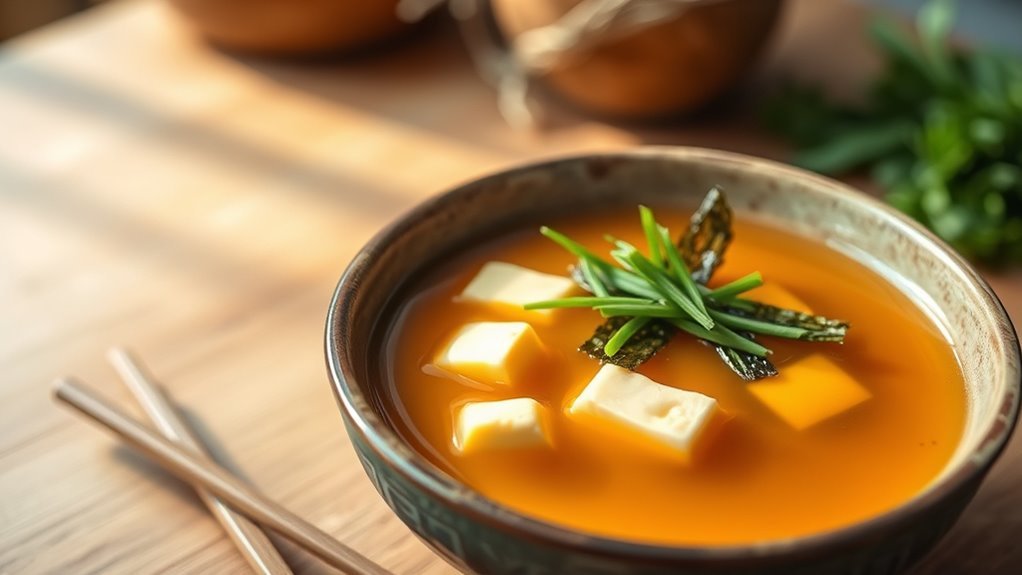

Yes, miso soup can be keto-friendly when made with low-carb ingredients. Traditional miso paste contains about 3-4 grams of carbs per tablespoon, with lighter varieties typically being lower in carbs. To keep it keto, avoid high-carb additions like noodles or rice, and instead incorporate low-carb toppings such as green onions or seaweed. Balance your intake, considering sodium levels, and you can enjoy this nutritious soup as part of your keto diet. There’s more to discover about making it a tasty part of your meals!
Understanding Miso Soup Ingredients
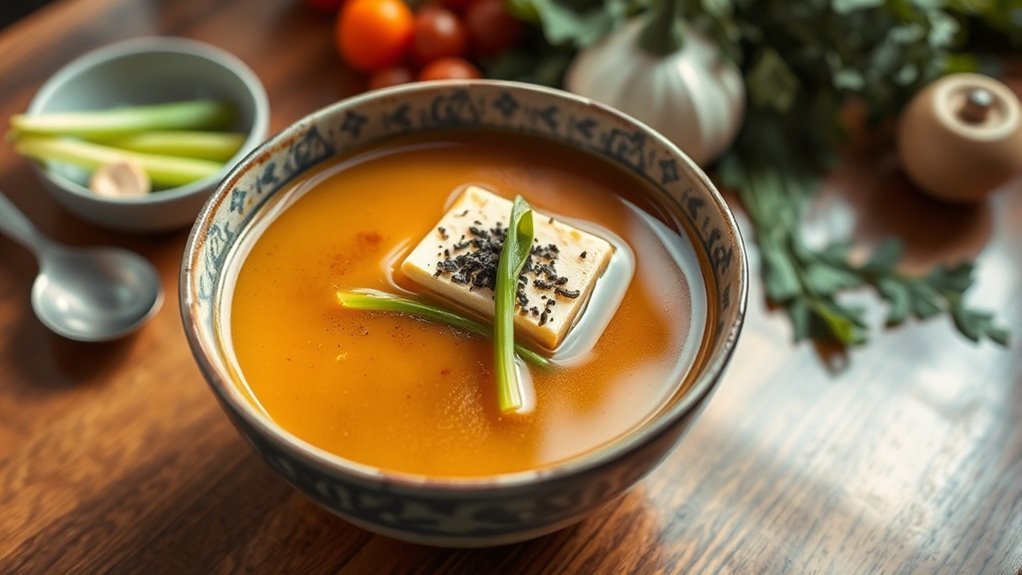
When you plunge into the world of miso soup, it’s vital to understand its key ingredients, as they greatly influence its nutritional profile. Miso, the star ingredient, comes in various miso varieties, like white, yellow, and red. Each type has unique flavors and health considerations. For instance, lighter miso tends to be less salty and can contain higher probiotic levels, while darker miso is richer in umami and nutrients. The broth often includes dashi, typically made from fish or seaweed, contributing additional savory notes and essential minerals. Understanding these elements helps you appreciate how they affect your dietary choices, especially if you’re considering a keto lifestyle. So, knowing your miso can empower you to enjoy this traditional dish mindfully.
Nutritional Breakdown of Miso Soup
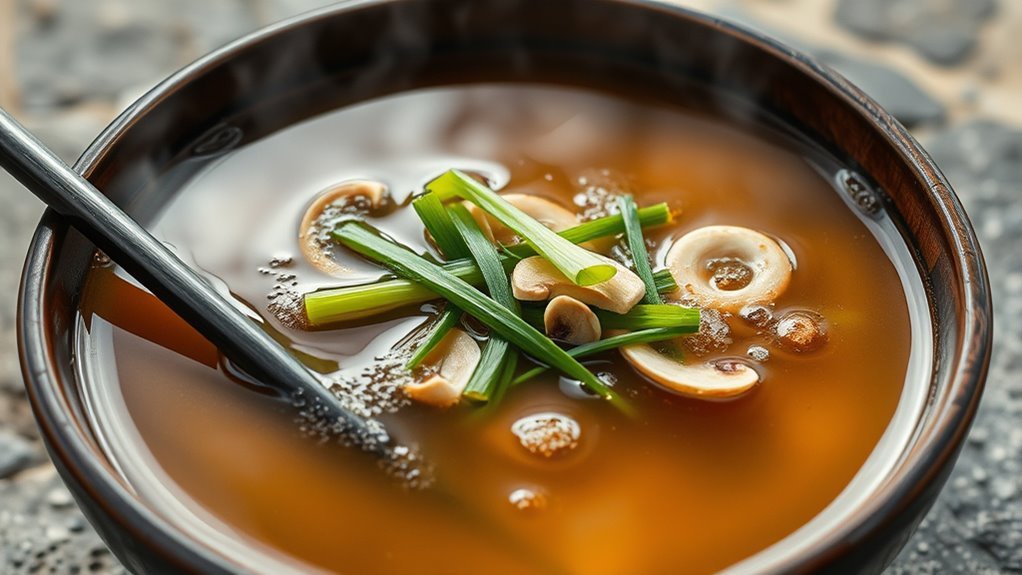
Miso soup is a nutritious dish that packs a variety of health benefits, making it worth evaluating its nutritional breakdown. Different miso varieties, such as white, red, and yellow, offer unique flavors and nutrient profiles. Generally, miso is rich in probiotics, protein, and essential vitamins, contributing to gut health and immune support. However, it’s vital to take into account the sodium content, which can be high in many miso soups. A typical serving may contain around 600 to 800 milligrams of sodium, depending on the miso variety used. If you’re watching your sodium intake, look for lower-sodium options or prepare your own version at home. Balancing the benefits with sodium considerations can help you enjoy this wholesome dish responsibly.
Carbohydrate Content and Keto Compatibility
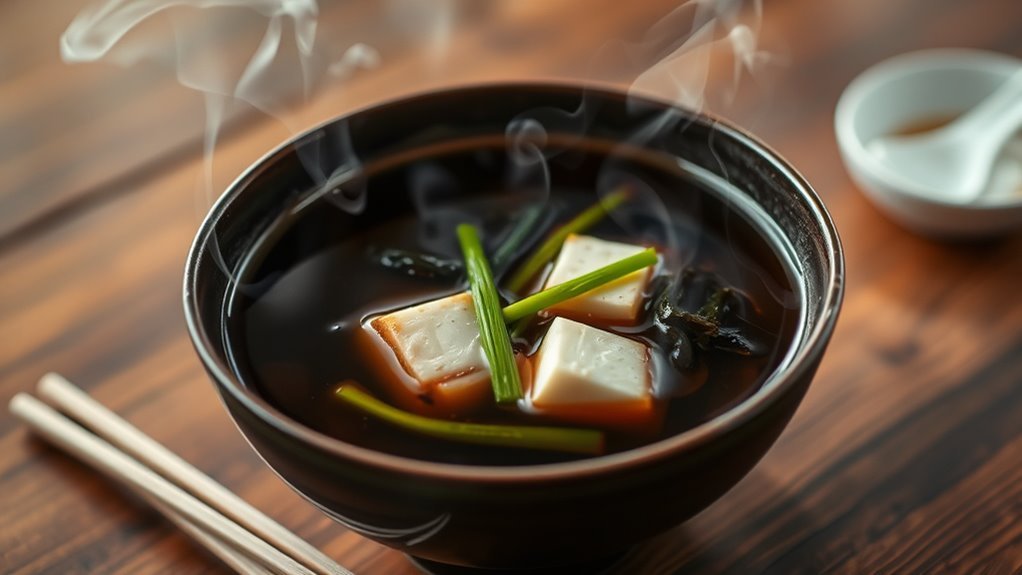
When considering whether miso soup fits into a keto diet, it’s crucial to look at its ingredients and their carbohydrate content. Most miso soup is made from miso paste, tofu, seaweed, and sometimes vegetables, which can vary in carb counts. Analyzing these components will help you determine if this comforting dish aligns with your keto goals.
Miso Soup Ingredients
Exploring the ingredients of miso soup reveals its carbohydrate content and how it fits into a keto diet. Miso types, primarily made from fermented soybeans, vary in flavor and nutritional profiles, with some containing more carbs than others. Common variations include white miso, which is milder and often lower in carbs, and red miso, which has a stronger flavor and slightly higher carbohydrate content. The broth typically includes dashi, made from seaweed and fish, both of which are keto-friendly. While additional ingredients like tofu and vegetables can enhance the soup’s flavor and nutrition, they can also contribute carbs. Understanding these elements will help you determine which miso soup variations work best for your keto lifestyle.
Carb Count Analysis
Understanding the carbohydrate content in miso soup is vital for those following a keto diet, as it can vary greatly depending on the ingredients used. Generally, traditional miso paste contains around 3-4 grams of carbs per tablespoon, primarily from fermented soybeans, which are moderate carb sources. However, when you add ingredients like tofu or seaweed, the carb count can change. If you’re looking for keto alternatives, consider using low-carb broth or adding more protein-rich components while minimizing added carbs. Being mindful of portion sizes is important, as even small amounts can affect your daily carb limit. Always check labels if you’re using packaged miso, as formulations can differ considerably. This way, you can enjoy miso soup without compromising your keto goals.
Health Benefits of Miso Soup
Miso soup is packed with nutrient-rich ingredients, offering vitamins and minerals that can support your overall health. Its probiotic properties may aid digestion and strengthen your gut health, making it a beneficial addition to your diet. Plus, as a low-calorie option, it can fit nicely into a balanced meal plan without adding excess calories.
Nutrient-Rich Ingredients
While you might think of miso soup as just a comforting dish, its nutrient-rich ingredients offer numerous health benefits that can complement a balanced diet. Miso, made from fermented soybeans, is packed with protein, vitamins, and minerals, providing significant nutrient density. This fermented ingredient is often combined with a variety of vegetables, seaweed, and tofu, showcasing ingredient diversity that enhances both flavor and nutritional value. These components work together to support overall health, from promoting digestive health to boosting the immune system. By incorporating miso soup into your meals, you’re not only enjoying a delicious dish but also reaping the benefits of its rich nutrients, helping you maintain a vibrant lifestyle without sacrificing enjoyment.
Probiotic Properties
The fermentation process that creates miso soup also introduces a wealth of probiotic properties, making it a valuable addition to your diet. These probiotics can support your gut health by promoting a healthy balance of bacteria in your digestive system. Consuming miso soup regularly may provide various probiotic benefits, like improved digestion and enhanced immune function. Research suggests that the live cultures found in fermented foods can help alleviate gastrointestinal issues, making miso soup a great option if you’re looking to boost your digestive wellness. In addition, these probiotics can contribute to overall well-being, potentially reducing inflammation and supporting mental health. So, incorporating miso soup into your meals can be a delicious way to nurture your gut health and enjoy its many benefits.
Low-Calorie Option
If you’re searching for a low-calorie option that still packs a nutritional punch, miso soup should be on your radar. This savory dish typically contains around 40-50 calories per serving, making it an excellent choice for those watching their caloric intake. The low calorie benefits don’t compromise the flavor or nutrition, as miso soup provides essential vitamins and minerals, including B vitamins and antioxidants. Plus, it’s rich in probiotics, promoting gut health. If you’re looking for miso soup alternatives, you can explore variations made with different vegetables or proteins for added nutrition without piling on calories. So, whether you enjoy it as a starter or a light meal, miso soup is a satisfying, healthy option.
How to Make Miso Soup Keto-Friendly
To make miso soup keto-friendly, you’ll need to focus on the ingredients that align with low-carb dietary principles. Start with low-carb miso alternatives, such as white or red miso, which contain fewer carbs. Enhance your soup with keto toppings to boost flavor and nutrition.
Here’s a quick reference table for your keto-friendly miso soup:
| Ingredients | Miso Alternatives | Keto Toppings |
|---|---|---|
| Base | White Miso | Green Onions |
| Broth | Bone Broth | Seaweed |
| Veggies | Spinach or Zucchini | Tofu (firm) |
| Protein | Chicken or Shrimp | Mushrooms |
| Flavor Boost | Garlic and Ginger | Sesame Seeds |
Creative Ways to Enjoy Miso Soup on Keto
While you might think of miso soup as a simple starter, there are plenty of creative ways to elevate this dish within your keto meal plan. Experimenting with miso variations can add depth and excitement. Try using white, yellow, or red miso to find the flavor that resonates with you.
To enhance the taste, consider flavor enhancements like adding fresh herbs, green onions, or a splash of sesame oil. Incorporate protein-rich ingredients such as tofu or shredded chicken to make it more filling. You could even toss in low-carb veggies like spinach or zucchini for added nutrition. With these tweaks, miso soup becomes a versatile, satisfying dish that fits seamlessly into your keto lifestyle, offering both freedom and flavor.
Frequently Asked Questions about Miso Soup and Keto Diet
1. Is miso soup keto-friendly?
Yes, miso soup can be considered keto-friendly. Miso itself is low in carbohydrates and high in protein, making it a suitable option for those following a ketogenic diet. However, the total carb count can increase depending on the additional ingredients used, such as tofu or seaweed. Always check the specific recipe or package for precise nutritional information.
2. What are the nutritional benefits of miso soup on a keto diet?
Miso soup offers several nutritional benefits on a keto diet. It is rich in probiotics, which can aid in digestion and gut health. The miso paste also contains essential vitamins and minerals such as vitamin K, manganese, and zinc. Additionally, the fat content can be balanced with the use of high-fat ingredients like tofu and avocado, making it a wholesome addition to your meals.
3. Can I make miso soup without adding carbohydrates?
Yes, you can make miso soup while keeping it low in carbohydrates. Stick to using low-carb vegetables such as spinach, mushrooms, or zucchini, and avoid traditional ingredients like noodles or high-carb vegetables. You can also add protein sources like shrimp or chicken to enhance the nutritional profile without adding carbs.
4. How many carbs are in a typical serving of miso soup?
A typical serving of miso soup contains around 3-5 grams of carbohydrates, depending on the specific ingredients used. Miso paste itself has about 2 grams of carbs per tablespoon. However, the total carb count may vary based on additional ingredients like tofu or vegetables. Always refer to the specific recipe for accurate nutritional data.
5. Are there any alternatives to miso soup for keto dieters?
If you’re looking for alternatives to miso soup on a keto diet, consider options like bone broth, which is rich in collagen and protein. Other soup alternatives include creamy soups made with coconut milk or heavy cream, or vegetable-based soups with low-carb vegetables. Each of these options can provide warmth and nutrition while keeping carb counts low.
References
- https://www.healthline.com/nutrition/keto-diet-foods#summary
- https://www.ncbi.nlm.nih.gov/pmc/articles/PMC6019055/
- https://www.mayoclinic.org/healthy-lifestyle/nutrition-and-healthy-eating/in-depth/keto-diet/art-20459825
- https://www.webmd.com/diet/what-is-the-keto-diet
- https://www.verywellfit.com/what-to-eat-on-the-keto-diet-5199608
- https://www.eatwell.gov.uk/advice/food-safety/food-choices/what-is-the-keto-diet
- https://www.washingtonpost.com/food/2021/04/11/keto-diet-vegetables/
- https://www.cdc.gov/healthyweight/healthy_eating/index.html
- https://www.nutrition.gov/topics/what-nutrition/healthy-eating
- https://www.bbcgoodfood.com/howto/guide/what-keto-diet