

Understanding how to determine your keto macros is essential for achieving success on a ketogenic diet. The key is to calculate your daily macronutrient ratios—specifically fats, proteins, and carbohydrates—based on your individual goals, activity level, and body composition. By accurately calculating your keto macros, you can make informed dietary choices that will enhance your weight loss or muscle gain efforts, ultimately leading to optimal results.
Understanding Macronutrients

Macronutrients are the nutrients that provide us with energy and are essential for our overall health. They consist of three main groups: fats, proteins, and carbohydrates. In a ketogenic diet, the focus is primarily on high fat intake, moderate protein, and very low carbohydrates.
– Fats are the cornerstone of the ketogenic diet, typically making up about 70% of your total caloric intake. They serve as the primary energy source, promoting ketosis—a metabolic state where the body burns fat for fuel instead of carbohydrates. Healthy fats include avocados, nuts, seeds, olive oil, and fatty fish.
– Proteins play a vital role in maintaining muscle mass and supporting bodily functions. In a ketogenic diet, protein constitutes about 25% of your caloric intake. While it’s important to consume enough protein to prevent muscle loss, excessive protein intake can lead to gluconeogenesis, where protein is converted into glucose, potentially disrupting ketosis. Good sources of protein include meat, poultry, fish, eggs, and dairy products.
– Carbohydrates are restricted to about 5% of your caloric intake in a strict ketogenic diet. This drastic reduction forces the body to enter ketosis. Carbohydrates are primarily found in fruits, grains, and sugars, which should be limited to maintain the desired state of fat burning.
Understanding these macronutrients and their roles will set the foundation for calculating your keto macros effectively.
Calculating Your Daily Caloric Needs
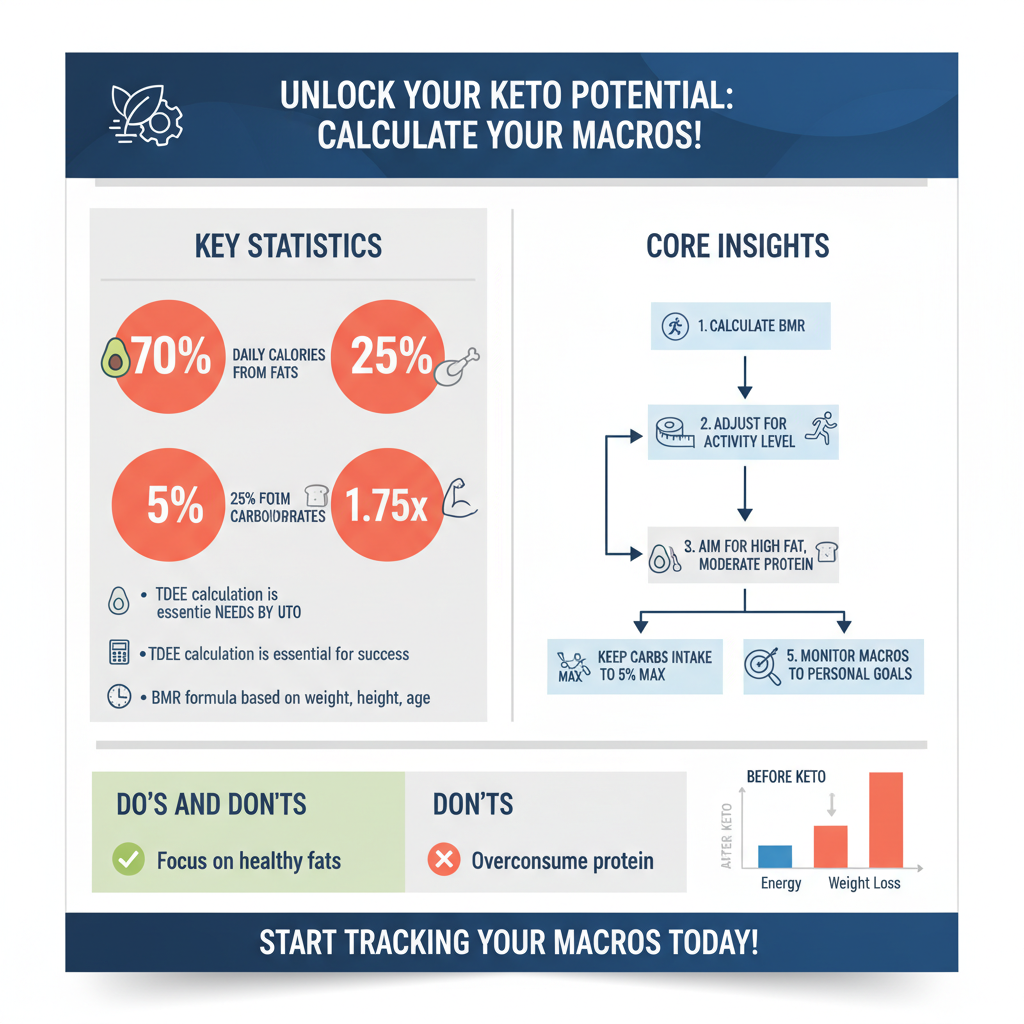

To successfully embark on a ketogenic diet, you need to understand your Total Daily Energy Expenditure (TDEE). TDEE is the total number of calories your body needs to function daily, considering your activity level. To calculate your TDEE, you can use the following formula:
1. Calculate your Basal Metabolic Rate (BMR) using the Mifflin-St Jeor Equation:
– For men: BMR = 10 weight (kg) + 6.25 height (cm) – 5 age (y) + 5
– For women: BMR = 10 weight (kg) + 6.25 height (cm) – 5 age (y) – 161
2. Multiply your BMR by your activity level:
– Sedentary (little or no exercise): BMR x 1.2
– Lightly active (light exercise/sports 1-3 days a week): BMR x 1.375
– Moderately active (moderate exercise/sports 3-5 days a week): BMR x 1.55
– Very active (hard exercise/sports 6-7 days a week): BMR x 1.725
– Super active (very hard exercise/physical job): BMR x 1.9
Once you have your TDEE, you can adjust your caloric intake based on your goals. For weight loss, a caloric deficit of about 500 calories per day is generally recommended, while for muscle gain, a caloric surplus may be necessary.
Setting Your Keto Macro Ratios
Once you have established your daily caloric needs, the next step is to set your ketogenic macro ratios. A common ratio for a standard ketogenic diet is approximately 70% fats, 25% proteins, and 5% carbohydrates. However, these ratios can be adjusted based on personal goals:
– Weight Loss: Maintaining the standard ratio is often effective, but some may benefit from slightly higher protein intake (e.g., 60% fat, 35% protein, 5% carbs) to preserve muscle mass.
– Muscle Gain: A higher protein ratio may be beneficial (e.g., 60% fat, 30% protein, 10% carbs) to support muscle recovery and growth while still promoting fat loss.
It’s essential to remember that these ratios are guidelines and can be adjusted based on individual responses to the diet. Tracking your intake and making modifications as needed will help you find the balance that works best for you.
Tracking Your Macronutrients
Tracking your macronutrient intake is crucial for maintaining a successful ketogenic diet. Several tools and apps can assist you in this endeavor:
– MyFitnessPal: This popular app allows you to log your food intake and track your macronutrients easily. It has a vast database of foods, making it simple to find nutritional information.
– Cronometer: Known for its detailed nutrient tracking, Cronometer provides insights into not just macronutrients but also micronutrients, helping you maintain a well-rounded diet.
– Keto-specific apps: Several apps are designed specifically for those on a ketogenic diet, providing tailored features that can help you manage your carb intake more effectively.
Emphasizing consistency in your tracking efforts will yield the most accurate results. Regularly logging your food not only helps you stay accountable but also enables you to fine-tune your diet based on real data.
Adjusting Macros Based on Progress
Monitoring your progress is vital for success on a ketogenic diet. Regularly assessing weight, body composition, and overall well-being can help you determine whether your current macro ratios need adjustment. Key indicators that signal a need for recalibration include:
– Weight Plateaus: If you’ve been at a consistent weight for several weeks despite maintaining a caloric deficit, it may be time to reevaluate your macros. Consider reducing your carbohydrate intake or adjusting your caloric intake to reignite fat loss.
– Energy Levels: If you find yourself feeling fatigued or lacking energy, it may be indicative of inadequate caloric intake or an imbalance in your macronutrient ratios. Adjusting your fat intake or incorporating more nutrient-dense foods may help.
– Ketone Levels: For those who are monitoring ketone levels, consistently low readings may suggest that your carbohydrate intake is too high or that your fat intake needs to be increased.
By staying attuned to these signs, you can make informed adjustments to your macros and continue progressing toward your goals.
Common Mistakes to Avoid
Navigating the complexities of macronutrient calculations can lead to several common mistakes. Recognizing and avoiding these pitfalls is essential for effective adherence to the ketogenic diet:
– Neglecting Caloric Needs: Some individuals focus solely on macro ratios without considering their overall caloric needs. This can lead to unintended weight gain or loss.
– Overestimating Protein Intake: While protein is important, excessive consumption can hinder ketosis. Be mindful not to exceed your protein goals significantly.
– Ignoring Food Quality: Focusing only on hitting macro numbers can lead to poor food choices. Prioritize whole, nutrient-dense foods to support your overall health.
To avoid these errors, take the time to educate yourself about macronutrient sources and maintain a balanced approach to your diet.
Tips for Staying on Track
Commitment to a ketogenic diet can be challenging, but employing effective strategies can enhance your success:
– Meal Planning and Preparation: Dedicate time each week to plan and prepare meals. This not only saves time but ensures you have keto-friendly options readily available, reducing the temptation to stray from your goals.
– Joining Keto Communities: Engaging with others on a similar journey can provide support, motivation, and accountability. Online forums, social media groups, and local meetups can foster a sense of community and shared experiences.
Incorporating these strategies into your routine will help you stay focused and committed to your ketogenic goals.
Summarizing the essential steps to determine your keto macros will empower you to tailor your diet effectively. By understanding your caloric needs, setting appropriate macro ratios, and tracking your intake, you can enhance your ketogenic journey. Start applying these insights today to optimize your results and maintain a healthy lifestyle!
Frequently Asked Questions
What are the ideal macronutrient ratios for a ketogenic diet?
The ideal macronutrient ratios for a ketogenic diet typically consist of approximately 70-75% fat, 20-25% protein, and 5-10% carbohydrates. This high-fat, low-carb ratio helps the body enter a state of ketosis, where it burns fat for fuel instead of glucose. Adjusting these ratios can depend on individual factors such as age, gender, activity level, and specific health goals, making it essential to personalize your keto macros based on your unique needs.
How do I calculate my daily caloric needs for keto?
To calculate your daily caloric needs for a ketogenic diet, start by determining your Basal Metabolic Rate (BMR) using formulas like the Harris-Benedict equation, which considers your age, gender, weight, and height. Once you have your BMR, multiply it by an activity factor (ranging from sedentary to highly active) to find your Total Daily Energy Expenditure (TDEE). From there, you can create a calorie deficit for weight loss or maintain your weight by adjusting your keto macros accordingly.
Why is tracking keto macros important for success on a ketogenic diet?
Tracking keto macros is crucial for success on a ketogenic diet because it ensures that you are adhering to the specific macronutrient ratios necessary to achieve and maintain ketosis. Many people may underestimate their carb intake or overestimate their fat consumption, which can hinder their weight loss or health goals. By keeping a close eye on your macros, you can make informed dietary choices, optimize your meal planning, and ultimately enhance your overall results on the keto diet.
Which tools or apps are best for tracking keto macros?
Some of the best tools for tracking keto macros include apps like MyFitnessPal, Cronometer, and Carb Manager, which allow you to easily log your food intake, calculate your macros, and monitor your progress over time. These apps offer extensive food databases, barcode scanning features, and customizable macro settings, making it easier to stay on track with your ketogenic lifestyle. Choosing a user-friendly app that fits your specific needs can significantly enhance your ability to manage your diet effectively.
What foods should I focus on to meet my keto macro goals?
To meet your keto macro goals, focus on foods that are high in healthy fats and low in carbohydrates. Ideal options include avocados, nuts and seeds, fatty fish (like salmon), olive oil, and low-carb vegetables (such as leafy greens and cauliflower). Additionally, moderate protein sources like eggs, poultry, and dairy can help you achieve the right balance. By prioritizing these foods, you can easily align your meals with the necessary macronutrient ratios for a successful ketogenic diet.
References
- Ketogenic diet
- https://www.ncbi.nlm.nih.gov/pmc/articles/PMC6835967/
- https://www.healthline.com/nutrition/keto-diet-macros
- https://www.webmd.com/diet/what-is-the-keto-diet
- https://www.diabetes.org/nutrition/healthy-foods/what-is-the-ketogenic-diet
- https://www.cdc.gov/healthyweight/assessing/bmi/adult_bmi/index.html