

The amount of weight you can lose on a keto diet varies significantly based on factors such as your starting weight, metabolism, and adherence to the diet. Many individuals report losing anywhere from 5 to 20 pounds within the first month. However, these numbers can fluctuate widely due to individual circumstances, including lifestyle choices and biological differences. In this article, we will explore the various factors influencing weight loss on a keto diet, how to optimize your results, and provide insights to help you achieve your goals effectively.
Understanding the Keto Diet

The ketogenic diet, often referred to as the keto diet, emphasizes high-fat, low-carbohydrate foods, which shifts the body into a metabolic state known as ketosis. In ketosis, the body efficiently burns fat for energy instead of carbohydrates. This is achieved by drastically reducing carbohydrate intake (typically below 50 grams per day) and replacing it with healthy fats, which can make up 70-80% of your daily caloric intake. Proteins also play a role, making up about 15-25% of the diet.
This shift in macronutrient consumption encourages the body to utilize fat stores for energy, leading to weight loss. Common foods in a keto diet include avocados, nuts, seeds, fatty fish, and low-carb vegetables. Understanding the principles of the keto diet is crucial for anyone looking to achieve significant weight loss and maintain long-term health benefits.
Factors Influencing Weight Loss
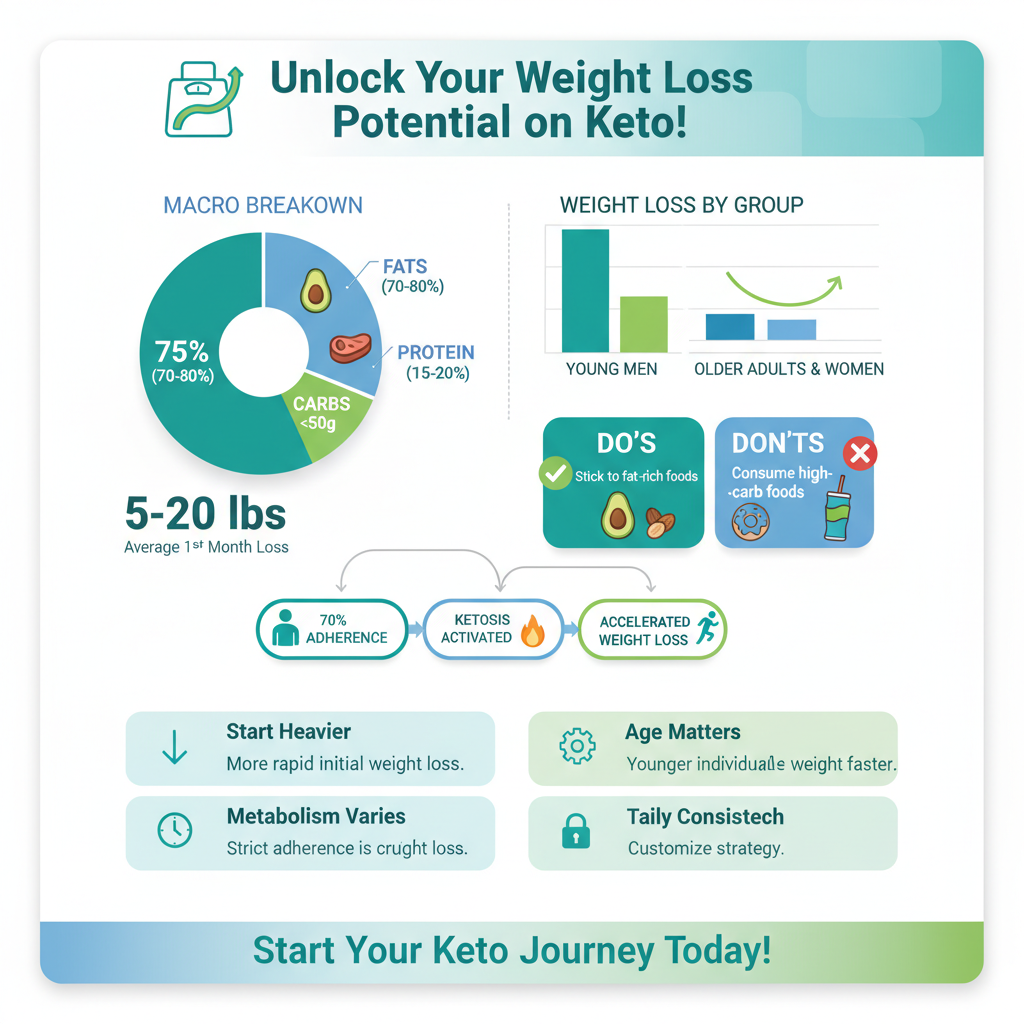
Several key factors influence weight loss on the keto diet:
– Starting weight: Heavier individuals may experience more rapid initial weight loss compared to those who are closer to their ideal weight. This is often due to a greater caloric surplus at the beginning of the diet.
– Age and gender: Younger individuals and men often lose weight more quickly than older adults and women. Hormonal differences can impact metabolism and fat distribution, making weight loss more challenging for some.
– Metabolic rate: Each person’s metabolism is unique. Those with a higher basal metabolic rate (BMR) will typically lose weight more quickly than those with a slower metabolism.
– Adherence to the diet: Consistency is crucial. Those who strictly adhere to the keto guidelines are more likely to see faster results. Regularly consuming high-carb foods can stall progress, leading to frustration.
Understanding these factors can help set realistic expectations and guide your approach to the keto diet, allowing for a more tailored strategy to achieve your weight loss goals.
Initial Weight Loss vs. Long-Term Weight Loss
Initial weight loss on the keto diet is often significant, primarily due to a reduction in water weight. This occurs because carbohydrates bind to water in the body, and when carb intake is reduced, this stored water is released, leading to quick weight loss—often within the first week. Some individuals may see a loss of 5 to 10 pounds during this initial phase.
However, sustained fat loss takes longer and requires consistent adherence to the diet. While the initial phase can be encouraging, it’s important to recognize that long-term weight loss is about fat reduction rather than just water loss. The average person can expect to lose about 1 to 2 pounds of fat per week after the initial phase, provided they maintain a caloric deficit and adhere to the macronutrient ratios of the keto diet.
Caloric Deficit and Macronutrient Ratios
Creating a caloric deficit is essential for weight loss; this means consuming fewer calories than your body burns. The ketogenic diet can help regulate appetite through its high-fat content, which promotes satiety and reduces hunger pangs. To successfully lose weight, it’s important to calculate your daily caloric needs and ensure that you are in a deficit.
Proper macronutrient balance is also crucial for maintaining ketosis. A typical keto diet consists of approximately 70-75% fats, 20-25% protein, and 5-10% carbohydrates. This unique composition helps the body transition into ketosis and utilize fat as its primary energy source. Monitoring your macronutrient intake using apps or food diaries can help you stay on track and maximize your weight loss potential.
Common Challenges and Solutions
Adapting to the keto lifestyle may involve some challenges, particularly in the early stages. One commonly reported side effect is the “keto flu,” which can occur as your body adjusts to burning fat for fuel. Symptoms may include fatigue, headaches, irritability, and digestive issues.
To alleviate these symptoms, it is crucial to stay hydrated and ensure adequate electrolyte intake, including sodium, potassium, and magnesium. Incorporating bone broth or electrolyte supplements can also be beneficial. Additionally, gradually reducing carbohydrate intake rather than making a sudden shift can help ease the transition into ketosis.
Another common challenge is finding suitable food options that align with the keto diet, especially when dining out or socializing. Planning meals ahead of time and exploring keto-friendly recipes can provide delicious alternatives and prevent unintentional carb consumption.
Tracking Progress and Adjusting Goals
Regularly tracking your weight, body measurements, and even how your clothes fit can help assess progress on the keto diet. Many individuals find that the scale does not always reflect their success due to muscle gain or water retention, so it’s essential to consider multiple indicators of progress.
As you continue on your keto journey, you may find that your weight loss plateaus. Adjusting your caloric intake or increasing your activity level can help reignite progress. It’s also beneficial to revisit your goals periodically and adjust them based on your current weight and health status.
Success Stories and Realistic Expectations
Many individuals share success stories of significant weight loss on the keto diet, highlighting achievements of 30, 50, or even 100 pounds lost over several months. However, it’s crucial to set realistic expectations, as sustainable weight loss is often gradual.
Success on the keto diet is not solely about the number on the scale but also about improving overall health, energy levels, and well-being. Focusing on the positive changes in your body and lifestyle can provide motivation and reinforce your commitment to the diet.
In summary, the keto diet can lead to significant weight loss, particularly in the initial stages. However, individual results may vary based on factors such as starting weight, metabolism, and adherence to the dietary guidelines. Staying committed, tracking your progress, and making necessary adjustments are vital to achieving your weight loss goals. For personalized guidance tailored to your specific needs, consider consulting a nutritionist or dietitian as you embark on your keto journey.
Frequently Asked Questions
How much weight can I realistically lose on a keto diet in the first month?
Many people experience significant weight loss on the keto diet during the first month, often ranging from 5 to 10 pounds, primarily due to water weight loss as glycogen stores deplete. As the body enters ketosis, fat becomes the main energy source, which can lead to further weight loss. Individual results may vary based on factors such as starting weight, adherence to the diet, and metabolic rate.
What factors influence weight loss on a keto diet?
Several factors can influence weight loss on a keto diet, including individual metabolism, age, gender, and activity level. Additionally, the types of foods consumed, portion sizes, and adherence to the macronutrient ratios (high fat, moderate protein, low carbohydrate) play crucial roles in determining how effectively one loses weight on the keto diet.
Why might I not be losing weight on the keto diet?
If you find that you are not losing weight on the keto diet, it could be due to several reasons, such as consuming hidden carbs, not tracking your food intake accurately, or eating too many calories. Hormonal imbalances, stress, and lack of physical activity can also hinder weight loss. It’s essential to assess your overall diet and lifestyle to identify potential barriers.
What is the best way to maximize weight loss while on a keto diet?
To maximize weight loss on a keto diet, focus on maintaining strict adherence to the low-carb guidelines while incorporating a variety of healthy fats and proteins. Regular physical activity, including strength training and aerobic exercises, can enhance fat burning. Additionally, staying hydrated and getting enough sleep are crucial for optimizing weight loss and overall health.
Which keto foods are most effective for weight loss?
Foods that are particularly effective for weight loss on a keto diet include avocados, nuts, seeds, fatty fish, and non-starchy vegetables like leafy greens. These foods are nutrient-dense and help keep you full longer while providing healthy fats, which support ketosis. Avoiding processed foods and sugars will also help you maintain a calorie deficit and promote effective weight loss.
References
- Ketogenic diet
- https://www.ncbi.nlm.nih.gov/pmc/articles/PMC5560141/
- The Ketogenic Diet: A Detailed Beginner’s Guide to Keto
- https://www.cdc.gov/healthyweight/losing_weight/index.html
- https://www.webmd.com/diet/ss/slideshow-keto-diet-overview
- Heart-Healthy Living – Aim for a Healthy Weight | NHLBI, NIH
- https://www.mayoclinic.org/healthy-lifestyle/nutrition-and-healthy-eating/expert-answers/keto-diet/faq-20472434
- https://www.jamanetwork.com/journals/jama/fullarticle/2773844