

The keto diet typically recommends that around 70% to 80% of your daily caloric intake come from fats, which translates to approximately 150-200 grams of fat for a standard 2,000-calorie diet. This high-fat intake is essential for achieving ketosis, the metabolic state where your body burns fat for fuel instead of carbohydrates. Understanding the ideal fat intake, the reasons behind its significance, and how to track it effectively can lead to better adherence to the keto diet and improved health outcomes.
Understanding the Keto Diet’s Macronutrient Breakdown

The ketogenic diet is defined by its unique macronutrient composition, which consists of high fats, moderate proteins, and very low carbohydrates. Typically, the standard macronutrient ratio for the keto diet is approximately 70-75% fats, 20-25% proteins, and 5-10% carbohydrates. This ratio is designed to shift the body’s primary energy source from glucose to fat, enabling the body to enter a state of ketosis.
In practical terms, this means that if you are consuming 2,000 calories a day, around 1,400 to 1,600 of those calories should come from fats. This translates to roughly 150 to 178 grams of fat per day. The strict limitation on carbohydrates—often limited to 20-50 grams—ensures that the body is deprived of glucose, prompting it to tap into fat reserves for energy. Understanding this foundational breakdown is crucial for anyone looking to succeed on the keto diet.
Calculating Your Daily Fat Intake
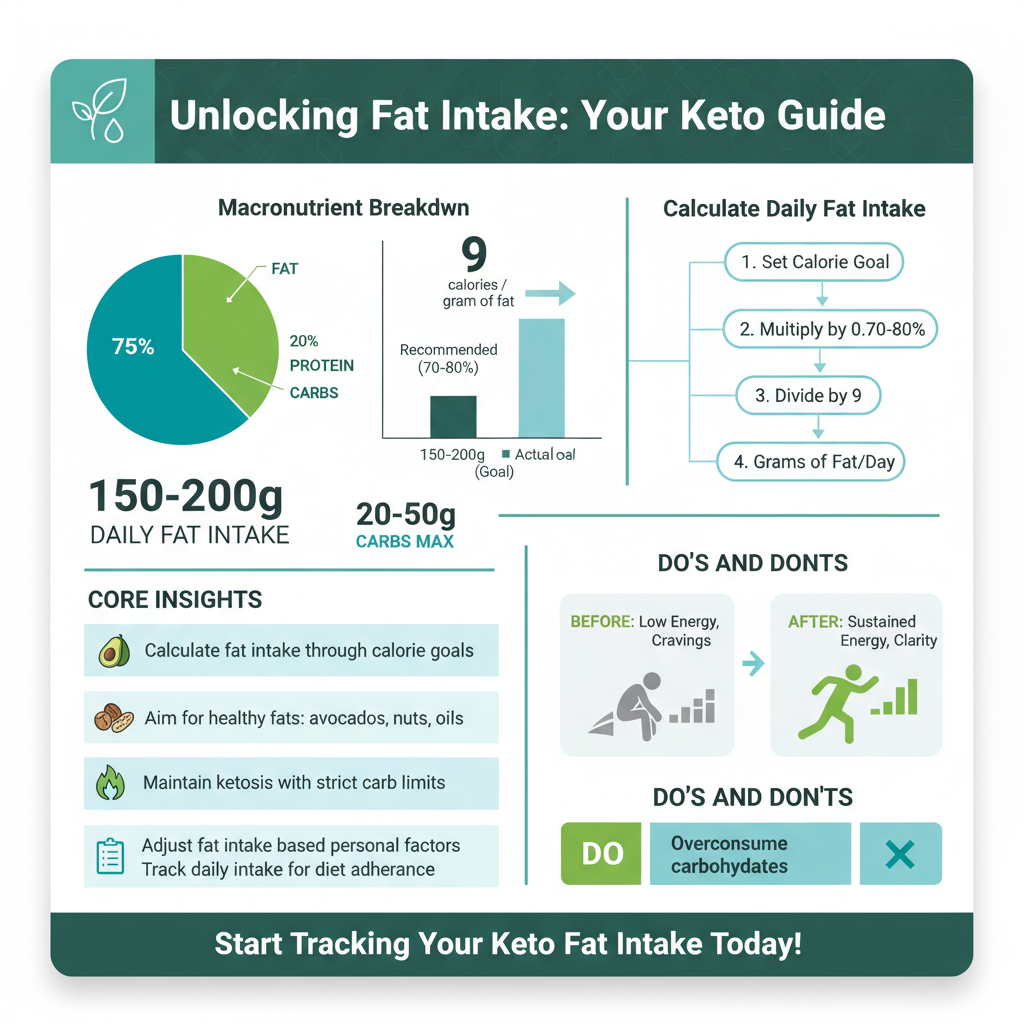
To determine your specific fat intake needs, you first need to identify your total daily calorie goal. If you’re following a 2,000-calorie diet, begin by calculating 70-80% of that figure. For instance, if you aim for 75% of your calories from fat, you would multiply 2,000 by 0.75, resulting in 1,500 calories from fat.
Next, convert these calories into grams of fat. Since each gram of fat contains 9 calories, you would divide 1,500 by 9, which equals approximately 167 grams of fat per day. This calculation can be adjusted based on individual calorie requirements, which may vary depending on factors such as age, gender, activity level, and weight loss goals. Utilizing this method helps ensure that you are consuming the right amount of fat to maintain ketosis effectively.
Types of Fats to Include
Not all fats are created equal, and focusing on the right types of fats is critical for optimal health on the keto diet. Healthy fats should be prioritized, including sources such as avocados, nuts, seeds, olive oil, coconut oil, and fatty fish like salmon. These fats not only provide essential fatty acids but also come with additional health benefits, such as anti-inflammatory properties and heart health support.
Conversely, it is essential to avoid trans fats—which are commonly found in processed and fried foods—as well as limit saturated fats from sources like fatty cuts of red meat and full-fat dairy. While some saturated fats can be included in moderation, it is advisable to prioritize unsaturated fats, which have been shown to support cardiovascular health. By choosing the right fats, you not only enhance your keto journey but also promote overall well-being.
Tracking Fat Intake on the Keto Diet
Effective tracking of macronutrient ratios is crucial for success on the keto diet. Utilizing food tracking apps such as MyFitnessPal, Cronometer, or Carb Manager can simplify this process. These tools allow you to input your meals and snacks, providing instant feedback on your macronutrient breakdown, calorie count, and overall dietary trends.
In addition to digital tools, maintaining a food diary can be a beneficial practice. By recording what you eat, you can identify patterns in your fat consumption and adjust accordingly. Keeping track of your intake helps ensure that you stay within your recommended fat limits, avoiding common pitfalls that can lead to ineffective dieting. Regular monitoring also supports accountability and can motivate you to make healthier food choices aligned with your keto goals.
Common Mistakes in Fat Consumption
Despite the simplicity of the keto diet’s macronutrient guidelines, many beginners make critical mistakes regarding fat consumption. One common issue is miscalculating fat intake, which can lead to insufficient fat levels for achieving ketosis. Some individuals may inadvertently consume too much protein or carbohydrates, preventing their bodies from effectively utilizing fat as the primary energy source.
Additionally, beginners often overlook the importance of quality when it comes to fats. Relying on low-quality fats or heavily processed oils can hinder progress and contribute to health issues. Educating yourself on the types of fats to consume and regularly assessing your dietary habits can prevent these mistakes and enhance your keto experience.
Tips for Maintaining Your Fat Intake
Maintaining an adequate fat intake can be challenging, especially in the early stages of adopting a keto lifestyle. One effective strategy is to meal prep with keto-friendly recipes that emphasize high-fat ingredients. Preparing meals in advance ensures you have the right foods on hand, reducing the temptation to stray from your dietary goals.
Experimenting with different fat sources can also keep your meals enjoyable and satisfying. Incorporating fats from various sources—such as nut butters, fatty cuts of meat, and olive oil dressings—can enhance flavor and texture while meeting your fat intake goals. Additionally, consider incorporating high-fat snacks like cheese, guacamole, or olives to help bridge the gap between meals and maintain your energy levels.
By staying organized and creative with your fat sources, you can avoid monotony in your meals and stay committed to your keto journey.
Summarizing key points, aim for a balanced intake of approximately 150-200 grams of healthy fats daily on the keto diet, and utilize tracking tools to stay on course. Start your keto journey today by assessing your current diet and making adjustments to meet your fat intake goals. The balance of fats, proteins, and carbohydrates is crucial for achieving the desired metabolic state and reaping the benefits of the ketogenic lifestyle.
Frequently Asked Questions
How many grams of fat should I consume on a keto diet?
On a ketogenic diet, the general guideline is to consume about 70-75% of your total daily calories from fat. For most people, this translates to roughly 150-200 grams of fat per day, depending on individual caloric needs. To determine the exact amount, calculate your daily calorie intake and multiply by 0.7 to 0.75, then divide by 9 (since there are 9 calories per gram of fat).
Why is it important to monitor fat intake on a keto diet?
Monitoring fat intake on a keto diet is crucial because the diet’s effectiveness relies on maintaining a state of ketosis, where the body burns fat for fuel instead of carbohydrates. Consuming too little fat can hinder this metabolic state, leading to reduced energy levels and cravings for carbohydrates. Conversely, too much fat can lead to excessive calorie consumption, which may prevent weight loss goals.
What types of fats should I include in my keto diet?
On a keto diet, it’s best to focus on healthy fats that support overall health. Include sources of unsaturated fats like olive oil, avocados, nuts, and seeds, as well as saturated fats from sources like coconut oil and grass-fed butter. Avoid trans fats and highly processed oils, as they can negatively affect health and undermine your ketogenic efforts.
How can I track my fat intake effectively while on a keto diet?
To effectively track your fat intake on a keto diet, consider using a mobile app or food diary that allows you to log your meals and monitor macronutrients. Popular apps like MyFitnessPal or Cronometer can help you analyze the fat content of your foods, ensuring you stay within your target range. Additionally, reading nutrition labels and using a food scale can aid in accurate tracking.
Which foods are high in fat and low in carbs suitable for a keto diet?
Foods that are high in fat and low in carbs include fatty fish (like salmon and mackerel), avocados, nuts (such as macadamia and pecans), full-fat dairy products (like cheese and heavy cream), and oils (such as olive and coconut oil). Incorporating these foods can help you meet your fat goals while keeping your carbohydrate intake low, which is essential for achieving and maintaining ketosis.
References
- Ketogenic diet
- https://www.ncbi.nlm.nih.gov/pmc/articles/PMC5699532/
- https://www.healthline.com/nutrition/keto-diet
- https://www.verywellfit.com/the-ketogenic-diet-5115178
- https://www.cdc.gov/healthyweight/assessing/bmi/adult_bmi/english_bmi_calculator/bmi_calculator.html
- https://www.hsph.harvard.edu/nutritionsource/keto-diet/