

The general recommendation for carbohydrate intake on the keto diet is about 20 to 50 grams of net carbs per day. This low-carb approach helps your body enter a state of ketosis, where it burns fat for fuel instead of carbohydrates. By limiting carbohydrate intake, you can shift your body’s metabolism from relying on glucose to utilizing fat as its primary energy source. In this article, we’ll explore how to determine your ideal carb intake, why it matters, and practical tips to stay within your limits.
Understanding Net Carbs
Net carbs are an essential concept for anyone following a ketogenic diet. They are calculated by subtracting fiber and certain sugar alcohols from total carbohydrates. This calculation is significant because fiber is a form of carbohydrate that the body does not digest, meaning it does not raise blood sugar levels. Similarly, certain sugar alcohols, such as erythritol, have a minimal impact on blood glucose and can be excluded from net carb calculations. For example, if a food item contains 15 grams of total carbohydrates, 5 grams of fiber, and 3 grams of erythritol, the net carbs would be calculated as follows: 15 – 5 – 3 = 7 grams of net carbs. Understanding this distinction allows for a more accurate assessment of how carbohydrate intake affects your body and helps you stay within the target range necessary for ketosis.
Factors Influencing Carb Intake
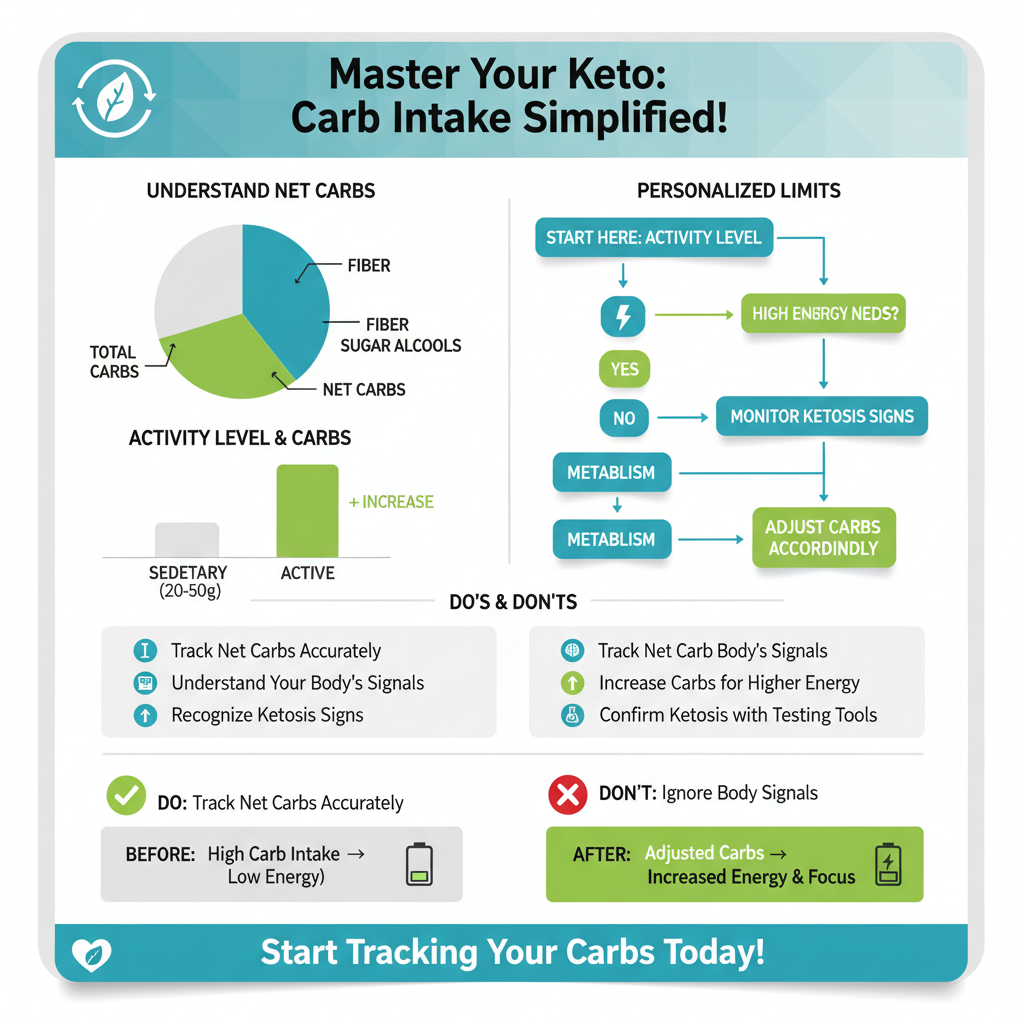

Several individual factors can influence how many carbs a person can consume while still maintaining ketosis. One primary factor is metabolic rate; individuals with a faster metabolism may be able to consume a slightly higher amount of carbohydrates without disrupting ketosis. Additionally, activity level plays a crucial role. More active individuals, such as athletes or those engaging in heavy physical labor, may require an increase in carbohydrate intake to fuel their workouts and recovery. This might mean adjusting net carb limits based on personal energy needs and physical performance goals. It’s essential to listen to your body and adapt your carb intake based on how you feel and your activity levels.
Signs You’re in Ketosis
Recognizing the signs of ketosis is vital for anyone on the keto diet to ensure they are achieving their dietary goals. Common indicators include increased energy levels, reduced appetite, and even a distinct fruity smell on your breath, often attributed to the presence of acetone, a type of ketone. Other signs can include improved mental clarity and focus, as many people report enhanced cognitive function when in ketosis. To monitor these signs, individuals can also use ketone testing strips that assess the presence of ketones in urine or breath. Keeping track of these indicators can help you make informed decisions about your carb intake and overall dietary habits.
Foods to Include and Avoid
When following a ketogenic diet, making informed food choices is crucial for maintaining low carb levels. Foods to include are low-carb vegetables such as spinach, kale, and zucchini, which provide essential nutrients without adding excessive carbohydrates. Healthy fats, such as avocados, nuts, seeds, and olive oil, are also key components of the diet, providing energy and promoting satiety. Quality protein sources like grass-fed beef, free-range chicken, and fatty fish are advisable as well. On the contrary, foods to avoid include high-sugar fruits like bananas and grapes, grains such as wheat and rice, and starchy vegetables like potatoes and corn. Recognizing which foods fit into your carb allowance is essential for sticking to the ketogenic plan and achieving desired results.
Tips for Tracking Your Carbs
To effectively manage your carbohydrate intake on the keto diet, tracking is essential. Utilizing mobile apps like MyFitnessPal or Cronometer can simplify the process of logging your daily carb consumption. These applications allow users to scan barcodes, search food databases, and customize entries, making it easy to stay accountable. Additionally, keeping a food journal can provide insights into your eating patterns and help identify any hidden sources of carbohydrates. Meal prepping is another practical strategy to avoid accidental carb overload; by preparing low-carb meals in advance, you can ensure that you have compliant options readily available, reducing the temptation to reach for higher-carb convenience foods.
Adjusting Carb Intake Over Time
As you progress on the ketogenic diet, it’s important to reassess your carb needs regularly. Weight loss can alter your metabolic rate, and what worked for you initially may not be effective indefinitely. If you find that you’ve hit a plateau or are no longer experiencing weight loss, consider making small adjustments to your carb intake. This could involve reducing your daily net carbs further or incorporating intermittent fasting to encourage fat loss. Monitoring your body’s response to these changes can help you find the optimal balance for sustainable results.
Common Mistakes to Avoid
Many new keto dieters make common mistakes that can hinder their progress. One frequent issue is underestimating daily carb intake, often due to not accounting for hidden carbs in processed foods or condiments. Items such as sauces, dressings, and snacks may contain sugars or starches that can quickly add up. It’s crucial to read labels carefully and be mindful of portion sizes. Additionally, some individuals may focus too heavily on protein intake while neglecting healthy fats, which are vital for ketosis. By educating yourself on these potential pitfalls, you can better navigate the challenges of the keto diet and stay on track.
By understanding how to effectively manage your carb intake on the keto diet, you can better achieve your health and weight loss goals. Remember to listen to your body and adjust your dietary choices accordingly. Consider keeping a food diary or using an app to track your progress, and don’t hesitate to reach out to a nutrition expert if you need personalized advice. Ultimately, finding the right balance of carbohydrates is essential for sustaining ketosis and enjoying the numerous benefits of the ketogenic lifestyle.
Frequently Asked Questions
How many carbs should you eat on the keto diet for optimal results?
On a standard ketogenic diet, the general recommendation is to limit carbohydrate intake to about 20 to 50 grams per day. This low level of carbs helps your body enter a state of ketosis, where it burns fat for fuel instead of carbohydrates. Individual needs may vary based on factors like age, activity level, and metabolic health, so it’s essential to monitor how your body responds and adjust accordingly.
What types of carbohydrates should be avoided on the keto diet?
On the keto diet, it’s crucial to avoid high-carb foods such as grains (like bread, pasta, and rice), sugary snacks, and starchy vegetables (such as potatoes and corn). Instead, focus on low-carb vegetables (like leafy greens and broccoli), nuts, seeds, and dairy products that are low in carbohydrates. By selecting the right types of carbohydrates, you can maintain your ketosis and maximize the benefits of the keto diet.
Why is it important to keep carbs low on the keto diet?
Keeping carbohydrate intake low on the keto diet is essential because it helps your body shift from using glucose as its primary energy source to utilizing fat through a metabolic state called ketosis. This switch can lead to increased fat burning, weight loss, and improved mental clarity. Additionally, a low-carb intake helps regulate insulin levels, which is beneficial for overall metabolic health.
How can I track my carb intake effectively on the keto diet?
To track your carb intake effectively on the keto diet, consider using a food diary or a mobile app specifically designed for tracking macros. These tools allow you to log your meals, monitor your carbohydrate consumption, and ensure you stay within the recommended range of 20 to 50 grams of net carbs per day. Reading food labels and being mindful of portion sizes can also help you better manage your carb intake.
Which foods are considered low-carb and keto-friendly?
Keto-friendly foods are typically low in carbohydrates and high in healthy fats. Some excellent options include avocados, eggs, fatty fish (like salmon), meat (such as chicken and beef), full-fat dairy products, nuts, seeds, and low-carb vegetables like zucchini and cauliflower. Incorporating these foods into your meals can help you stay within your carb limits while enjoying a diverse and satisfying diet.
References
- https://www.ncbi.nlm.nih.gov/pmc/articles/PMC6520987/
- https://www.healthline.com/nutrition/keto-diet-guide
- https://www.diabetes.org/nutrition/eating-well/recipes/keto-diet
- https://www.webmd.com/diet/obesity/what-is-the-keto-diet
- https://www.mayoclinic.org/healthy-lifestyle/nutrition-and-healthy-eating/in-depth/keto-diet/art-20437975
- https://www.cdc.gov/healthyweight/healthy_eating/what_is_a_healthy_diet.html
- https://www.ncbi.nlm.nih.gov/pmc/articles/PMC6837171/