

To successfully follow a ketogenic diet, most individuals typically consume between 1,500 to 2,000 calories per day, depending on factors like age, gender, activity level, and personal goals. Finding your specific caloric needs is essential for effective weight loss or maintenance while on a keto diet. This article will guide you through calculating your ideal calorie intake on a keto diet, considering all the necessary factors for optimal results.
Understanding the Keto Diet

The ketogenic diet is characterized by its high fat, moderate protein, and very low carbohydrate content. This creates a metabolic state known as ketosis, where the body shifts its primary energy source from glucose derived from carbohydrates to fat. In this state, the liver converts fatty acids into ketones, which serve as fuel for the brain and other organs. The standard macronutrient ratio for a keto diet typically consists of approximately 70% fats, 25% proteins, and just 5% carbohydrates. This radical shift in nutrient intake is designed to promote fat burning efficiently, ultimately aiding in weight loss and improved metabolic health.
Moreover, the ketogenic diet has gained popularity not just for weight loss but also for its potential therapeutic benefits. Research indicates that it may help manage conditions such as epilepsy, type 2 diabetes, and even certain neurological disorders. However, to reap these benefits, it’s crucial to adhere to a well-structured plan that includes the right caloric intake.
Factors Influencing Caloric Needs
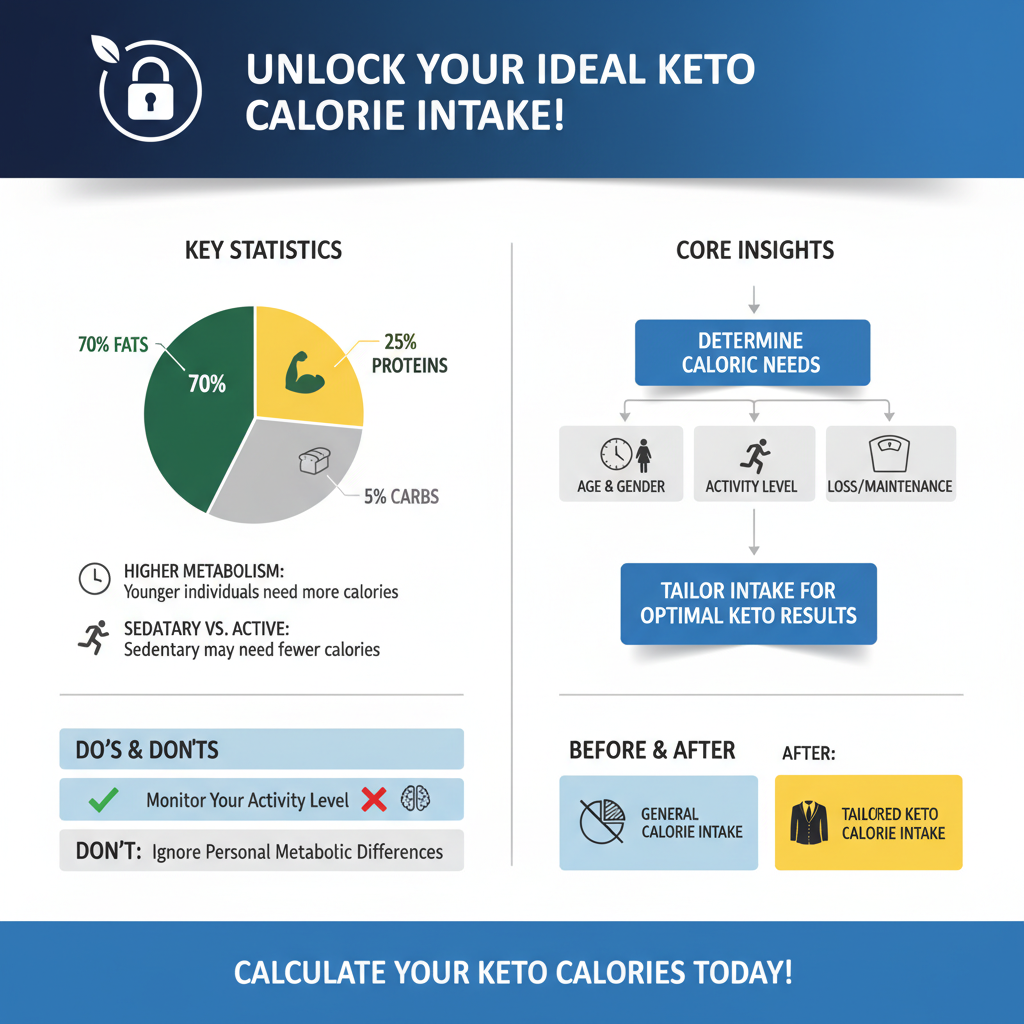

Several factors significantly influence your daily caloric needs while following a ketogenic diet. Age and gender play a foundational role; generally, younger individuals and men tend to have higher metabolic rates, necessitating increased caloric intake. For instance, a 25-year-old male athlete may require significantly more calories than a 50-year-old sedentary woman.
Additionally, your metabolic rate—how efficiently your body converts food into energy—affects caloric requirements. Metabolic rates can vary widely among individuals due to genetics, hormone levels, and other physiological factors.
Your activity level also greatly impacts your caloric needs. More active individuals, such as those who engage in regular exercise or manual labor, require additional calories to sustain their energy expenditure. Conversely, those with a sedentary lifestyle may need to consume fewer calories to maintain their weight. Understanding these factors is crucial for tailoring your caloric intake to align with your lifestyle and goals.
Calculating Your Caloric Needs
To determine your ideal caloric intake on a keto diet, you can use the Mifflin-St Jeor equation, a well-recognized formula for estimating daily caloric needs based on basal metabolic rate (BMR). The equation differs for men and women:
– For men: BMR = 10 × weight (kg) + 6.25 × height (cm) – 5 × age (y) + 5
– For women: BMR = 10 × weight (kg) + 6.25 × height (cm) – 5 × age (y) – 161
Once you calculate your BMR, multiply it by an activity factor to determine your total daily energy expenditure (TDEE). The activity factors range from sedentary (BMR × 1.2) to very active (BMR × 1.725).
Depending on your goals—whether you wish to lose, maintain, or gain weight—you can adjust your calorie count accordingly. For weight loss, a common strategy involves creating a caloric deficit of 500 to 1,000 calories per day, leading to an approximate weight loss of 1 to 2 pounds per week. Conversely, if your aim is to gain muscle mass, you might add an additional 250 to 500 calories to your daily intake.
Macronutrient Breakdown
On a ketogenic diet, it is not only the total calorie count that matters but also how those calories are distributed among macronutrients. The typical macronutrient ratio you should aim for is around 70% fats, 25% proteins, and 5% carbohydrates. This distribution is critical for maintaining ketosis and ensuring that your body uses fat as its primary fuel source.
For instance, if you are consuming 1,800 calories per day, your macronutrient breakdown would look like this:
– Fats: 70% of 1,800 = 1,260 calories (or approximately 140 grams of fat, since fat contains 9 calories per gram)
– Proteins: 25% of 1,800 = 450 calories (or about 113 grams of protein, since protein contains 4 calories per gram)
– Carbohydrates: 5% of 1,800 = 90 calories (or about 22 grams of carbohydrates, since carbs also contain 4 calories per gram)
Understanding how to accurately distribute your calories among these macronutrients is essential for achieving and maintaining ketosis. Tools like food diaries or apps can help you track macronutrient intake and ensure you’re meeting these targets.
Monitoring Progress and Adjusting Calories
Regularly monitoring your progress is vital for long-term success on the keto diet. Tracking your weight and body measurements, such as waist circumference, can provide valuable insights into your progress. If you find that you are not losing weight as expected, it may be necessary to adjust your caloric intake or macronutrient distribution.
For example, if you’ve been on a plateau for several weeks, consider decreasing your calorie intake slightly or reassessing your activity levels. Alternatively, if you are losing weight too quickly or feeling fatigued, you might need to increase your caloric intake or adjust your macronutrient ratios to ensure you are nourishing your body adequately.
Common Mistakes to Avoid
When embarking on a ketogenic diet, it’s easy to fall into certain traps that can hinder your success. One common mistake is overlooking the importance of calorie quality over quantity. While it’s essential to meet your caloric goals, the sources of those calories are equally important. Relying heavily on processed or unhealthy fats can lead to nutrient deficiencies and negatively impact your overall health.
Another pitfall is neglecting to account for hidden carbs in processed foods or condiments. Many seemingly keto-friendly products can contain added sugars or starches that can disrupt ketosis. It’s vital to read labels carefully and opt for whole, unprocessed foods whenever possible.
Tips for Staying on Track
To remain consistent with your caloric and macronutrient goals on a keto diet, meal planning is crucial. By preparing meals in advance, you can ensure that you are meeting your caloric and macronutrient targets without resorting to on-the-spot decisions that may lead to suboptimal choices.
Utilizing apps or food diaries can significantly aid in tracking your intake, allowing you to stay within your limits. These tools can provide insights into your eating habits and help you identify areas for improvement. Additionally, consider incorporating variety into your meals to prevent boredom and maintain motivation.
Maintaining the right caloric intake is key to achieving success on a keto diet. By understanding your individual needs and making necessary adjustments, you can effectively reach your health goals. Consider tracking your progress, staying committed to meal planning, and being mindful of the quality of your food choices for the best results.
Frequently Asked Questions
How many calories should I eat on a ketogenic diet?
The number of calories you should consume on a ketogenic diet varies depending on factors such as your age, gender, weight, activity level, and weight loss goals. Generally, for weight loss, a common recommendation is to reduce your daily caloric intake by 500-1000 calories from your maintenance level. This often results in a calorie range of about 1,500 to 2,000 calories per day for most adults, but it’s essential to calculate your specific needs using a calorie calculator tailored for keto.
What is the ideal macronutrient ratio for keto calories?
On a ketogenic diet, the ideal macronutrient ratio typically consists of around 70-75% of calories from fat, 20-25% from protein, and only about 5-10% from carbohydrates. This ratio helps your body enter a state of ketosis, where it burns fat for fuel instead of carbs. To calculate this, you can multiply your total daily calorie intake by the percentage of each macronutrient to find out how many grams of fat, protein, and carbs you should aim for daily.
Why do I need to monitor my calorie intake on a keto diet?
Monitoring your calorie intake on a keto diet is crucial for achieving weight loss and maintaining ketosis. While the keto diet focuses on low carbohydrate intake, consuming excess calories from fats and proteins can still hinder weight loss progress. By tracking your calories, you can ensure that you’re in a calorie deficit, allowing your body to effectively burn fat while still meeting your nutritional needs.
How can I calculate my daily calorie needs for a ketogenic diet?
To calculate your daily calorie needs for a ketogenic diet, you can use the Mifflin-St Jeor formula, which takes into account your basal metabolic rate (BMR) and activity level. First, calculate your BMR based on your age, gender, height, and weight, then multiply that number by an activity factor (e.g., sedentary, moderately active, or very active). This will give you your total daily energy expenditure (TDEE), from which you can adjust for weight loss by creating a calorie deficit.
What are the best foods to include in my daily calorie intake on keto?
The best foods to include in your daily calorie intake on a ketogenic diet are high-fat, low-carb options such as avocados, nuts and seeds, olive oil, fatty fish, and low-carb vegetables like spinach and broccoli. Additionally, high-quality proteins like eggs, grass-fed beef, and poultry are excellent choices. By focusing on whole, nutrient-dense foods, you can meet your calorie goals while ensuring you get the essential nutrients needed to support your overall health on keto.
References
- https://www.healthline.com/nutrition/how-many-calories-on-keto
- https://www.ncbi.nlm.nih.gov/pmc/articles/PMC7020550/
- https://www.cdc.gov/healthyweight/calories/index.html
- Ketogenic.com | Start, Succeed & Sustain a Keto Diet
- https://www.webmd.com/diet/obesity/what-is-ketogenic-diet
- https://www.mayoclinic.org/healthy-lifestyle/nutrition-and-healthy-eating/expert-answers/keto-diet/faq-20463667
- https://www.nutrition.gov/topics/nutrition-education/healthy-eating
- https://www.journalofcurrentclinicalcare.com/articles/understanding-the-ketogenic-diet-and-its-application-in-weight-loss