

The ideal duration for following a keto diet varies from person to person, but many experts suggest a commitment of at least 3 to 6 months to see significant benefits. This timeframe is often necessary to achieve the metabolic changes associated with ketosis and to experience improvements in health markers such as weight loss, energy levels, and blood sugar regulation. However, the length of time one should adhere to a keto diet ultimately depends on individual health goals, metabolic responses, and the diet’s sustainability within one’s lifestyle.
Understanding the Keto Diet

The keto diet, short for ketogenic diet, is a high-fat, low-carbohydrate eating plan designed to induce a metabolic state known as ketosis. In ketosis, the body becomes remarkably efficient at burning fat for energy instead of relying on carbohydrates. This shift can lead to weight loss, improved mental clarity, and enhanced energy levels.
Key foods in a keto diet include fatty cuts of meat, full-fat dairy products, nuts, seeds, and a variety of low-carbohydrate vegetables like leafy greens and cruciferous vegetables. In contrast, foods high in carbohydrates, such as sugary snacks, grains, and starchy vegetables, are to be avoided. Research has shown that the keto diet may be beneficial for certain health conditions, including epilepsy, type 2 diabetes, and metabolic syndrome, making it a popular choice for those looking to improve their health.
Factors Influencing Duration
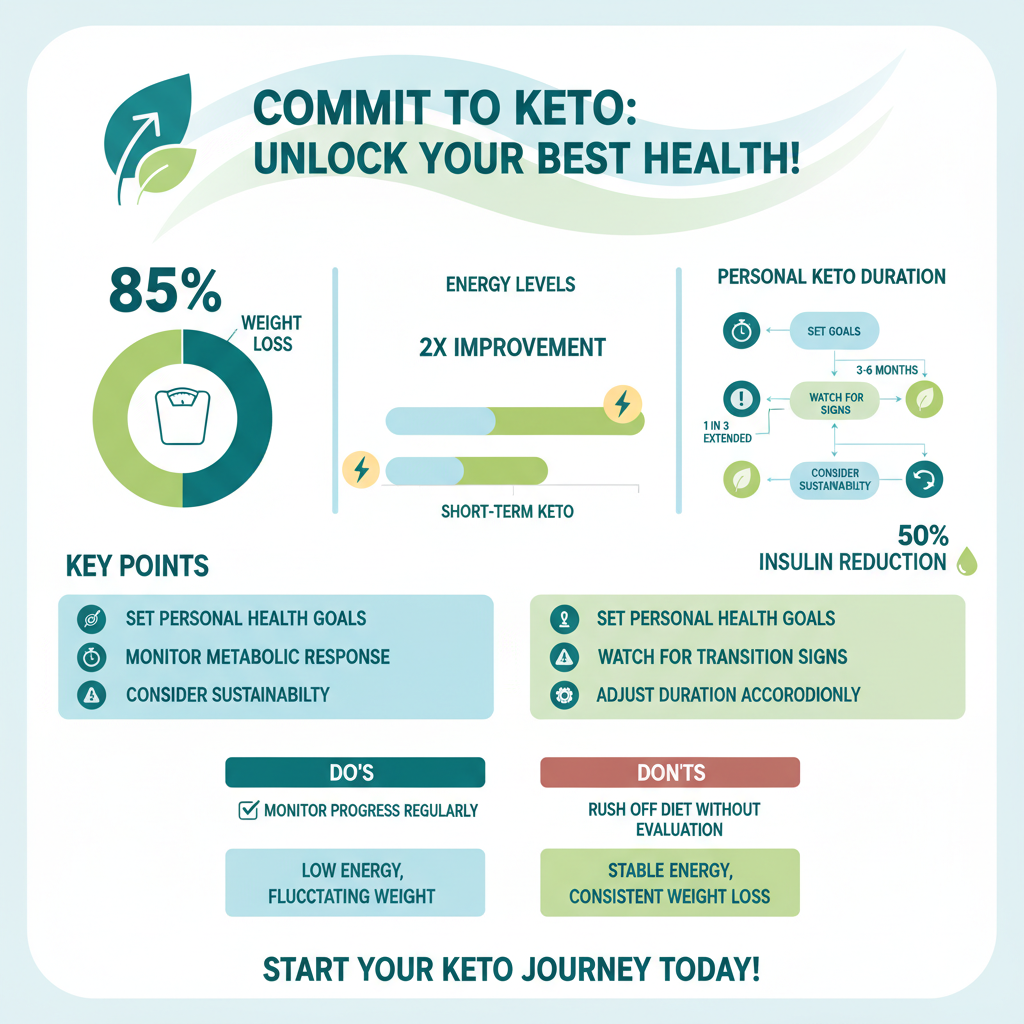

Several factors will influence how long an individual should remain on a keto diet. First and foremost are personal health goals. For individuals aiming for significant weight loss, a longer duration on the diet may be necessary to reach and maintain their desired weight. Conversely, those seeking to improve their energy levels might find they can transition off the diet sooner, once their energy stabilizes.
Another crucial factor is metabolic response. Each person’s body reacts differently to dietary changes, particularly when it comes to carbohydrate restriction. Some may experience rapid weight loss and health improvements, while others may take longer to see results. For instance, a 2020 study published in the Journal of Nutrition found that individuals with higher insulin resistance may struggle more on a strict keto diet, suggesting they may need to remain on the diet longer to see significant benefits.
Signs It’s Time to Transition
As you follow a keto diet, it is crucial to monitor your body and recognize signs that it may be time to transition. Fatigue, digestive issues, or a lack of progress in weight loss or health markers can indicate that your body is no longer responding positively to the keto diet. For example, if you find yourself frequently feeling lethargic or experiencing gastrointestinal discomfort, these may be signs that your body needs a dietary adjustment.
Furthermore, a plateau in weight loss or health improvements may signal that your metabolism has adapted to a low-carb intake, and it might be beneficial to reintroduce some carbohydrates or explore other dietary options. Listening to your body and tracking your progress can help you determine the optimal time to adjust your dietary approach.
Long-term Sustainability
One of the most critical aspects of any diet is sustainability. A diet that is not maintainable in the long term can lead to yo-yo dieting and frustration. When considering how long to follow a keto diet, reflect on how well it fits into your lifestyle and whether you can envision adhering to it for an extended period.
For many, a cyclical or targeted keto approach may provide a more sustainable option. This method allows individuals to alternate between periods of strict ketogenic eating and days where they consume higher amounts of carbohydrates. This flexibility can help combat feelings of deprivation and make the diet easier to stick to in the long run.
Potential Health Risks
While the keto diet can offer numerous benefits, it is essential to be aware of potential health risks associated with extended adherence to a strict keto plan. One significant concern is the risk of nutrient deficiencies, as the diet restricts several food groups that provide essential vitamins and minerals. For example, fruits and whole grains are typically limited, which can result in inadequate intake of dietary fiber, vitamins C and B, and various phytonutrients.
To mitigate these risks, it is advisable to consult with a healthcare professional or registered dietitian who can help ensure that your nutritional needs are met while following a keto diet. They may recommend supplements or specific food choices to help address potential deficiencies.
Alternatives to a Strict Keto Diet
For those who find the strict limitations of a keto diet unsustainable, there are several alternative dietary approaches that may align better with personal preferences and lifestyle. A balanced low-carb diet can provide the benefits of reduced carbohydrate intake without the rigidity of keto. This approach typically allows for more flexibility in food choices while still emphasizing whole, unprocessed foods.
Another alternative is the Mediterranean diet, which focuses on healthy fats, lean proteins, whole grains, and a variety of fruits and vegetables. This diet has been associated with numerous health benefits, including improved heart health and weight management, and may be a more balanced option for long-term adherence.
Gradually reintroducing carbohydrates while focusing on whole, unprocessed foods can offer a balanced approach that promotes health without the restrictions of a strict keto diet.
Monitoring Progress and Adjustments
Regularly assessing your progress toward your health goals is vital for ensuring that your dietary choices are effective and beneficial. Keep track of not only your weight but also how you feel both physically and mentally. This reflection can provide valuable insight into whether to continue on the keto path or consider adjustments.
For example, if you find that your energy levels have stabilized, and you are meeting your health goals, you may choose to maintain your current approach. However, if you notice a decline in well-being or a stall in progress, it may be time to consider dietary adjustments or explore alternative eating patterns.
Maintaining a keto diet can be beneficial, but finding the right duration and approach for you is essential. It’s important to listen to your body and consult with healthcare professionals when making significant dietary changes. For personalized guidance, consider seeking advice from a registered dietitian or nutrition expert. This way, you can ensure that your dietary choices align with your health goals, lifestyle, and overall well-being.
Frequently Asked Questions
How long should you follow a keto diet to see results?
The duration for which you should follow a keto diet to see results can vary significantly from person to person. Many individuals start to notice weight loss and other health benefits within the first 2 to 4 weeks of adhering to a strict ketogenic regimen. However, for sustained results, many experts recommend maintaining the diet for at least 3 to 6 months, depending on your personal goals and health conditions.
What are the signs that I should stop the keto diet?
You should consider stopping the keto diet if you experience adverse effects such as persistent fatigue, digestive issues, or nutrient deficiencies. Additionally, if you find that you’re feeling deprived or if the diet negatively impacts your mental health or social life, it may be time to reassess your approach. Consulting with a healthcare professional can help determine if it’s time to transition off the diet or adjust your ketogenic plan.
Why do some people only stay on the keto diet for a short period?
Many individuals may only stay on the keto diet for a short period due to the restrictive nature of the diet, which can lead to feelings of deprivation or social isolation during meals. Additionally, some people may not see the results they expect quickly enough, leading to frustration and discontinuation. Others might experience side effects like the “keto flu,” which can discourage them from continuing.
What is the best way to transition off the keto diet?
The best way to transition off the keto diet is to gradually reintroduce carbohydrates into your meals rather than making abrupt changes. Start by adding healthy, whole-food sources of carbohydrates, such as fruits, vegetables, and whole grains, while monitoring how your body responds. This slow reintroduction helps prevent unwanted weight gain and allows your metabolism to adjust without overwhelming your system.
Which factors should I consider when determining how long to stay on the keto diet?
When determining how long to stay on the keto diet, consider factors such as your personal health goals, metabolic response, and lifestyle preferences. It’s essential to evaluate how your body feels on the diet, monitor any weight changes, and assess any health issues. Additionally, consulting with a healthcare provider or nutritionist can provide personalized guidance based on your unique circumstances and help you make informed decisions about the duration of your keto journey.
References
- https://www.ncbi.nlm.nih.gov/pmc/articles/PMC7313090/
- https://www.healthline.com/nutrition/keto-diet-101
- https://www.webmd.com/diet/obesity/keto-diet
- https://www.nutrition.gov/topics/nutrition-101/dietary-patterns/keto-diet
- https://www.mayoclinic.org/healthy-lifestyle/nutrition-and-healthy-eating/in-depth/keto-diet/art-20460085
- https://www.cdc.gov/healthyweight/assessing/bmi/adult_bmi/index.html