To test your ketone levels, you can use blood ketone meters, urine strips, or breath analyzers. Blood meters offer the most accurate readings, while urine strips are convenient but may give misleading results over time. Breath analyzers provide real-time feedback but require proper calibration. Regular testing helps you adjust your diet for ideal ketosis. Each method has its pros and cons, so understanding them will enhance your keto journey and guide your dietary choices effectively.
Understanding Ketosis and Ketone Bodies
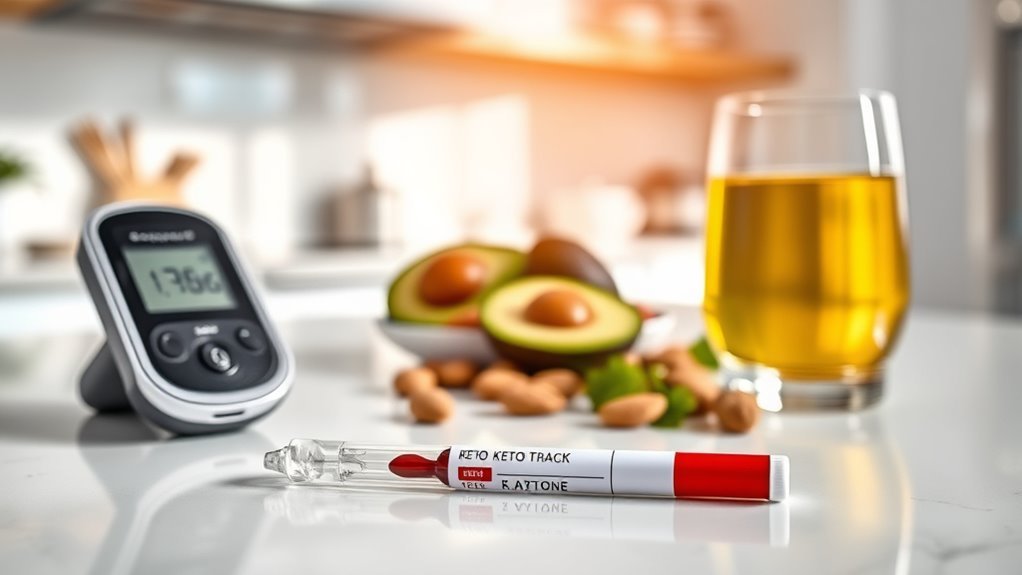
Understanding ketosis and ketone bodies is essential for anyone looking to test the ketogenic diet effectively. At its core, ketosis is a metabolic state where your body shifts from using glucose for energy to utilizing fat. This change occurs when carb intake is drastically reduced, prompting ketone production from fatty acids in your liver. These ketones serve as an alternative energy source, fueling your brain and muscles. To grasp ketosis basics, recognize that achieving and maintaining this state can enhance fat loss and improve mental clarity. By understanding how your body produces and uses ketones, you empower yourself to make informed choices on your keto journey, embracing the freedom and flexibility this lifestyle offers.
Different Methods for Testing Ketone Levels
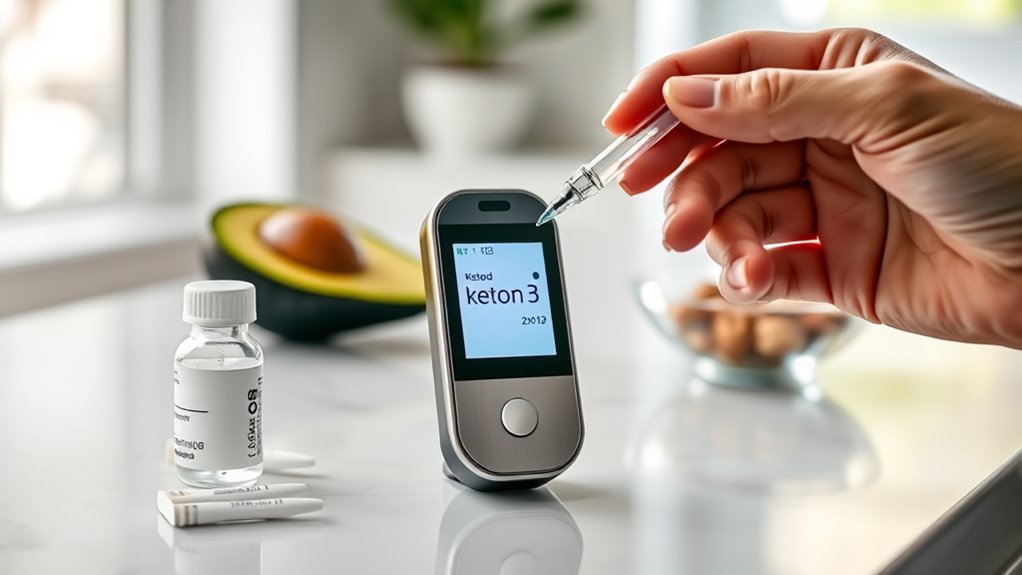
While knowing how to test your ketone levels is essential for tracking your progress on the ketogenic diet, it’s important to understand the different methods available. You can measure ketone production through urine, breath, or blood tests. Urine strips are the most accessible and affordable, showing ketones excreted due to dietary impact. Breath analyzers measure acetone, a type of ketone, providing a non-invasive option. Blood ketone meters, while pricier, offer the most accurate readings of your current ketosis state. Each method has its pros and cons, so consider your budget and lifestyle. Remember, regular testing can help you adjust your diet for maximum ketone production, ensuring you stay in ketosis and enjoy the freedom of effective fat burning.
Blood Ketone Meters: Accuracy and Usage
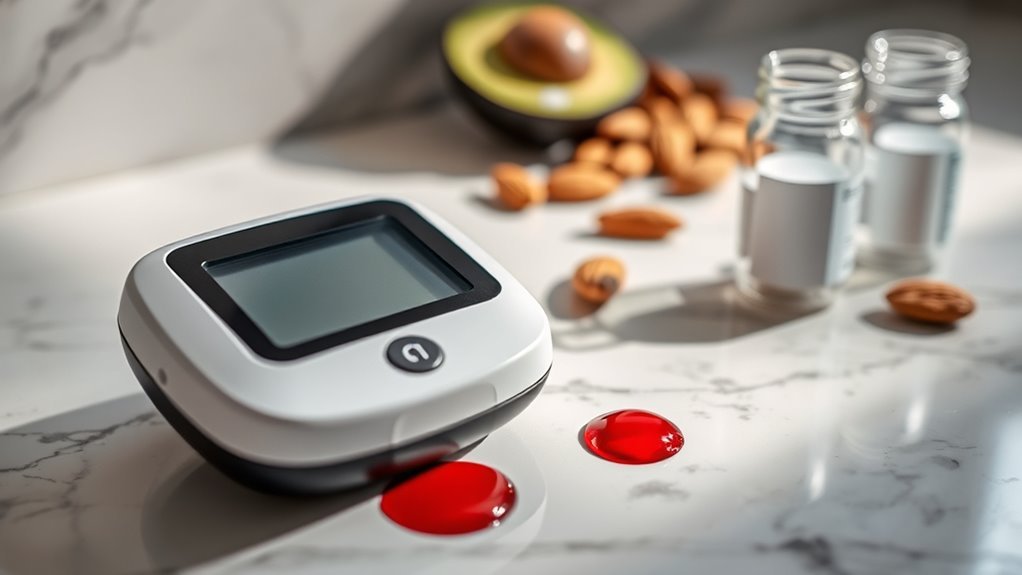
When it comes to tracking your ketone levels, blood ketone meters are a reliable option. You’ll want to understand the different types available, how often to test, and how to interpret the results effectively. Knowing these details can help you optimize your keto journey and guarantee you’re in the desired state of ketosis.
Meter Types Explained
As you commence on your keto journey, it is crucial to choose the right meter to measure your ketone levels accurately. Blood ketone meters are popular due to their precision and reliability. When making a meter comparison, consider factors like ease of use, cost, and the availability of test strips. Some meters are more user-friendly, while others may have a higher upfront cost but offer longer-term savings. Testing frequency will also influence your choice; if you’re checking your levels multiple times a day, a more efficient meter could save you time and hassle. Ultimately, selecting a meter that fits your lifestyle will empower you to track your progress and make informed adjustments to your keto journey.
Testing Frequency Guidelines
Choosing the right blood ketone meter sets the stage for effective monitoring, but knowing how often to test is just as important. Testing frequency can vary based on your goals and how your body responds to the ketogenic diet. For those new to keto, testing daily or even multiple times a day can help you understand your body’s adaptation. Once you’re more familiar with your ketone levels, you might find that testing a few times a week at ideal intervals suits your lifestyle. Remember, it’s not just about numbers; it’s about feeling confident in your choices. Tailor your testing routine to your needs, giving you the freedom to enjoy your keto journey while staying on track.
Interpreting Ketone Levels
Understanding how to interpret ketone levels is essential for effectively managing your ketogenic diet. Blood ketone meters offer an accurate way to measure your ketone levels, which can guide your dietary adjustments. Here’s a quick reference table to help you interpret your results:
| Ketone Level (mmol/L) | Interpretation | Action Required |
|---|---|---|
| 0.0 – 0.5 | Low | Adjust carb intake |
| 0.6 – 1.5 | Ideal | Maintain current diet |
| 1.6 – 3.0 | High | Consider protein intake |
| 3.1 – 5.0 | Very High | Reduce fat intake |
| >5.0 | Dangerously High | Seek medical advice |
Urine Ketone Strips: Pros and Cons
While many people turn to urine ketone strips as a quick way to check their ketone levels, it’s essential to weigh the pros and cons before relying on them. One of the urine strip benefits is their convenience; they’re easy to use and provide immediate results. This can be great for tracking your progress on a keto diet. However, urine strip limitations exist as well. They only measure acetoacetate, not beta-hydroxybutyrate, which is the primary ketone in your blood. As your body adapts to ketosis, urine ketone levels can fluctuate, potentially leading to misleading results. So, while these strips can be useful, they shouldn’t be your sole method for monitoring ketone levels on your keto journey.
Breath Ketone Analyzers: How They Work
Breath ketone analyzers measure acetone levels in your breath, offering a non-invasive way to track ketosis. It is crucial to understand the importance of device calibration for accurate readings, as even slight variations can affect results. By considering factors like accuracy and reliability, you’ll be better equipped to use these devices effectively in your keto journey.
Measuring Acetone Levels
If you want to effectively monitor your ketone levels, using a breath ketone analyzer can be an excellent choice. These devices measure acetone levels, a byproduct of fat metabolism, giving you insight into your body’s ketone production. Unlike blood tests, which require pricking your finger, breath analyzers provide a non-invasive way to track your progress. They work by utilizing specific sensors that detect acetone molecules in your breath, offering real-time feedback on your state of ketosis. By regularly measuring acetone production, you can adjust your diet and lifestyle to maintain or deepen your ketosis. Embracing these measuring techniques empowers you to take control of your keto journey with confidence and freedom.
Device Calibration Importance
To guarantee accurate readings from your breath ketone analyzer, regular calibration is essential. This process guarantees that the device maintains its precision over time, providing reliable results for your keto journey. Neglecting device maintenance can lead to inaccurate readings, impacting your ability to track ketosis effectively.
Calibration techniques typically involve using a known standard or reference gas to adjust your analyzer’s sensitivity. Many devices come with instructions for this process, so following them closely will help you maintain accuracy. Consider scheduling regular checks based on your usage frequency—monthly or quarterly might be ideal. By prioritizing calibration, you’re taking control of your health and making informed dietary decisions on your keto path.
Accuracy and Reliability Factors
Understanding accuracy and reliability in breath ketone analyzers is essential for anyone serious about tracking their ketosis. These devices measure acetone levels in your breath, reflecting your body’s ketone production. However, testing precision can vary, leading to reliability concerns.
Consider these factors when choosing a breath analyzer:
- Calibration: Verify the device is regularly calibrated for accurate readings.
- Environmental Factors: External conditions can affect results; be consistent in your testing environment.
- User Technique: Proper usage is critical; follow instructions closely for best results.
- Device Quality: Invest in a reputable brand known for reliability and accuracy.
Interpreting Your Ketone Levels and Adjusting Your Diet
Monitoring your ketone levels is essential for optimizing your ketogenic diet and ensuring you’re in a state of ketosis. When your readings indicate lower ketone levels, it might be time for some dietary adjustments. Consider increasing your healthy fat intake or lowering your carb consumption to boost those levels. Nutrient timing also plays a significant role; consuming fats around your workout can enhance ketone production. If you’re consistently above your target range, you might need to evaluate your protein intake, as too much can kick you out of ketosis. By interpreting these levels accurately, you can enjoy the freedom of a flexible diet while staying aligned with your health goals. Adjusting based on your ketone readings empowers you to take control of your ketogenic journey.
Frequently Asked Questions about Testing Keto
1. How can I test if I am in ketosis?
You can test for ketosis using several methods:
- Blood Ketone Meters: These devices measure the level of ketones in your blood, providing an accurate reflection of your ketosis state.
- Urine Strips: Ketone test strips can be used to detect acetoacetate in your urine, though they may not be as reliable over time.
- Breath Analyzers: These devices measure acetone in your breath, giving an indication of your ketone levels.
Generally, blood ketone levels of 0.5-3.0 mmol/L indicate a state of nutritional ketosis.
2. What is the best time to test for ketosis?
The best time to test for ketosis is in the morning, right after you wake up. This is when your body has been fasting overnight, and your ketone levels are likely to be the most stable. Testing after a workout can also yield accurate results, as exercising can help increase ketone production.
3. How often should I test for ketosis?
How often you test for ketosis depends on your personal goals and level of experience with the ketogenic diet. Beginners may want to test daily or a few times a week to monitor their transition into ketosis. Once you feel comfortable and have a better understanding of your body’s response, you may choose to test less frequently, perhaps once a week or biweekly.
4. What factors can affect my ketone levels?
Several factors can influence your ketone levels, including:
- Diet Choices: The types and amounts of foods you consume directly affect your ketone production.
- Exercise: Physical activity can enhance ketone production, especially high-intensity workouts.
- Hydration: Dehydration can concentrate ketones in the blood, potentially skewing test results.
- Fasting: Longer periods of fasting can boost ketone levels significantly.
Monitoring these factors can help you understand and optimize your ketosis experience.
5. Are there any symptoms that indicate I am in ketosis?
Yes, there are several common symptoms that may indicate you are in ketosis:
- Increased Energy: Many people report having more energy once they are fully adapted to ketosis.
- Improved Mental Clarity: Some find that they experience less brain fog and improved focus.
- Bad Breath: A fruity smell in your breath can be a sign of elevated acetone levels.
- Reduced Appetite: Ketosis often leads to a natural reduction in hunger.
However, individual experiences may vary, and it’s important to rely on testing for precise confirmation.
References
- https://www.ncbi.nlm.nih.gov/pmc/articles/PMC7073374/
- https://www.healthline.com/nutrition/keto-diet-101
- https://www.diabetes.org/healthy-living/recipes-nutrition/nutrition-basics/keto-diet
- https://www.nutrition.gov/topics/nutrition-and-health-education/keto-diet
- https://www.cdc.gov/healthyweight/assessing/bmi/adult_bmi/english_bmi_calculator/bmi_calculator.html
- https://www.webmd.com/diet/ss/slideshow-ketogenic-diet
- https://www.mayoclinic.org/healthy-lifestyle/nutrition-and-healthy-eating/expert-answers/keto-diet/faq-20460160
- https://www.jamanetwork.com/journals/jama/fullarticle/2761199