
Truvia is indeed keto-friendly, as it contains zero calories and low net carbs, making it suitable for your low-carb diet. It’s made from natural sweeteners like steviol glycosides and erythritol, which don’t spike blood sugar levels. This helps maintain ketosis while allowing you to enjoy sweetness in your meals. Just keep an eye on your body’s response, as some may experience digestive issues. Discover more about using Truvia in your keto recipes and its health effects.
Understanding Truvia: What Is It Made Of?
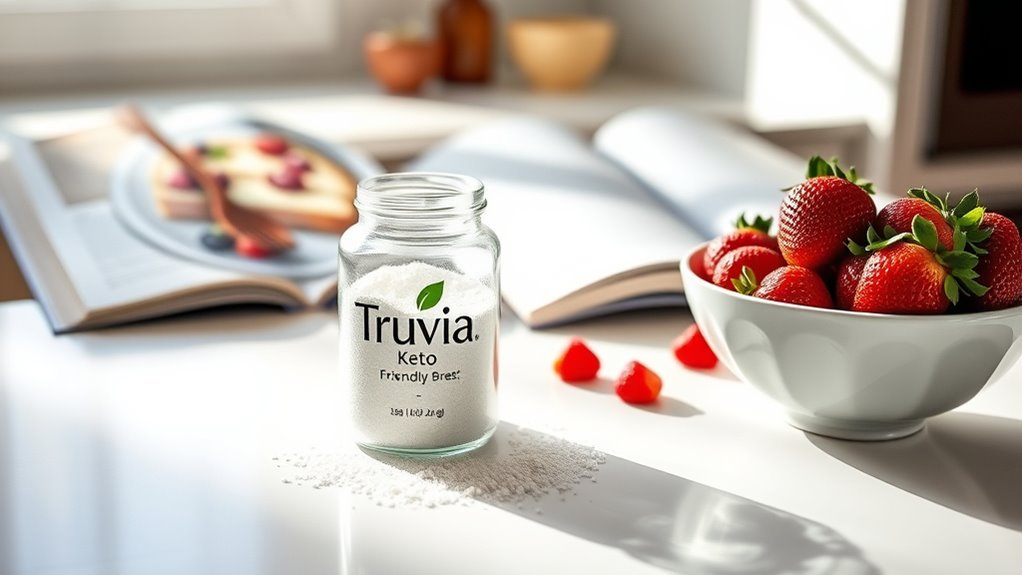
Truvia, a popular sugar substitute, is primarily made from steviol glycosides, which are derived from the leaves of the Stevia rebaudiana plant. These glycosides are combined with erythritol, a sugar alcohol that contributes to Truvia’s sweet taste while providing minimal calories. When you consider Truvia ingredients, you’ll notice it contains no artificial flavors or preservatives, making it an appealing choice for those seeking natural options. With regard to Truvia nutrition, it has zero calories and a low glycemic index, meaning it won’t spike your blood sugar. This can be particularly liberating for individuals looking to reduce sugar intake without sacrificing sweetness. Overall, Truvia offers a balanced alternative for those mindful of their dietary choices.
The Role of Sweeteners in a Ketogenic Diet
When following a ketogenic diet, understanding the role of sweeteners becomes essential, especially if you’re aiming to satisfy your sweet tooth without derailing your carb intake. Sweetener choices can help you maintain your ketogenic lifestyle while enjoying your favorite treats. Here are some popular options:
- Stevia: A natural sweetener with zero carbs and calories, perfect for keto.
- Erythritol: A sugar alcohol that mimics sugar’s taste without the carbs.
- Monk Fruit: Another natural alternative that offers sweetness without impacting blood sugar. Additionally, many of these alternatives provide low glycemic index options, making them suitable for those committed to maintaining ketosis.
Truvia’s Glycemic Index and Blood Sugar Impact
Understanding the glycemic index (GI) of sweeteners like Truvia is important when considering their effects on blood sugar levels, especially for those on a ketogenic diet. Truvia has a GI of zero, meaning it doesn’t spike your blood sugar like traditional sugars do. This makes it a great option if you’re aiming to maintain steady energy levels and avoid cravings. With its natural sweetness derived from stevia, Truvia offers a satisfying taste profile that many find appealing. Additionally, the Truvia health benefits include being low in calories and carbs, which aligns well with keto principles. By choosing Truvia, you’re allowing yourself to enjoy sweetness without compromising your dietary goals or experiencing unwanted blood sugar fluctuations. Furthermore, incorporating ketosis as a metabolic state into your dietary strategy can further enhance the benefits of using low-GI sweeteners like Truvia.
Net Carbs in Truvia: What You Need to Know
When you’re considering Truvia for your keto diet, understanding its net carb content is essential. Truvia contains sugar alcohols, which can affect your overall carb intake and potentially your state of ketosis. Let’s break down how these components interact and what it means for your low-carb lifestyle.
Carb Content Overview
While many people following a keto diet are concerned about carbohydrate intake, Truvia offers an appealing option due to its low net carb content. With only 1 gram of net carbs per serving, you can enjoy sweetness without sacrificing your dietary goals.
Here are some key points to reflect on:
- Low-Calorie Sweetness: Truvia provides a sweet taste with minimal calories.
- Natural Ingredients: Made from stevia, it’s a natural Truvia substitute for those seeking alternatives.
- Truvia Safety: Research indicates it’s safe for most people, making it a reliable choice. Additionally, it has a zero glycemic impact, making it suitable for stable blood sugar management.
Sugar Alcohols Explained
If you’re exploring the keto landscape, it’s vital to grasp the role of sugar alcohols in products like Truvia. Sugar alcohols, such as erythritol, can provide sweetness without greatly impacting your carbohydrate intake. One of the primary sugar alcohols benefits is their low-calorie count, making them appealing for those watching their weight. However, it’s important to be aware of sugar alcohols downsides as well. Some people may experience digestive issues, like bloating or gas, especially when consumed in larger quantities. Additionally, while they don’t spike blood sugar levels like regular sugars, they still contribute to overall carb counts. Understanding both sides will empower you to make informed choices on your keto journey. Moreover, being mindful of fat sources can help mitigate negative effects associated with sugar alcohols and support a balanced diet.
Impact on Ketosis
Understanding sugar alcohols like erythritol is only part of the equation when considering products like Truvia on a keto diet. While Truvia offers some benefits, it’s essential to weigh its drawbacks, especially when tracking net carbs.
- Low-calorie sweetness without raising blood sugar levels
- Versatile use in baking and beverages
- Potential digestive discomfort for some individuals
For a successful keto lifestyle, you should consider your sweetener choices carefully. Truvia’s net carbs are minimal, making it a popular option, but it may not suit everyone. Balancing Truvia benefits against potential drawbacks can help you enjoy your favorite flavors without compromising your goals. Ultimately, knowing how it impacts your ketosis will empower your journey toward freedom in your diet. Additionally, being aware of hidden carbs can aid in maintaining ketosis effectively.
Natural vs. Artificial Sweeteners: The Keto Perspective
When you’re on a keto diet, understanding the difference between natural and artificial sweeteners can be essential for maintaining ketosis. Natural sweeteners, like stevia, often have minimal impact on blood sugar levels, while some artificial options can cause spikes that may disrupt your state of ketosis. Evaluating how each type affects your body can help you make informed choices in your keto journey. Additionally, it’s important to consider the carbohydrate content of sweeteners, as high sugar levels can significantly impact ketosis.
Sweetener Types Comparison
While both natural and artificial sweeteners can fit into a keto diet, their effects on health and ketosis can vary significantly. Understanding the sweetener benefits and drawbacks is essential for making informed choices.
- Natural Sweeteners: Often derived from plants, these can offer antioxidants and fewer chemicals.
- Artificial Sweeteners: Usually calorie-free and intensely sweet, they might cause digestive issues for some.
- Health Considerations: Natural options tend to be less processed, while artificial ones might trigger cravings or insulin responses.
Additionally, it’s important to consider the carbohydrate content of sweeteners, as some may impact ketosis more than others. Ultimately, it’s about what aligns with your lifestyle. While you can enjoy both types, consider how each affects your body. Finding that balance empowers you to embrace a keto journey without sacrificing flavor or health.
Impact on Ketosis
Although natural and artificial sweeteners can both be included in a keto diet, their impact on ketosis can differ considerably. Truvia, a popular sweetener made from stevia and erythritol, offers a sweet taste without significant carbs, making it a favorable option for many. Its ingredients are low-calorie and unlikely to spike your insulin levels, helping you maintain ketosis. However, some individuals may experience digestive issues with erythritol, which could affect their overall experience on keto. The Truvia taste is often praised for resembling sugar, allowing you to enjoy sweets without derailing your diet. Ultimately, while Truvia can fit into your keto lifestyle, it’s crucial to monitor your body’s response to guarantee you stay in ketosis. Additionally, using sweeteners like Truvia helps to maintain stable blood sugar, which is essential for sustaining ketosis.
How to Use Truvia in Keto Recipes
Using Truvia in your keto recipes can be a game-changer, especially since it provides a sweet flavor without the carbs found in traditional sugars. When you’re crafting keto dessert recipes, it’s essential to know how to make effective Truvia substitutions. Here are a few ways to incorporate Truvia seamlessly:
- Baking: Replace sugar with Truvia in cakes and cookies for that perfect sweetness.
- Beverages: Stir it into your morning coffee or tea for a guilt-free treat.
- Sauces: Use Truvia in homemade sauces or dressings to add a touch of sweetness without the calories.
With these tips, you can enjoy delicious, low-carb treats while staying true to your keto lifestyle. Enjoy the freedom of sweetness without compromising your goals!
Potential Health Benefits and Risks of Truvia
As you explore the potential health benefits and risks of Truvia, it’s important to contemplate both sides of the equation. On one hand, Truvia can aid in diabetes management and weight loss, as it’s low-calorie and doesn’t spike blood sugar levels. Many enjoy its taste, which aligns with their preferences for sweetness without the calories. However, some individuals report digestive effects, particularly with long-term use, which raises questions about ingredient sourcing and consumer perception. Regulatory status of Truvia is generally positive, but it’s essential to examine nutritional labeling to understand its composition fully. Balancing these factors can help you make informed choices about incorporating Truvia into your diet while considering any potential health risks.
Alternatives to Truvia for a Keto-Friendly Sweetener
While Truvia is a popular choice for those following a keto diet, several alternatives can also provide sweetness without the carbs. Exploring these sugar substitutes can enhance your meals while keeping your carb count low.
Here are a few great low carb options:
- Stevia: A natural sweetener derived from the leaves of the stevia plant, offering zero calories and no carbs.
- Erythritol: This sugar alcohol has a similar taste to sugar but contains almost no calories and is low on the glycemic index.
- Monk Fruit: Made from monk fruit extract, it’s a natural sweetener that’s calorie-free and has minimal impact on blood sugar. Additionally, these options are preferred for maintaining ketosis as they do not raise blood sugar levels significantly.
Frequently Asked Questions
Can Truvia Cause Digestive Issues on a Ketogenic Diet?
Truvia can cause digestive issues for some people, especially when consumed in larger amounts. Since it contains erythritol, a sugar alcohol, it may lead to keto side effects like bloating and gas. If you’re sensitive to sugar alcohols, you might experience discomfort. It’s best to monitor your body’s reaction and adjust your intake accordingly. Balancing your diet can help you enjoy sweeteners like Truvia without unwanted digestive problems while staying on keto.
Is Truvia Suitable for People With Diabetes?
Yes, Truvia can be suitable for people with diabetes. It’s a zero-calorie sweetener that doesn’t greatly affect blood sugar levels, making it a popular choice for those managing diabetes. Studies suggest that it has a minimal insulin response, allowing you to enjoy sweetness without the usual glucose spikes. However, it’s always best to monitor your individual reactions and consult with a healthcare provider to guarantee it fits well within your dietary plan.
How Does Truvia Compare to Stevia in Taste?
When you compare Truvia to stevia, you’ll notice some differences in taste profile and flavor intensity. Truvia, which combines erythritol and stevia, has a milder sweetness with a subtle cooling effect, while pure stevia can have a more intense, sometimes bitter flavor. Many people prefer Truvia for its balanced sweetness, making it versatile for various recipes. Ultimately, your preference will depend on how you like your sweeteners to enhance your favorite dishes.
Can Truvia Be Used in Baking at High Temperatures?
Yes, you can use Truvia for baking at high temperatures. Truvia baking blend is designed to withstand heat, making it suitable for recipes that require baking at temperatures up to 400°F. However, it’s important to note that it might not provide the same texture as sugar in certain dishes. By experimenting with proportions, you can achieve delicious results while enjoying the freedom of low-calorie sweetness in your favorite baked goods.
Does Truvia Contain Any Allergens or Gluten?
Truvia is gluten-free and doesn’t contain common allergens like wheat, dairy, or nuts. However, if you’re sensitive to any specific ingredients, it’s always wise to check the label. The product primarily features erythritol, stevia leaf extract, and natural flavors, which are generally considered safe for most diets. If you have allergies or dietary restrictions, consulting with a healthcare professional is a smart move to guarantee it fits your needs.
References
- https://www.ncbi.nlm.nih.gov/pmc/articles/PMC6549204/
- https://www.health.harvard.edu/staying-healthy/are-artificial-sweeteners-safe
- https://www.usda.gov/media/blog/2020/05/26/what-keto-diet
- https://www.webmd.com/diet/features/keto-diet-what-to-know
- https://www.cdc.gov/healthyweight/healthy_eating/index.html
- https://www.ncbi.nlm.nih.gov/books/NBK547121/
- https://www.nhlbi.nih.gov/health-topics/healthy-eating
- https://www.eatright.org/health/wellness/preventing-illness/the-ketogenic-diet-and-weight-loss