
Yes, squash can be keto diet-friendly, especially low-carb varieties like zucchini and spaghetti squash. Zucchini has about 3 grams of carbs per cup, making it a great choice for maintaining ketosis. Spaghetti squash, with around 7 grams of carbs per cup, offers a low-carb pasta alternative. While winter squashes like butternut have higher carb counts, they can still be enjoyed in moderation. To learn more about which types of squash fit best in your keto meals, keep exploring!
Understanding the Keto Diet
When you plunge into the keto diet, you’ll find it’s primarily focused on drastically reducing carbohydrate intake while increasing fats, which puts your body into a state of ketosis. The keto principles emphasize that by consuming high dietary fats, your body becomes efficient at burning fat for energy instead of carbohydrates. This shift can lead to weight loss and improved mental clarity. However, it’s essential to choose healthy fats, like those from avocados, nuts, and olive oil, rather than processed options. As you begin this journey, keep in mind that balance is key; while fats are your friend, monitoring protein intake is equally important to maintain the desired state of ketosis and avoid potential pitfalls. Additionally, achieving metabolic adaptation is crucial for enhancing your body’s efficiency in utilizing fat.
Nutritional Overview of Squash
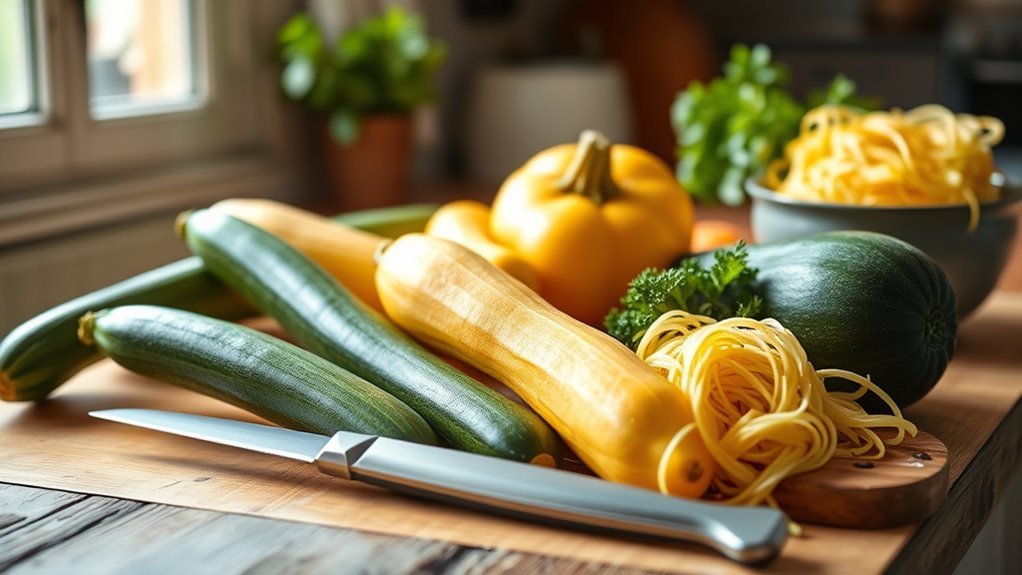
Understanding the nutritional profile of squash is vital for those contemplating its place in a keto diet. Squash offers various nutritional benefits, including vitamins A and C, potassium, and fiber, making it a healthy addition to your meals. Different squash varieties, like zucchini and butternut squash, provide unique nutrient profiles. For instance, zucchini is low in calories but high in water content, while butternut squash is rich in antioxidants. The fiber found in squash can promote digestive health, which is often a concern when following a low-carb diet. However, it’s important to evaluate the carb content of each variety to confirm they align with your keto goals. Balancing these factors can help you enjoy squash while staying on track.
Types of Squash and Their Carb Content
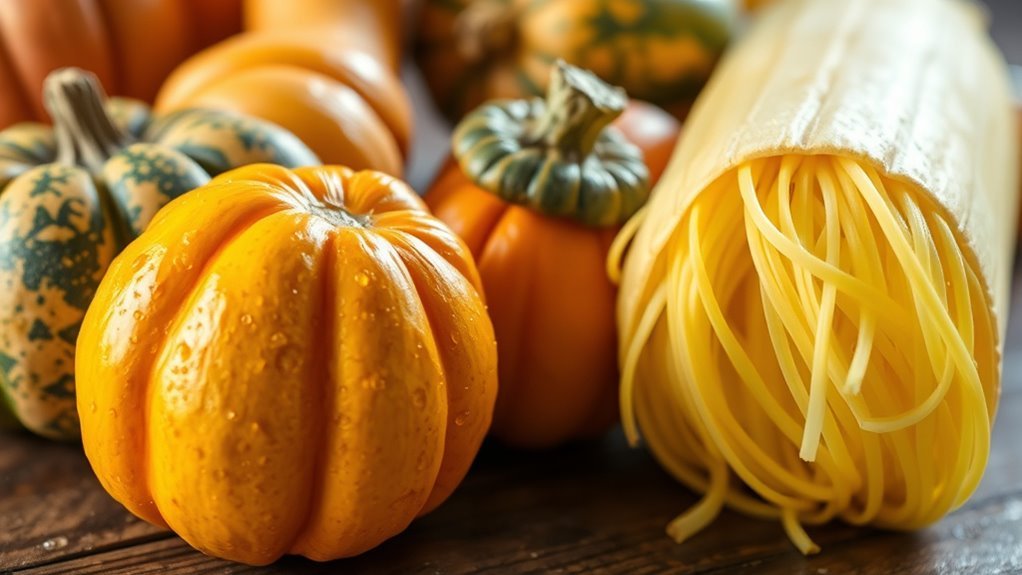
When considering squash on a keto diet, it’s essential to understand the different types and their carb content. You’ll find that summer squashes, like zucchini and yellow squash, generally have lower carb counts compared to winter squashes, such as butternut and acorn. By comparing these varieties, you can make informed choices that align with your dietary goals.
Summer Squash Varieties
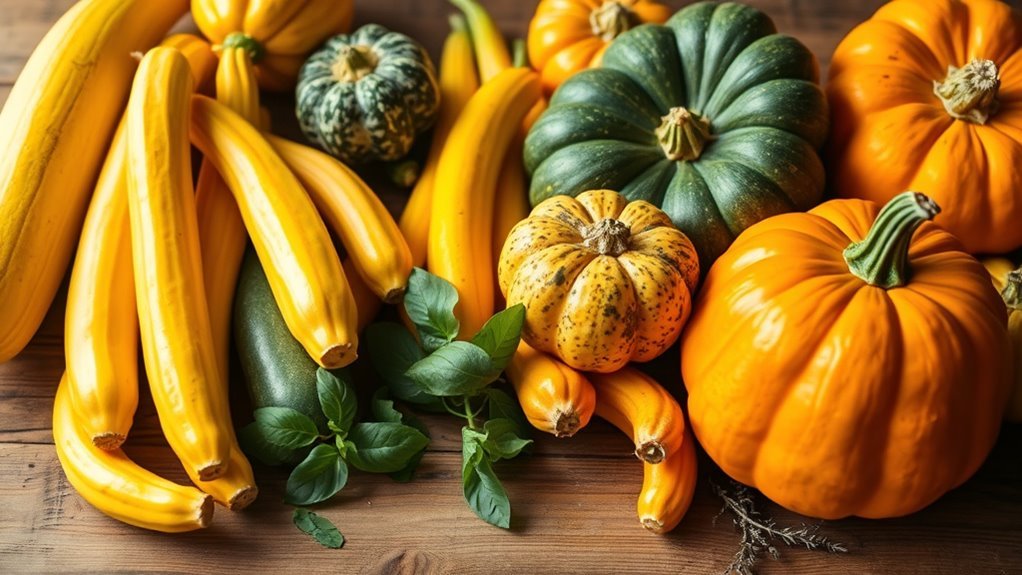
Summer squash comes in several popular varieties, each with its own unique flavor and nutritional profile. If you’re exploring keto-friendly options, consider these:
- Zucchini – Low in carbs, it’s perfect for making zucchini noodles as a pasta substitute.
- Yellow Squash – Slightly sweeter and versatile for a variety of summer recipes.
- Pattypan Squash – Unique shape, mild flavor, and low in carbohydrates, making it a fun addition to dishes.
- Cousa Squash – A Middle Eastern variety, it’s tender and great for grilling or roasting.
These summer squash varieties can fit nicely into your keto lifestyle, providing essential nutrients without the carb overload. Incorporating them can enhance your meals while keeping your carb count low, as they are low in carbohydrates and offer a range of vitamins and minerals. Enjoy experimenting with them in your favorite summer recipes!
Winter Squash Options
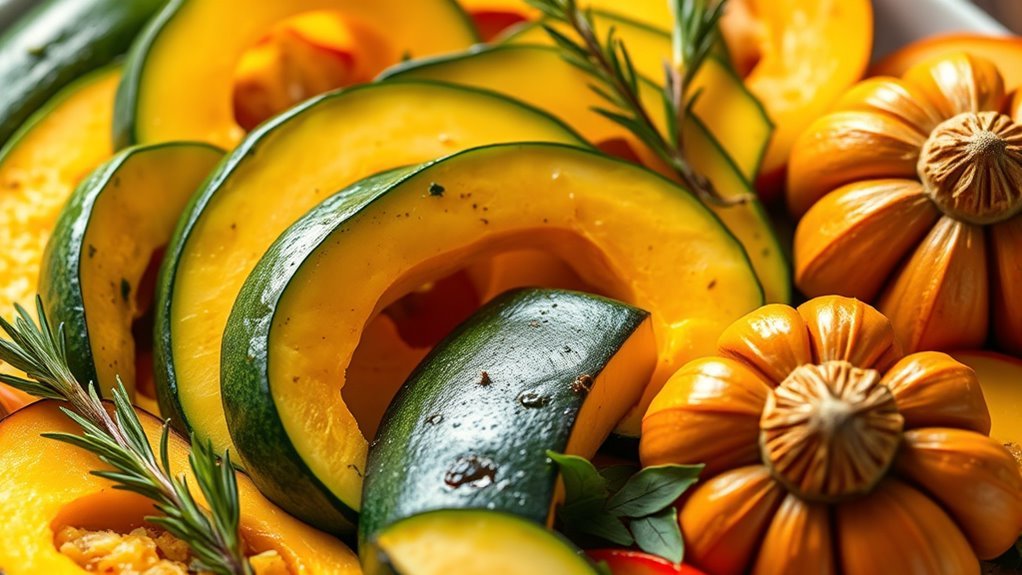
While summer squash varieties are great for a keto-friendly diet, winter squash presents a different challenge due to its higher carbohydrate content. When considering winter squash options, you’re looking at varieties like butternut, acorn, and spaghetti squash. These can add a rich, comforting flavor to your meals, but you’ll want to be mindful of portion sizes. If you’re keen on incorporating these winter squash varieties into your diet, try creating healthy winter recipes that balance your carb intake. Roasting butternut squash with herbs or making a spaghetti squash bake can offer delicious alternatives while keeping your keto goals in check. Embrace the seasonal bounty, but always stay aware of how these choices fit into your overall nutritional plan, especially considering that water chestnuts contain approximately 24 grams of carbohydrates per cup, which may impact strict ketogenic diet adherence.
Carb Counts Comparison
Understanding the carbohydrate content of different squash types is essential for maintaining a successful keto diet. Not all squash is created equal, especially when it comes to carb counts. Here’s a quick comparison based on typical serving sizes:
- Zucchini: About 3 grams of carbs per 1 cup, making it a keto favorite.
- Butternut Squash: Roughly 16 grams of carbs per 1 cup, higher but still manageable in moderation.
- Spaghetti Squash: Around 7 grams of carbs per 1 cup, a great low-carb pasta alternative.
- Acorn Squash: Approximately 15 grams of carbs per 1 cup, so watch your portions.
Comparing Squash Varieties: Which Are Keto-Friendly?
When it comes to choosing squash for a keto diet, which varieties should you prioritize? Not all squash varieties are created equal regarding keto compatibility. Zucchini and yellow squash are excellent choices, as they’re low in carbs, making them suitable for your keto meals. On the other hand, butternut and acorn squashes tend to be higher in carbohydrates, which can hinder your keto goals. If you’re looking for variety, spaghetti squash is also a decent option, offering a unique texture without excessive carbs. Always consider the carb counts and nutritional profiles of each type to make informed decisions. Embracing the right squash varieties can help you stay within your carb limits while enjoying delicious meals on your keto journey. Additionally, incorporating low-carb vegetables like cabbage can further enhance your meal options while adhering to keto principles.
Health Benefits of Squash on a Keto Diet
Incorporating squash into your keto diet can offer a range of health benefits, especially when you choose low-carb varieties. Here are some notable squash health benefits that align with keto diet advantages:
- Low in Carbs: Squash varieties like zucchini provide minimal carbohydrates, helping you maintain ketosis.
- Rich in Nutrients: Squash is packed with vitamins A and C, essential for immune function and skin health.
- High in Fiber: The fiber in squash aids digestion and promotes a feeling of fullness, which can help with weight management.
- Antioxidant Properties: Many squash types are rich in antioxidants, which combat oxidative stress and support overall health.
Tips for Incorporating Squash Into Keto Meals
When incorporating squash into your keto meals, it’s important to choose low-carb varieties like zucchini or spaghetti squash to keep your carb count in check. Pairing squash with healthy fats, such as olive oil or avocado, can enhance flavor while supporting your ketogenic goals. Also, be mindful of portion sizes to guarantee you’re not exceeding your daily carb limits. Additionally, tracking overall carb intake is essential to maintain ketosis while enjoying the health benefits of squash.
Choose Low-Carb Varieties
While many types of squash can be enjoyed on a keto diet, it’s important to choose low-carb varieties to stay within your daily carbohydrate limits. Here are some great options to evaluate:
- Zucchini – A versatile squash that’s perfect for low carb recipes, whether spiralized or grilled.
- Yellow Squash – With a mild flavor, it works well in casseroles or as a sautéed side dish.
- Spaghetti Squash – A fantastic substitute for pasta, it’s low in carbs and high in fiber.
- Acorn Squash – Though slightly higher in carbs, if portioned wisely, it can still fit into your meal plan.
These healthy swaps can help you enjoy squash while maintaining your keto lifestyle.
Pair With Healthy Fats
How can you elevate your squash dishes on a keto diet? Pairing squash with healthy fats is a fantastic way to enhance flavor and keep your meals satisfying. Consider incorporating creamy sauces made from avocado, coconut milk, or nut-based options. These not only complement the natural sweetness of squash but also provide essential fats that are vital for a ketogenic lifestyle. You could also whip up delicious squash dips by blending roasted squash with olive oil, garlic, and spices for a tasty snack or appetizer. This approach not only boosts the nutritional value of your meals but also aligns perfectly with your keto goals, giving you the freedom to enjoy diverse flavors while staying on track. Additionally, remember to keep your portion sizes in check to maintain lower carbohydrate levels while enjoying delicata squash.
Limit Portion Sizes
To successfully incorporate squash into your keto meals, it’s crucial to limit portion sizes. Squash can be nutritious, but it does contain carbs, so practicing portion control is key. Here are some tips to help you manage your serving sizes:
- Measure Your Servings: Use a food scale or measuring cups to keep portions in check.
- Choose Smaller Varieties: Opt for smaller squash types, like acorn or spaghetti, which naturally limit your intake.
- Balance With Other Foods: Pair squash with high-fat, low-carb ingredients to create a satisfying meal without overdoing it.
- Listen to Your Body: Pay attention to hunger cues; if you feel full, don’t be afraid to stop, even if there’s more left on your plate.
Mindful eating will help you enjoy squash while staying keto-friendly!
Common Misconceptions About Squash and Keto
Many people mistakenly believe that all types of squash are off-limits on a keto diet due to their carbohydrate content. This is one of the common squash myths that can lead to unnecessary restrictions. While it’s true that some squash varieties, like butternut, contain more carbs, others, such as zucchini and yellow squash, are lower in carbohydrates and can fit into your keto lifestyle. Understanding these keto misconceptions is vital for making informed choices. Instead of avoiding squash altogether, consider portion control and focus on the types that align with your dietary goals. Embracing a variety of low-carb vegetables can enhance your meals and provide essential nutrients while maintaining the flexibility you desire on your keto journey. Additionally, incorporating low-carb vegetables into your diet can support your overall health and well-being.
Delicious Keto-Friendly Squash Recipes
While some may shy away from squash on a keto diet due to misconceptions, there are plenty of delicious recipes that incorporate low-carb varieties like zucchini and yellow squash. These seasonal squash options can be transformed into savory dishes that fit perfectly into your meal plan. Here are four keto-friendly recipes to try:
Embrace the versatility of low-carb squash in your keto meals with these delicious, savory recipes!
- Zucchini Noodles – Spiralize zucchini and sauté with olive oil and garlic for a pasta alternative.
- Stuffed Yellow Squash – Fill halved yellow squash with ground turkey, cheese, and spices, then bake until tender.
- Savory Squash Casserole – Layer sliced zucchini and yellow squash with cream, cheese, and herbs for a comforting side.
- Squash Fritters – Grate zucchini, mix with eggs and almond flour, then pan-fry for a tasty snack.
Incorporating these squash options can provide essential vitamins while keeping your carb intake low. Give these a shot to enjoy squash on keto!
Frequently Asked Questions
Can I Eat Squash on a Strict Keto Diet?
You can eat squash on a strict keto diet, but you’ll need to be mindful of its carb content. While it offers nutritional benefits like vitamins A and C, its higher carbohydrate levels compared to other low-carb veggies may not align with your strict keto goals. Consider options like zucchini or spaghetti squash, which are lower in carbs and can provide similar health benefits without compromising your keto lifestyle.
How Much Squash Can I Eat Daily on Keto?
You can enjoy about ½ to 1 cup of squash daily while following keto diet guidelines. This amount typically keeps your carb intake within limits, allowing you to stay in ketosis. Squash is nutritious but does contain carbs, so tracking your daily squash intake is essential. Remember to balance it with other low-carb veggies to maintain variety and nutrition in your meals, ensuring you feel free and satisfied on your keto journey.
Are There Any Keto-Friendly Squash Substitutes?
If you’re seeking keto-friendly squash substitutes, search no more than zucchini noodles and spaghetti squash. These versatile options can transform your meals into culinary masterpieces without straying from your dietary goals. Zucchini noodles, with their delightful crunch, replace traditional pasta effortlessly, while spaghetti squash offers a satisfying, stringy texture that mimics noodles. Both are low in carbs, providing you the freedom to indulge without the keto guilt. Enjoy experimenting with these delicious alternatives!
Will Squash Affect My Ketosis State?
Yes, squash can affect your ketosis state, but it depends on the type and amount you consume. Squash nutrition varies, with higher-carb varieties like butternut potentially pushing you out of ketosis if eaten in large portions. However, summer squash, like zucchini, contains fewer carbs and might be more suitable. Always track your intake to guarantee you maintain ketosis while enjoying the freedom of incorporating squash into your meals in moderation.
Is Frozen Squash Keto-Friendly?
Yes, frozen squash can be keto-friendly! It’s low in carbs, rich in nutrients, and versatile for various frozen squash recipes. You can whip up a delicious squash soup or add it to stir-fries for a nutritious boost. The frozen squash benefits include convenience and extended shelf life, making it easy to incorporate into your meals without compromising your keto goals. Enjoy the freedom to create tasty dishes while staying on track!
References
- https://www.healthline.com/nutrition/keto-diet-foods#vegetables
- https://www.ncbi.nlm.nih.gov/pmc/articles/PMC6469495/
- https://www.webmd.com/diet/what-is-the-keto-diet
- https://www.livestrong.com/article/13711879-is-squash-keto-friendly/
- https://www.cdc.gov/healthyweight/healthy_eating/vegetables.html
- https://www.mayoclinic.org/healthy-lifestyle/nutrition-and-healthy-eating/expert-answers/keto-diet/faq-20471038