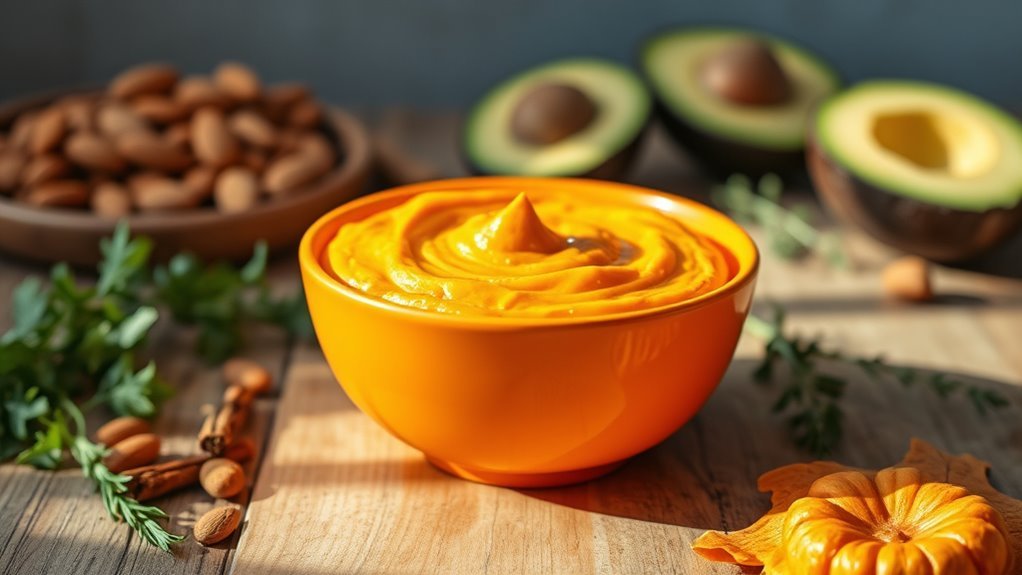

Yes, pumpkin puree can be keto-friendly if you manage your portions carefully. With about 3-4 grams of net carbs per serving, it fits within the low-carb limits necessary for ketosis. It’s nutrient-rich, offering vitamins A and C, along with fiber, which aids digestion. However, overconsumption can affect your carb goals. Pairing it with high-fat ingredients can help balance your macros. If you want to explore how to creatively incorporate pumpkin puree into your meals, there’s more to discover.
Understanding the Ketogenic Diet
When you commence on a ketogenic diet, understanding its fundamental principles is essential for success. The ketogenic diet focuses on a high-fat, low-carb intake, pushing your body into a state of ketosis, where it burns fat for energy instead of carbohydrates. Carb counting becomes vital, as you’ll need to limit your daily carbohydrate intake, typically around 20-50 grams, to achieve and maintain ketosis. Familiarizing yourself with ketogenic principles helps you make informed food choices, ensuring you stay within your carb limits while enjoying a variety of foods. This approach can lead to increased energy levels, weight loss, and improved mental clarity. Ultimately, embracing these core concepts empowers you to navigate your ketogenic journey with confidence and flexibility. Furthermore, understanding the daily carb limit is crucial for optimizing your success on the diet.
Nutritional Profile of Pumpkin Puree
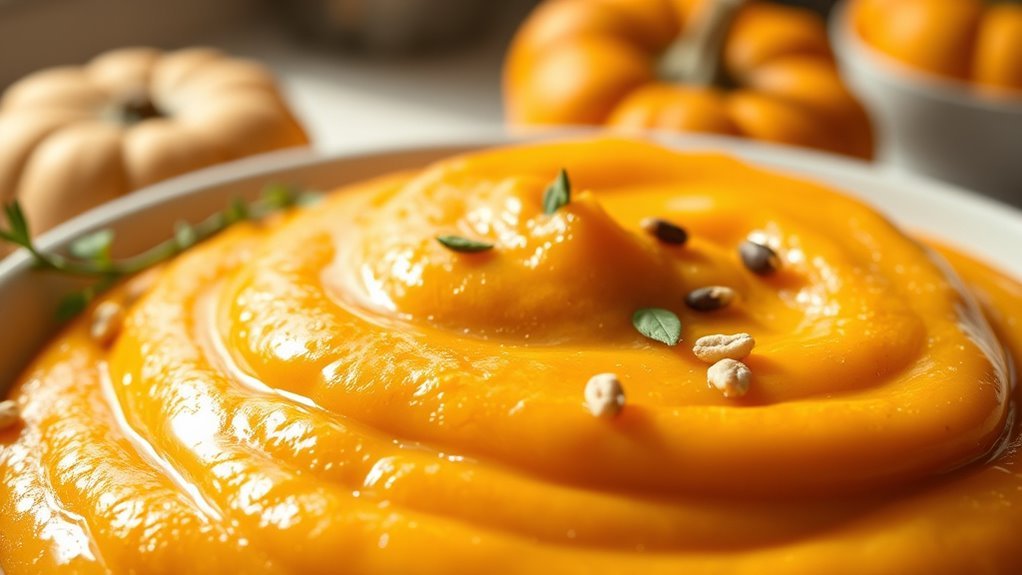
Although pumpkin puree is often associated with fall recipes and comfort foods, it’s important to examine its nutritional profile to determine its compatibility with a ketogenic diet. Pumpkin nutrition is quite impressive, offering a variety of vitamins and minerals. Here’s a quick look at its key components:
| Nutrient | Amount (per 100g) |
|---|---|
| Calories | 50 |
| Protein | 1.0g |
| Fat | 0.1g |
| Carbohydrates | 12g |
| Fiber | 0.5g |
With its low-fat content and moderate protein, pumpkin puree can fit into your meals. However, its carbohydrate count may raise questions about keto compatibility. Make sure to take into account portion sizes when including it in your diet!
Carbohydrate Content in Pumpkin Puree
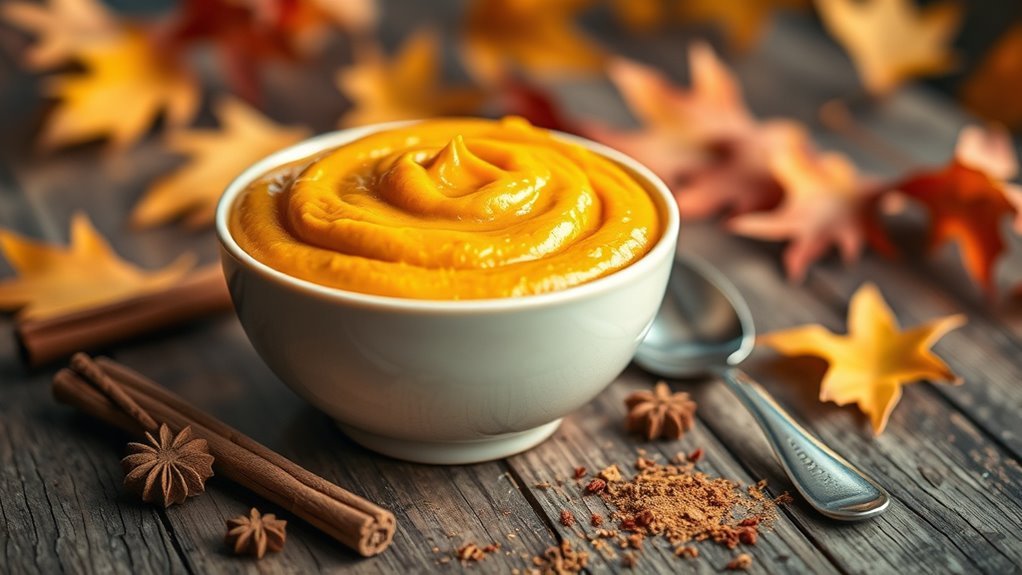
When considering pumpkin puree for a keto diet, it’s important to look at its carbohydrate content. A typical serving size of pumpkin puree contains about 8 grams of carbs, which can impact your daily intake. Understanding this nutritional breakdown can help you make informed choices about incorporating pumpkin into your meals.
Nutritional Breakdown of Pumpkin
Pumpkin puree packs a surprising nutritional punch, especially when considering its carbohydrate content. While pumpkin varieties differ slightly in their nutrient profiles, most contain about 7 grams of carbs per 100 grams. The majority of these carbs come from natural sugars and fiber, making it a relatively low-carb option. Beyond carbs, pumpkin is rich in essential pumpkin nutrients like vitamin A, which supports vision and immune function, and potassium, crucial for heart health. Additionally, its high fiber content can aid digestion. If you’re looking for a versatile ingredient that fits into a balanced diet, pumpkin puree can be a smart choice, allowing you to enjoy its health benefits without sacrificing your nutritional goals.
Serving Size Considerations
Understanding serving size is essential for managing carbohydrate intake when incorporating pumpkin puree into a keto-friendly diet. To enjoy pumpkin without overstepping your carb limits, practice portion control. Here are some key considerations:
- A typical serving size is about 1/4 cup of pumpkin puree.
- This portion contains roughly 3-4 grams of net carbs.
- Keep an eye on your daily carb allowance to stay within keto guidelines.
- Complement pumpkin with low-carb ingredients to enhance flavors without adding carbs.
- Monitor how your body responds to guarantee you maintain ketosis. Additionally, the fiber content in pumpkin can provide digestive benefits while keeping your carb count low.
Health Benefits of Pumpkin Puree
Although many people associate pumpkin puree with fall festivities, its health benefits make it a valuable addition to your diet year-round. Pumpkin puree is rich in vitamins A and C, both essential for immune support. With its high fiber content, it promotes digestive health and keeps you feeling full longer.
| Nutrient | Amount per 100g | Health Benefit |
|---|---|---|
| Vitamin A | 851 µg | Supports vision and immunity |
| Vitamin C | 9 mg | Boosts immune function |
| Fiber | 3 g | Aids digestion |
| Potassium | 340 mg | Regulates blood pressure |
| Antioxidants | Varies | Protects against free radicals |
Incorporating pumpkin puree into your meals can enhance your overall well-being and support a healthier lifestyle.
How to Incorporate Pumpkin Puree Into Your Keto Diet
Incorporating pumpkin puree into your keto diet can be both delicious and nutritious. You can explore various recipes that highlight its versatility while benefiting from its rich fiber and vitamin content. Let’s look at some tasty options and the nutritional advantages of adding pumpkin puree to your meals.
Recipes With Pumpkin Puree
When you’re looking to add some fall flavor to your keto diet, pumpkin puree is a versatile ingredient that can enhance both sweet and savory dishes. Here are some delicious ways to incorporate it:
- Pumpkin Soup: Blend pumpkin puree with broth and spices for a creamy, comforting soup.
- Pumpkin Muffins: Whip up keto-friendly muffins using almond flour and pumpkin puree for a tasty treat.
- Pumpkin Spice Coffee: Stir pumpkin puree into your coffee with a sprinkle of cinnamon for a seasonal twist.
- Pumpkin Smoothie: Combine pumpkin puree with coconut milk and your favorite low-carb sweetener for a nutritious breakfast.
- Pumpkin Cheesecake: Create a keto cheesecake using pumpkin puree for a rich, indulgent dessert.
These recipes not only satisfy cravings but also keep your keto lifestyle on track!
Nutritional Benefits Overview
Pumpkin puree offers numerous nutritional benefits that can seamlessly fit into your keto diet. It’s rich in fiber, which aids digestion and helps you feel full longer, while being low in carbs—ideal for maintaining ketosis. With about 7 grams of net carbs per cup, its nutritional value includes essential vitamins like A, C, and E, as well as potassium and magnesium. These nutrients provide health advantages, such as supporting immune function and improving skin health. To incorporate pumpkin puree, consider adding it to smoothies, soups, or keto-friendly baked goods. This versatile ingredient not only enhances flavor but also boosts the nutrient profile of your meals, allowing you to enjoy variety without compromising your dietary goals.
Comparing Pumpkin Puree to Other Low-Carb Vegetables
While many people following a keto diet often seek out low-carb vegetables, comparing pumpkin puree to other options can reveal some surprising insights. Pumpkin varieties, like sugar pie or pie pumpkins, offer unique flavors and nutritional profiles. When you stack them against other low-carb vegetables, you might find:
- Spinach: Low in carbs and high in nutrients.
- Zucchini: Versatile and low-calorie, great for substituting pasta.
- Cauliflower: Ideal for rice or mash alternatives.
- Broccoli: Packed with fiber and antioxidants.
- Asparagus: Low in carbs and rich in vitamins.
Each of these options has its merits, but pumpkin puree can provide a satisfying sweetness and depth to your dishes, making it a delightful addition to your keto journey. Additionally, Brussel sprouts are another excellent low-carb vegetable choice, as they are rich in fiber and offer a unique flavor profile.
Potential Risks of Eating Pumpkin Puree on Keto
Although pumpkin puree can enhance your meals with flavor and nutrition, there are potential risks to evaluate when incorporating it into a keto diet. One concern is the carbohydrate content; while it’s lower than many other vegetables, consuming too much can hinder your keto goals. Additionally, some people might experience potential digestive issues, like bloating or gas, when adding pumpkin puree to their diet, especially if they’re sensitive to fiber. To mitigate these risks, consider moderation strategies, such as limiting your portion size and pairing it with high-fat foods to maintain your macros. Remember, listening to your body is key; if you notice discomfort, you might want to adjust how much pumpkin puree you include in your meals. It’s also important to consider the carbohydrate content of any food you add to your diet, as it can significantly impact your ability to stay in ketosis.
Recipes Using Pumpkin Puree for a Keto Lifestyle
Incorporating pumpkin puree into your keto lifestyle can be both delicious and nutritious when done mindfully. This vibrant ingredient can transform your meals and snacks while keeping your carb count in check. Here are some tasty recipes to try:
Incorporating pumpkin puree into your keto lifestyle adds delicious flavor while keeping your carb count in check.
- Pumpkin Soup: A warm, creamy delight perfect for chilly days.
- Pumpkin Muffins: Low-carb treats that satisfy your sweet tooth.
- Pumpkin Smoothies: A nutritious breakfast option packed with flavor.
- Pumpkin Curry: A savory dish that’s rich in nutrients and spice.
- Pumpkin Pancakes: Fluffy and satisfying, ideal for a keto brunch.
You can also explore pumpkin dip, pumpkin cheesecake, and pumpkin bread to keep your meal plan exciting and diverse. Enjoy the freedom of flavor while staying true to your keto goals!
Seasonal Considerations for Using Pumpkin Puree
As the seasons change, so does the appeal and availability of pumpkin puree, making it a versatile ingredient to incorporate into your keto meal plan, especially during the fall months. Pumpkin seasonality offers you the chance to enjoy festive dishes while remaining aligned with your dietary goals. Additionally, pumpkin puree contains approximately 14 grams of net carbs per cup, allowing for thoughtful portion control in your meals.
Here’s a quick look at how pumpkin puree can fit into your seasonal cooking:
| Season | Benefits of Pumpkin Puree | Festive Dish Ideas |
|---|---|---|
| Fall | High in fiber, low in carbs | Pumpkin soup, keto pumpkin pie |
| Winter | Nutrient-rich, supports immunity | Pumpkin chili, muffins |
| Spring | Versatile for lighter dishes | Pumpkin salad, smoothies |
| Summer | Fresh options available | Grilled pumpkin, dips |
| Year-Round | Canned puree for convenience | Various keto desserts |
Using pumpkin puree in these festive dishes can help you enjoy the season while sticking to your keto principles.
Final Thoughts on Pumpkin Puree and Keto
When you consider adding pumpkin puree to your keto diet, it’s essential to balance its benefits with your overall carbohydrate intake. While pumpkin can fit into a low-carb lifestyle, moderation is key. Here are some important points to keep in mind:
- Nutrient-Rich: Pumpkin is packed with vitamins and minerals.
- Low in Calories: It’s a great way to add volume without adding too many calories.
- Fiber Source: Helps with digestion and can aid in satiety.
- Versatile Ingredient: You can use it in both sweet and savory dishes.
- Keto Flexibility: Incorporating pumpkin allows for creative meal options.
Frequently Asked Questions
Can I Use Canned Pumpkin Puree on a Keto Diet?
Yes, you can use canned pumpkin puree on a keto diet in moderation. It’s low in carbs and can add flavor and nutrition to your keto recipes. Just keep an eye on portion sizes, as it does contain some carbohydrates. Incorporating it into dishes like keto-friendly pumpkin soup or muffins can be a delicious way to enjoy its benefits while staying within your carb limits. Enjoy experimenting with it in your meals!
Is Fresh Pumpkin Puree Better Than Canned for Keto?
Fresh pumpkin puree can be slightly better than canned pumpkin for keto, mainly because it might have fewer additives and preservatives. However, canned pumpkin is often just as nutritious and convenient. Both options are low in carbs, but you should check labels for any added sugars in canned varieties. Ultimately, it’s about personal preference and what works best for your diet. Enjoying either option in moderation can fit your keto lifestyle just fine!
How Much Pumpkin Puree Can I Include in My Daily Carb Limit?
When it comes to your daily carb limit, “everything in moderation” rings true. You can typically include about 1/4 cup of pumpkin puree in your daily carb allowance, which contains around 7-8 grams of carbohydrates. Portion control is key, so keep an eye on how it fits into your overall meal plan. Balancing it with other low-carb foods can help you enjoy pumpkin while staying within your desired carb range.
Does Pumpkin Puree Affect Ketosis?
Pumpkin puree can affect ketosis, but it largely depends on your overall carb intake. With its low calorie and nutrient-rich pumpkin nutrition, you can enjoy it in moderation. A small serving won’t typically knock you out of ketosis, as long as you’re mindful of your daily carb limit. Balance is key; if you keep your carbs in check, pumpkin puree can be a flavorful addition to your keto meals without disrupting your ketosis impact.
Are There Any Keto-Friendly Pumpkin Puree Brands?
Yes, there are keto-friendly pumpkin puree brands to evaluate. When comparing brands, look for those with minimal additives and sugars. For instance, organic varieties often provide better pumpkin nutrition, while some commercial brands may add sweeteners that can affect your ketosis. Always check nutrition labels for carb content per serving. By choosing wisely, you can enjoy the flavors of fall without straying from your keto goals.
References
- https://www.healthline.com/nutrition/keto-diet-food-list#vegetables
- https://www.ncbi.nlm.nih.gov/pmc/articles/PMC6019055/
- https://www.webmd.com/diet/obesity/what-is-the-keto-diet
- https://www.health.harvard.edu/blog/the-ketogenic-diet-2018121715539
- https://www.dietdoctor.com/low-carb/keto/pumpkin
- https://www.verywellfit.com/keto-friendly-vegetables-5110435
- https://www.cdc.gov/healthyweight/assessing/bmi/adult_bmi/english_bmi_calculator/bmi_calculator.html
- https://www.nutrition.gov/topics/nutrition-education/healthy-eating
- https://www.eatright.org/food/nutrition/healthy-eating/keto-diet-what-you-need-to-know
- https://www.uclahealth.org/health-library/keto-diet-guide