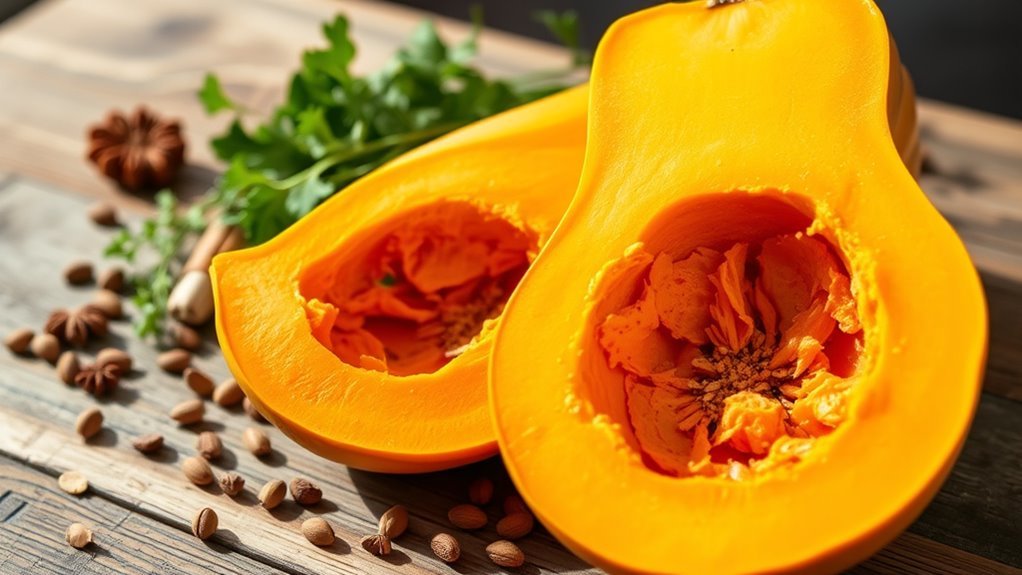

Butternut squash isn’t typically considered keto-friendly due to its higher carbohydrate content. A cup of cooked squash has about 22 grams of carbs, which can interfere with your daily limits on a keto diet. If you enjoy its flavors, you might still use it in moderation, limiting yourself to 1/2 cup and pairing it with low-carb ingredients. If you want to learn how to incorporate it wisely into your meals, consider exploring some helpful serving suggestions.
Understanding the Keto Diet
When you think about the keto diet, it’s vital to understand its core principles. At its heart, keto focuses on high-fat, low-carb intake, prompting your body to enter ketosis, where it burns fat for fuel. Understanding macros is essential; typically, your daily intake should consist of about 70% fats, 25% proteins, and only 5% carbs. This balance can be a game-changer for energy and weight loss. To make this lifestyle sustainable, effective keto meal prep is key. By planning your meals in advance, you can guarantee you meet your macro goals while enjoying delicious, satisfying dishes. Embracing the keto diet provides the freedom to explore new flavors while prioritizing your health and well-being. Limiting carbs to 20-50 grams daily is crucial for maintaining ketosis and optimizing fat burning.
Nutritional Profile of Butternut Squash
The nutritional profile of butternut squash makes it a popular choice in many diets, but its suitability for the keto lifestyle is worth examining. This vibrant vegetable offers a variety of benefits that can enhance your meals. Here’s what you can expect from butternut squash:
- Rich in vitamins: Particularly high in vitamin A and C.
- Low in calories: A great option for weight management.
- High in fiber: Supports digestive health.
- Antioxidant properties: Helps combat oxidative stress.
- Versatile varieties: Includes sweet, nutty flavors that can complement many dishes.
While it’s packed with nutrients, consider how butternut squash varieties might fit into your overall carb strategy when following keto. Balancing butternut squash benefits with your dietary goals can lead to satisfying meals.
Carb Content in Butternut Squash
Although butternut squash is nutrient-dense, its carbohydrate content is a vital factor to evaluate for those following a ketogenic diet. In a one-cup serving of cooked butternut squash, you’ll find about 22 grams of carbohydrates. While it offers fiber and vitamins, this carb content can add up quickly, especially if you’re aiming to stay within a strict carb limit. If you enjoy butternut squash, consider controlling your serving sizes to manage your daily intake effectively. Balancing it with other low-carb vegetables could help you enjoy its rich flavor without derailing your keto goals. Ultimately, understanding the carb content and serving sizes is vital for making informed dietary choices while still feeling free to enjoy your meals.
Comparing Butternut Squash to Other Vegetables
When comparing butternut squash to other vegetables, it’s essential to look at their nutritional profiles, especially with regard to carbohydrate content and fiber versus sugar ratios. You might find that while butternut squash is richer in carbohydrates than some leafy greens, it also offers a good amount of fiber, which can aid digestion. Understanding these differences can help you make more informed choices about incorporating butternut squash into your keto diet.
Nutritional Profile Comparison
Butternut squash stands out among vegetables for its unique nutritional profile, particularly with respect to carbohydrates and fiber content. When comparing it to other veggies, it’s essential to take into account factors like nutrient density and glycemic index. Here’s a quick comparison:
- Calories: Butternut squash is lower in calories than many starchy options.
- Carbohydrates: It has a moderate carb content, making it a consideration for low-carb diets.
- Fiber: High in fiber, which aids digestion and promotes satiety.
- Vitamins: Rich in vitamins A and C, supporting immune health.
- Glycemic Index: Lower than potatoes, making it a better choice for blood sugar control. Additionally, sweet potatoes’ high carbohydrate content can lead to weight gain if not managed properly, highlighting the importance of careful carbohydrate management.
Understanding these differences can help you make informed choices in your diet while enjoying the freedom to indulge in nutritious foods.
Carb Content Analysis
Carbohydrate content plays an essential role in determining whether a vegetable fits into a keto diet. Butternut squash, while delicious and nutritious, has a higher carb count than some other vegetables. When comparing it to options like zucchini and spinach, you’ll see significant differences in carb content.
| Vegetable | Net Carbs (per 100g) |
|---|---|
| Butternut Squash | 12g |
| Zucchini | 3g |
| Spinach | 1g |
Understanding these differences can help you make informed decisions about your meals. While you can enjoy the nutritional benefits of butternut squash, consider cooking methods that minimize carb intake, like steaming or roasting, to strike a balance in your keto journey.
Fiber Versus Sugar Content
While many vegetables offer a blend of fiber and sugar, understanding how butternut squash compares to other options is vital for those following a keto diet. Butternut squash can be a nutritious choice, but let’s look at its fiber benefits versus sugar impact in relation to other vegetables:
- Butternut Squash: High in fiber, moderate sugar content.
- Broccoli: Excellent fiber source, low sugar.
- Cauliflower: Low in both sugar and carbs, high fiber.
- Zucchini: Low sugar, decent fiber.
- Spinach: Minimal sugar, great fiber benefits.
Additionally, incorporating leafy greens into meals can further enhance fiber intake while keeping sugar levels low. When considering your keto journey, it’s important to weigh these factors, aiming for a balance that supports your dietary goals while enjoying the freedom of varied vegetables.
Health Benefits of Butternut Squash
Considering its vibrant color and rich flavor, butternut squash offers a variety of health benefits that can enhance your diet. This vegetable is packed with nutrient density, supplying essential vitamins like A, C, and E, along with minerals such as potassium and magnesium. These nutrients not only contribute to overall well-being but also provide immune support, helping your body fend off illnesses. Butternut squash is also high in antioxidants, which combat oxidative stress and promote healthy aging. Plus, its fiber content aids digestion and keeps you feeling fuller for longer. Incorporating this versatile squash into your meals can lead to improved health and wellness, making it a delicious choice for those seeking balanced nutrition.
How to Incorporate Butternut Squash Into Keto Meals
If you’re looking to add butternut squash to your keto meals, consider making a roasted butternut squash medley or a creamy butternut squash soup. These dishes can enhance your meals while still keeping your carb intake in check. With the right preparation, you can enjoy the flavors and health benefits of butternut squash without straying from your keto goals.
Roasted Butternut Squash Medley
A roasted butternut squash medley can be a delightful addition to your keto meals, offering a satisfying blend of flavors and textures. You can enjoy the roasted flavors of butternut squash while incorporating other seasonal vegetables to enhance your dish. Here’s how to create a colorful medley:
- Brussels sprouts: Roasted for a crunchy contrast.
- Red onions: Sweet and caramelized for depth.
- Garlic: Adds aromatic richness.
- Kale: Offers a nutrient boost and vibrant color.
- Olive oil and herbs: Elevate the dish with healthy fats and flavor.
This combination not only meets your keto needs but also keeps your meals exciting and varied. Embrace the freedom to experiment and enjoy this nutritious medley!
Creamy Butternut Squash Soup
While many might think butternut squash is off-limits on a keto diet due to its natural sugars, it can actually be incorporated in moderation, especially in the form of a creamy soup. This dish not only offers a comforting, creamy texture but also serves as a wonderful canvas for flavor enhancement. By blending roasted butternut squash with low-carb ingredients like coconut milk or heavy cream, you can create a rich, satisfying soup that fits your keto lifestyle. Adding spices like nutmeg or cinnamon can further elevate the flavor while keeping carbs in check. Remember to balance your portion sizes to maintain your daily carb goals, allowing you to enjoy this delicious soup without straying from your keto journey.
Portion Control and Serving Suggestions
Although butternut squash can fit into a keto diet when consumed in moderation, portion control is essential to maintaining your carbohydrate limits. When meal planning, it’s significant to keep your portion sizes in check. Here are some serving suggestions to help you enjoy butternut squash without overdoing it:
- Limit servings to 1/2 cup cooked butternut squash.
- Pair it with protein sources like chicken or fish for a balanced meal.
- Use it as a base for soups or salads, mixing with low-carb veggies.
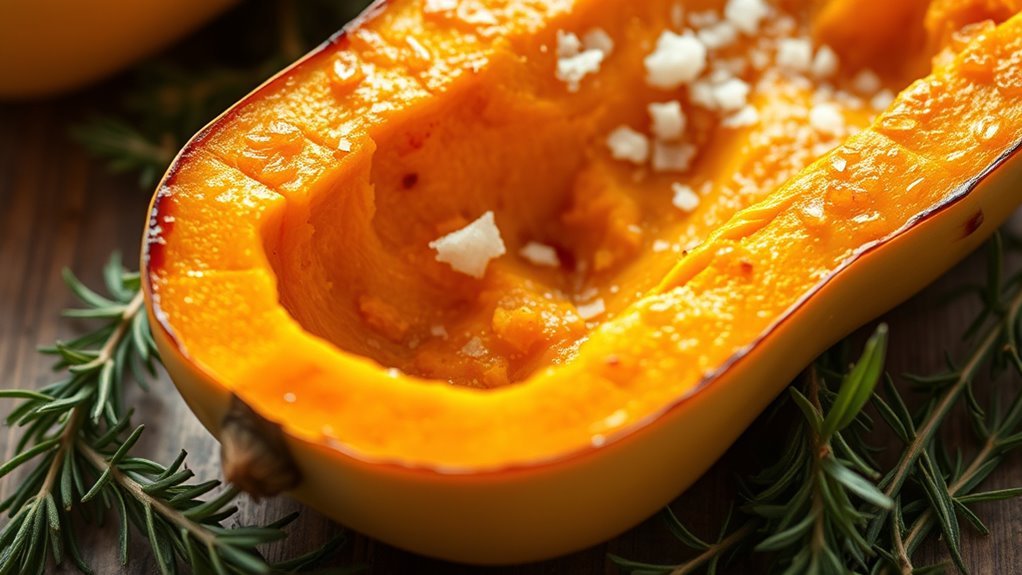
- Roast with herbs and spices for added flavor—skip the sugary glazes.
- Consider spiralizing into noodles for a fun, low-carb alternative.
With mindful portion sizes, you can savor butternut squash while staying true to your keto goals.
Alternatives to Butternut Squash on Keto
If you’re looking for alternatives to butternut squash on a keto diet, there are several low-carb vegetable options to contemplate. Zucchini makes a great substitute, offering versatility and a mild flavor that pairs well with various dishes. Additionally, cauliflower rice can serve as a perfect base for meals, providing a similar texture without the carbs. Another excellent option is spaghetti squash, which is low in calories and has a low glycemic index, making it a blood sugar-friendly choice.
Low-Carb Vegetable Options
When you’re following a keto diet, it’s important to choose low-carb vegetables that fit within your daily carb limits, especially if you’re looking for alternatives to butternut squash. Fortunately, there are plenty of delicious low-carb options that can keep your meals satisfying and nutrient-rich. Here are some great vegetable alternatives:
- Zucchini
- Spinach
- Cauliflower
- Broccoli
- Bell peppers
These options not only provide essential vitamins and minerals but also help you maintain your carb count. Incorporating these low-carb vegetables into your meals can enhance flavor and variety, ensuring you don’t feel deprived while sticking to your keto lifestyle. Additionally, vegetables like green beans can be a versatile choice that supports your overall health without compromising your dietary goals. Enjoy exploring these alternatives and get creative in the kitchen!
Zucchini as Substitute
Zucchini makes an excellent substitute for butternut squash on a keto diet, as it offers a similar texture while being considerably lower in carbohydrates. With just about 2 grams of net carbs per 100 grams, zucchini allows you to enjoy delicious meals without derailing your keto goals. You can spiralize zucchini into noodles for a low-carb pasta alternative, perfect for pairing with your favorite sauces. Additionally, consider making zucchini fritters as a tasty side dish or snack, combining shredded zucchini with eggs and cheese for a satisfying bite. By choosing zucchini, you gain more versatility in your cooking while maintaining the freedom to enjoy flavorful dishes that align with your keto lifestyle. Incorporating vegetables like bell peppers can further enhance your meal’s nutritional value without adding significant carbs.
Cauliflower Rice Alternatives
Cauliflower rice is a fantastic alternative to butternut squash for those following a keto diet, thanks to its low carbohydrate content and versatility. If you’re looking for other substitutes, consider these options:
- Zucchini noodles: These spiralized veggies can mimic pasta while keeping carbs low.
- Shredded cabbage: This can serve as a crunchy base for stir-fries or salads.
- Shirataki rice: Made from konjac yam, it’s extremely low in calories and carbs.
- Broccoli rice: Just like cauliflower rice, it’s nutrient-rich and low in carbs.
- Eggplant: When cooked, it can add a hearty texture to dishes.
These alternatives can help you maintain your keto lifestyle without feeling restricted. Enjoy experimenting!
Recipes Featuring Butternut Squash
Although butternut squash is often associated with fall dishes, it can be enjoyed year-round in a variety of delicious recipes that fit into a keto lifestyle. You can create savory dishes like roasted butternut squash with olive oil, garlic, and herbs, making for a fantastic side dish. For meal prep, consider a butternut squash soup that blends warmth with nutrition. If you’re craving something sweet, healthy desserts like butternut squash muffins or brownies can satisfy your cravings while keeping carbs in check. Additionally, its versatility allows it to shine in seasonal recipes, whether in salads or as a comforting mash. Embrace butternut squash and elevate your meals with these creative options!
Final Thoughts on Butternut Squash and Keto
While butternut squash can be a delightful addition to your meals, it’s essential to take into account its carbohydrate content when following a keto diet. While it has numerous butternut squash benefits, its keto diet compatibility might be limited for some. Here are a few considerations to keep in mind:
- Moderate in carbs, so portion control is key.
- Rich in vitamins A and C, providing nutritional value.
- High in fiber, which can aid digestion.
- Versatile for various recipes, adding flavor and texture.
- Can be enjoyed occasionally while monitoring your carb intake.
Ultimately, if you love butternut squash, you can still incorporate it into your meals—just be mindful of how it fits into your overall carb count.
Frequently Asked Questions
Can I Eat Butternut Squash on a Strict Keto Diet?
You can eat butternut squash on a strict keto diet, but it’s like inviting a tiger into your living room—exciting but risky! Butternut squash nutrition is packed with carbs, which might not align with your keto goals. If you’re craving something hearty, consider keto diet alternatives like zucchini or cauliflower. They’ll give you that comforting vibe without the carb overload. Keep your carb count in check, and you’ll still enjoy your meals!
What Is the Best Way to Prepare Butternut Squash for Keto?
To prepare butternut squash for keto, try roasting it. Cut the squash into cubes or slices, toss ’em with olive oil, salt, and pepper, or experiment with seasoning options like garlic powder, paprika, or Italian herbs. Roast at 400°F for about 25-30 minutes until tender and caramelized. This method enhances its natural sweetness while keeping the carb count manageable, allowing you to enjoy a delicious, keto-friendly dish without feeling restricted.
Does Cooking Butternut Squash Change Its Carb Content?
Cooking butternut squash is like transforming a raw canvas into a vibrant masterpiece; it doesn’t change its carb content considerably. Different cooking methods, like roasting or steaming, might slightly alter the digestibility of carbs, but the overall amount remains fairly consistent. If you’re watching your carb intake, it’s wise to measure your portions regardless of how you prepare it. Enjoying it in moderation can still fit into your lifestyle!
Are There Any Side Effects of Eating Butternut Squash on Keto?
Eating butternut squash on keto can have some side effects, primarily due to its carb content. While it offers nutritional benefits like vitamins and a good fiber content, consuming it in excess might hinder your ketosis. You might experience bloating or digestive discomfort if you’re not used to high-fiber foods. Moderation is key; balance it with lower-carb options to enjoy its benefits without compromising your keto goals. Always listen to your body!
Can Butternut Squash Kick Me Out of Ketosis?
Butternut squash can impact your ketosis, but it depends on how much you consume. While it’s higher in carbs compared to other vegetables, moderation is key. If you keep your portion sizes small and fit it into your daily carb limit, you might not get kicked out of ketosis. It’s all about balance; enjoy the flavor and nutrients without overindulging. Just track your intake to maintain your desired state of ketosis.
References
- https://en.wikipedia.org/wiki/Butternut_squash
- https://www.healthline.com/nutrition/low-carb-vegetables
- https://www.ncbi.nlm.nih.gov/pmc/articles/PMC6832331/
- https://www.dietitiansofcanada.ca/YourHealth/Shopping-and-Meal-Planning/Food-Labels/Understanding-food-labels
- https://www.medicalnewstoday.com/articles/323123
- https://www.health.harvard.edu/staying-healthy/healthy-eating-plate
- https://www.verywellfit.com/what-is-the-keto-diet-5110660