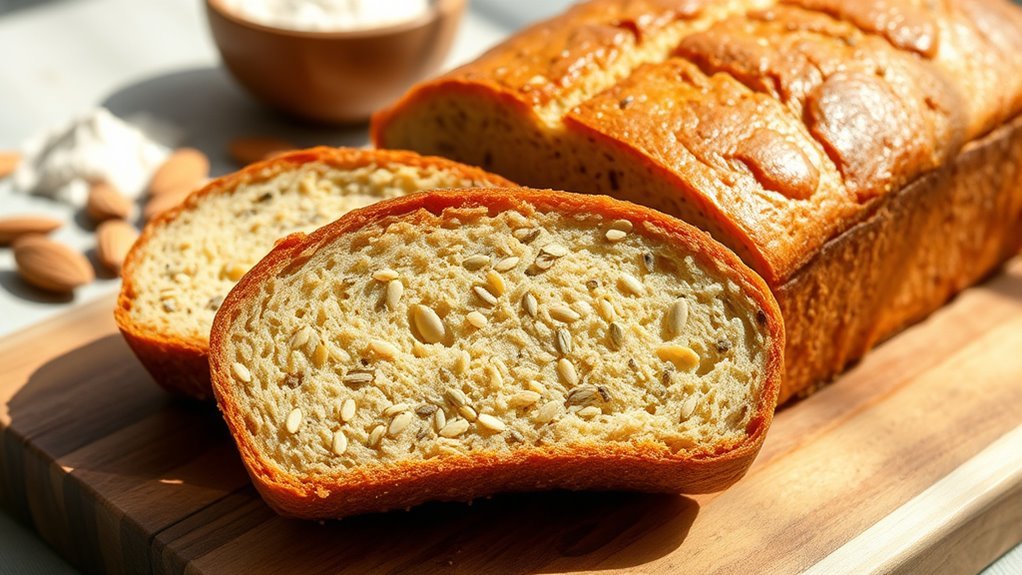

Keto bread is primarily defined by its low carbohydrate content, typically containing fewer than 5 grams of net carbs per serving. It often uses alternative flours like almond or coconut flour, which are lower in carbs than traditional wheat flour. Additionally, keto bread incorporates fiber-rich ingredients to enhance texture and support digestion. These characteristics help maintain a ketogenic lifestyle. If you’re curious about popular recipes and how to enhance your keto bread further, keep exploring!
Understanding the Keto Diet and Its Principles
While many diets focus on calorie counting or macronutrient balance, the keto diet stands out by emphasizing low carbohydrate intake to induce a state of ketosis. The keto diet basics revolve around considerably reducing carbs, typically to about 20-50 grams per day. This carbohydrate restriction shifts your body’s energy source from glucose to fats, leading to the production of ketones. By prioritizing healthy fats and moderate protein, you can experience increased energy, mental clarity, and potential weight loss. Embracing this lifestyle allows you to break free from conventional dieting norms and explore a nutritional approach that promotes metabolic flexibility. Understanding these principles empowers you to make informed choices, setting the foundation for a successful keto journey. Additionally, tracking daily carb intake is crucial to ensure adherence to the ketogenic guidelines.
Key Characteristics of Keto-Friendly Bread
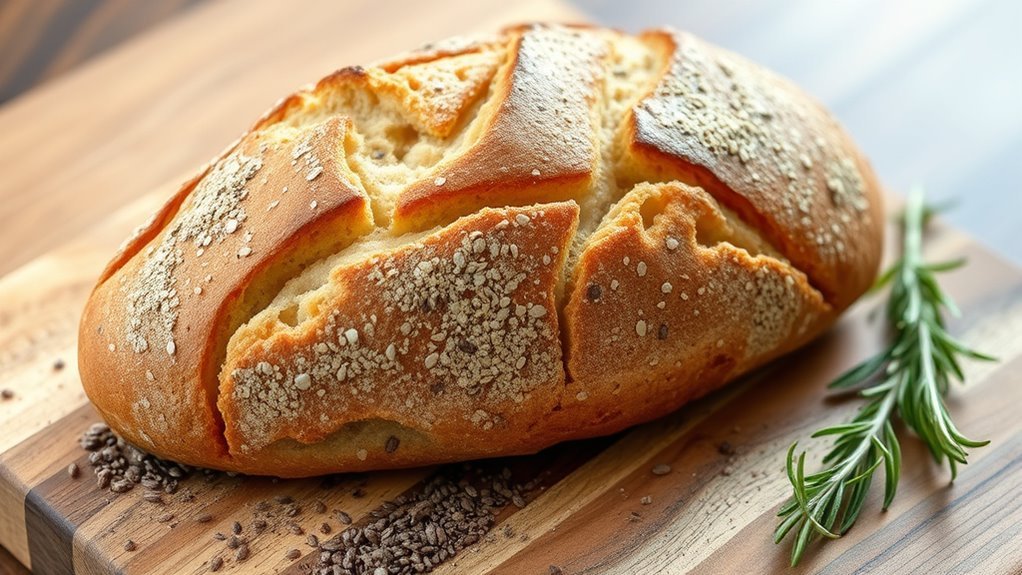
When you’re on a keto diet, finding bread that fits your nutritional goals can be challenging, but there are key characteristics that define keto-friendly options. First, look for low-carb content—ideal breads typically have fewer than 5 grams of net carbs per serving. Next, consider the bread texture; it should be dense and hearty rather than airy, which helps maintain satiety. Additionally, keto-friendly breads often feature unique flavor profiles, using ingredients like nuts, seeds, or spices to enhance taste without adding carbs. Finally, watch for added sugars or fillers, as these can derail your efforts. By focusing on these characteristics, you can enjoy bread that aligns with your keto lifestyle while still satisfying your cravings. Moreover, using low carb flours such as almond or coconut flour is essential for creating satisfying keto bread options.
Low-Carb Flours: The Foundations of Keto Bread
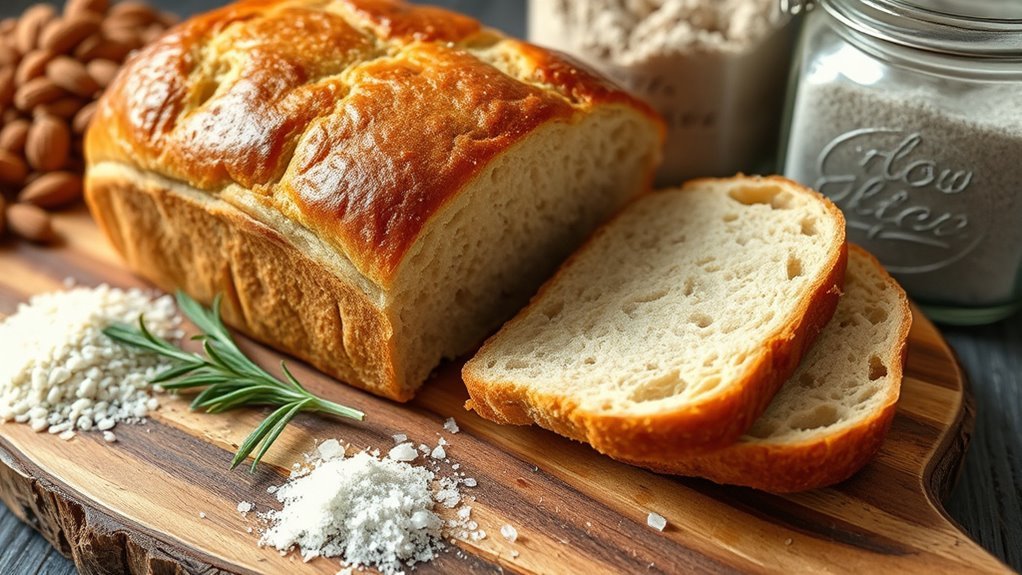
To create keto-friendly bread, the choice of flour is essential, as traditional wheat flour is high in carbs. Instead, you’ll want to explore low-carb alternatives like almond flour, coconut flour, and flaxseed meal. These flours not only offer significant reductions in carbohydrate content but also provide nutritional benefits such as healthy fats, fiber, and protein. When using these flours, you may need to adjust your baking techniques, as they behave differently than wheat flour. For instance, almond flour requires more eggs or binding agents to achieve the right texture. Embracing these low-carb flours allows you to enjoy delicious, satisfying bread while adhering to a ketogenic lifestyle, giving you the freedom to indulge without compromising your health goals. Additionally, almond flour’s low carbohydrate content makes it a preferred choice over traditional wheat flour.
The Role of Fiber in Keto Bread Recipes
Incorporating low-carb flours like almond and coconut can greatly enhance the fiber content of your keto bread. When you add fiber to your recipes, you enjoy numerous benefits that support your keto lifestyle. Here are some key fiber sources and their advantages:
- Almond Flour: High in fiber, it aids digestion and promotes satiety.
- Coconut Flour: Rich in fiber, it helps stabilize blood sugar levels.
- Psyllium Husk: A soluble fiber that improves dough texture and moisture retention.
- Chia Seeds: Packed with fiber, they provide essential omega-3 fatty acids.
Moreover, a higher fiber content can contribute to better glucose management, which is crucial for maintaining a healthy keto diet.
Popular Keto Bread Recipes to Try
If you’re looking for delicious keto-friendly options, almond flour bread, cloud bread, and flaxseed meal loaf are great recipes to contemplate. Each of these options is low in carbs while offering unique textures and flavors that can satisfy your bread cravings. Trying out these recipes can help you maintain your keto lifestyle without feeling deprived. Additionally, incorporating keto flour options like coconut flour can enhance your baking experience and add variety to your bread recipes.
Almond Flour Bread
While many traditional breads are off-limits on a keto diet due to their high carbohydrate content, almond flour bread offers a delicious alternative that fits perfectly within your dietary restrictions. Packed with almond benefits, it’s a low-carb option that supports your health goals. If you’re ready to give it a try, consider these popular recipes:
- Classic Almond Flour Bread: Simple and versatile.
- Almond Flour Banana Bread: A sweet treat without the carbs.
- Cheesy Almond Flour Breadsticks: Perfect for dipping!
- Almond Flour Pizza Crust: Enjoy pizza night guilt-free.
Utilizing effective baking techniques, you can whip up these delightful recipes while savoring the freedom of a keto lifestyle. Additionally, almond flour is a great source of healthy fats that can help maintain your energy levels throughout the day. Enjoy the delicious possibilities that almond flour brings!
Cloud Bread Recipe
After exploring the versatility of almond flour bread, another popular option for those following a keto diet is cloud bread. This airy, low-carb alternative is perfect for sandwiches or as a side. You’ll love its light texture, which can vary based on your ingredients.
Here’s a quick overview of cloud bread’s benefits:
| Benefit | Details |
|---|---|
| Low in Carbs | Perfect for keto diets |
| High in Protein | Keeps you satisfied longer |
| Customizable Flavor | Add herbs, spices, or cheese |
| Easy to Make | Simple ingredients needed |
With its unique texture variations, cloud bread offers freedom in your keto lifestyle. Additionally, its low-carb nature allows it to align perfectly with the principles of the keto diet. Try it out and enjoy a guilt-free bread experience!
Flaxseed Meal Loaf
For those looking to add more variety to their keto bread options, a flaxseed meal loaf is an excellent choice. This nutrient-dense bread not only satisfies your cravings but also offers numerous flaxseed benefits, including improved digestion and heart health. Plus, it’s incredibly versatile! Here are some loaf variations you might want to try:
- Herb and Garlic: Infuse flavors for a savory twist.
- Cinnamon Swirl: Add a hint of sweetness for breakfast.
- Cheese and Jalapeño: Spice things up with this cheesy delight.
- Seeded: Toss in sunflower or pumpkin seeds for added crunch.
Additionally, incorporating healthy fats into your flaxseed meal loaf can further enhance the nutritional profile, making it a well-rounded option for your keto lifestyle. With these options, you can enjoy your keto lifestyle without sacrificing deliciousness!
How to Calculate Net Carbs in Bread
To determine the net carbs in bread, you first need to understand the components that contribute to its carbohydrate content. Start by calculating carbohydrates listed on the nutrition label. Next, subtract dietary fiber and sugar alcohols, if applicable, since these don’t impact your blood sugar levels. This is your net carb analysis, essential for maintaining a keto lifestyle. For example, if a slice of bread has 15 grams of total carbs, 5 grams of fiber, and 2 grams of sugar alcohols, the net carbs would be 8 grams (15 – 5 – 2). By mastering this calculation, you can confidently navigate your bread choices while staying aligned with your ketogenic goals. Additionally, incorporating gluten-free flours into your baking can further support low-carb goals while enhancing flavor.
Store-Bought vs. Homemade Keto Bread
While both store-bought and homemade keto bread can fit into your low-carb lifestyle, there are key differences that may influence your choice. Here are some factors to evaluate:
Both store-bought and homemade keto bread offer unique benefits to enhance your low-carb lifestyle.
- Store-Bought Convenience: Perfect for busy days, these options are ready to eat and save you time.
- Homemade Freshness: You control the ingredients, ensuring no hidden sugars or unhealthy additives.
- Cost: Often, homemade bread can be more economical in the long run, especially in bulk.
- Customization: When you bake at home, you can experiment with flavors and textures to suit your preferences. Additionally, homemade bread allows for the use of low-carb alternatives that align with a ketogenic diet.
Ultimately, whether you choose store-bought or homemade keto bread, both can support your health goals while adding variety to your meals.
Enhancing Flavor and Texture in Keto Bread
Whether you opt for store-bought or homemade keto bread, enhancing the flavor and texture can elevate your low-carb experience. Start with herb infusions like rosemary or thyme for a savory kick. Incorporate texture enhancers such as psyllium husk or chia seeds to improve moisture retention and create a more satisfying bite. Explore yeast alternatives like baking powder for leavening, or use flavor boosters like garlic powder for added depth. Sweeteners options such as erythritol or stevia can satisfy your cravings without the carbs. Finally, finish with nut butter blends or savory toppings like avocado to enrich your bread experience.
| Enhancer Type | Examples |
|---|---|
| Herb Infusions | Rosemary, Thyme |
| Texture Enhancers | Psyllium Husk, Chia Seeds |
| Yeast Alternatives | Baking Powder |
| Flavor Boosters | Garlic Powder, Onion Powder |
| Sweeteners Options | Erythritol, Stevia |
Common Mistakes to Avoid When Making Keto Bread
When making keto bread, it’s essential to get your ingredient measurements right; miscalculations can lead to disappointing results. Additionally, overmixing the dough can impact the texture, making your bread dense instead of light and fluffy. Avoiding these common mistakes will help you achieve the perfect keto loaf.
Ingredient Miscalculations
Many people plunge into keto bread making with enthusiasm, but ingredient miscalculations can quickly derail the process. To guarantee your bread turns out perfect every time, pay attention to these common pitfalls:
- Incorrect ingredient ratios: A balanced mix of almond flour, coconut flour, and other low-carb ingredients is essential.
- Improper measurement accuracy: Using volume instead of weight can lead to discrepancies; invest in a kitchen scale for precision.
- Ignoring moisture content: Different brands of ingredients can vary in moisture, affecting the dough consistency.
- Neglecting ingredient temperature: Room-temperature ingredients blend better, guaranteeing a uniform texture.
Overmixing the Dough
Although you might be enthusiastic to achieve a perfect loaf, overmixing the dough can lead to undesirable results in keto bread making. When you mix too vigorously, you risk altering the dough consistency, which can make your bread dense and chewy instead of light and airy. To prevent this, use gentle mixing techniques, ensuring you incorporate ingredients just until combined. This helps maintain the right balance of air and moisture, vital for a great keto bread. Remember, keto flours behave differently than traditional ones, so it’s important to adapt your mixing approach. By being mindful of how you handle the dough, you’ll enjoy a delicious, low-carb bread that aligns with your keto lifestyle.
Tips for Incorporating Keto Bread Into Your Meals
Since incorporating keto bread into your meals can enhance your dietary variety while keeping you within your carb limits, it’s essential to find creative ways to use it. Here are some tips for delicious meal pairings and snack ideas:
- Avocado Toast: Top your keto bread with smashed avocado, a sprinkle of salt, and chili flakes for a nutritious breakfast.
- Sandwiches: Use keto bread to create hearty sandwiches filled with meats, cheeses, and low-carb veggies.
- French Toast: Dip slices in a mixture of eggs and almond milk, then fry for a low-carb brunch option.
- Pizza Base: Spread your favorite keto-friendly sauce and toppings on keto bread for a quick pizza fix.
Experiment with these ideas to keep your meals exciting and satisfying!
Frequently Asked Questions
Can I Eat Keto Bread Daily Without Affecting My Diet?
Yes, you can eat keto bread daily without negatively impacting your diet, as long as you’re mindful of your overall carbohydrate intake. Keto bread benefits include lower net carbs and higher fiber content, which can help maintain your ketosis. Just confirm it fits within your daily macros. Enjoying it regularly can add variety to your meals while still allowing you to adhere to your keto goals, offering you the freedom to savor your favorite foods.
How Do I Store Keto Bread for Maximum Freshness?
To store keto bread for maximum freshness, you should use proper storage techniques. While some might think refrigeration is best, it can actually dry out your bread. Instead, opt for airtight containers or resealable bags at room temperature. If you won’t eat it within a few days, freeze slices in the best containers for later use. This way, you can enjoy your keto bread without sacrificing quality or flavor!
Is Gluten-Free Bread Always Keto-Friendly?
No, gluten-free bread isn’t always keto-friendly. While it uses gluten alternatives like almond flour or coconut flour, some gluten-free options can contain high-carb ingredients, making them unsuitable for a ketogenic diet. Always check the carb content on the label. Aim for breads that prioritize low-carb ingredients to make certain they fit your dietary goals. Remember, just because it’s gluten-free doesn’t mean it’s keto-approved, so stay vigilant!
Can I Freeze Homemade Keto Bread?
Yes, you can freeze homemade keto bread! To guarantee it stays fresh, use proper freezing methods like wrapping it tightly in plastic wrap or aluminum foil, then placing it in an airtight container. When you’re ready to enjoy it, thaw the bread at room temperature or use a microwave for quick thawing. This way, you maintain its texture and flavor while enjoying the convenience of having keto-friendly bread ready when you need it.
What Are Some Common Additives in Store-Bought Keto Bread?
When you’re checking out store-bought keto bread, you’ll often find common additives like almond flour, coconut flour, and psyllium husk. These ingredients enhance nutritional content and improve texture. You might also see preservatives and sweeteners, which can affect ingredient sourcing. It’s essential to read labels carefully; some additives could compromise your keto goals. By choosing wisely, you can enjoy the freedom of tasty bread without straying from your dietary preferences.
References
- https://www.ncbi.nlm.nih.gov/pmc/articles/PMC7075015/
- https://www.healthline.com/nutrition/keto-bread
- https://www.sciencedirect.com/science/article/pii/S0955286321000663
- https://www.webmd.com/diet/what-is-the-keto-diet
- https://nutrition.org/keto-diet-what-you-need-to-know/
- https://www.mayoclinic.org/healthy-lifestyle/nutrition-and-healthy-eating/expert-answers/keto-diet/faq-20459695
- https://www.nutrition.gov/topics/nutrition-101/dietary-recommendations/keto-diet
- https://www.thepaleomom.com/faq/keto-diet-faq/