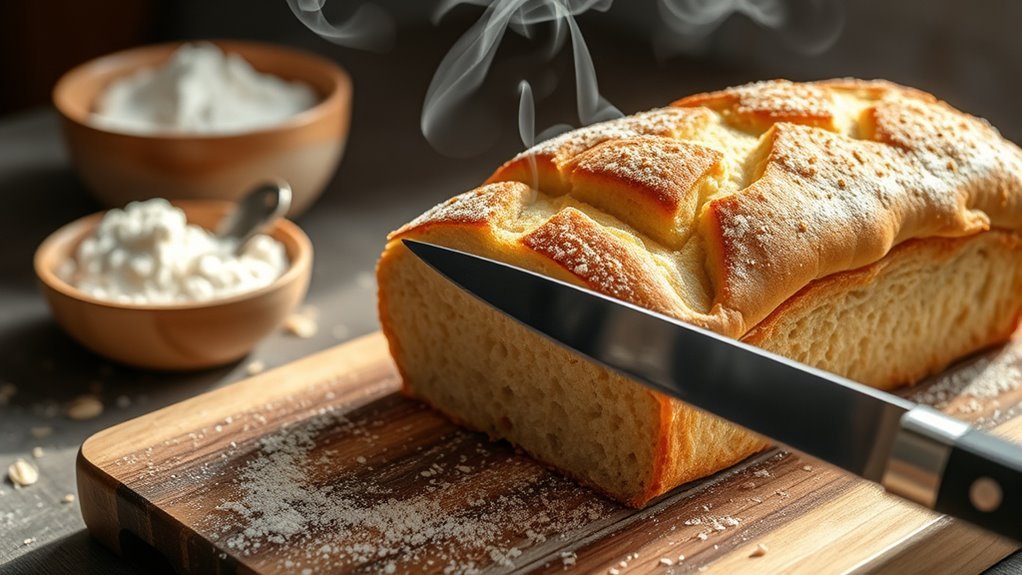

To make keto bread, combine 2 cups of almond flour, 4 large eggs, 1 tablespoon of baking powder, and 1 teaspoon of salt in a mixing bowl. Preheat your oven to 350°F (175°C) and mix the ingredients thoroughly. Pour the mixture into a greased loaf pan and bake for about 30 minutes. This low-carb option is perfect for your favorite sandwiches and toast. Stick around for more tips on variations and storage!
Understanding Keto Bread Ingredients
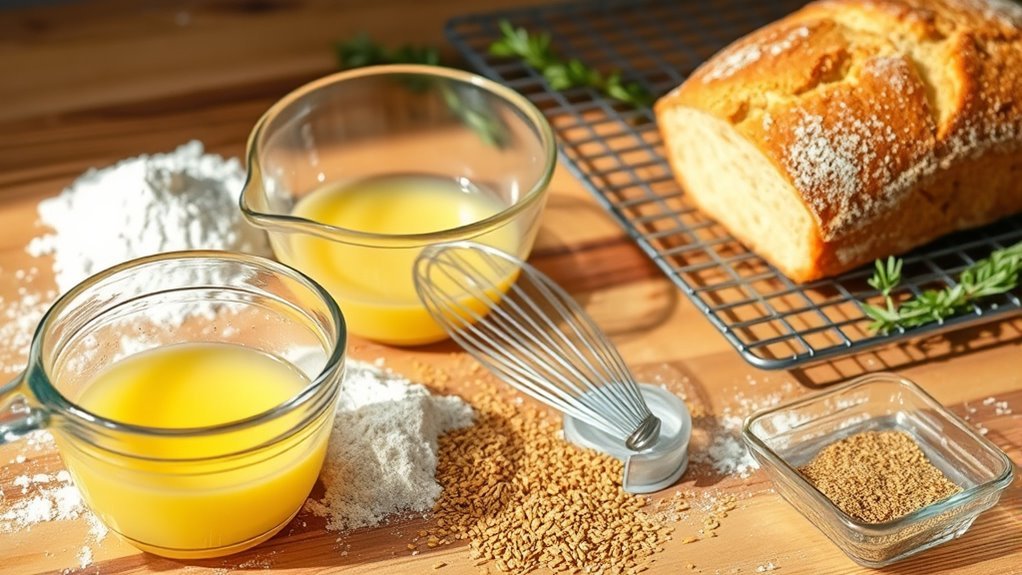
When diving into keto bread, it’s essential to understand the unique ingredients that set it apart from traditional bread. Unlike regular flour, keto bread often uses keto flour options like almond flour, coconut flour, or flaxseed meal, which are lower in carbs and higher in healthy fats. These alternatives provide the necessary texture while keeping your carb count in check. Additionally, low carb sweeteners, such as erythritol or stevia, play a key role in enhancing flavor without spiking blood sugar levels. They allow you to satisfy your sweet tooth while adhering to a keto lifestyle. By embracing these ingredients, you’re not just baking; you’re crafting a delicious, guilt-free alternative that aligns with your health goals.
Essential Tools for Baking Keto Bread
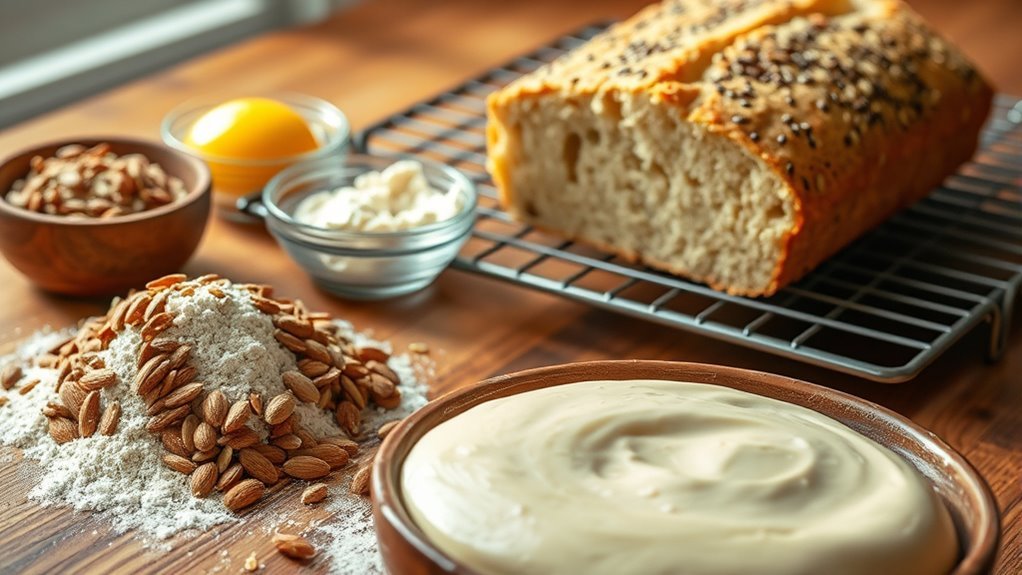
To bake keto bread successfully, you’ll need some essential tools to streamline the process. Having the right measuring tools is vital for accuracy, while deciding between a mixer and a whisk can impact the texture of your bread. Let’s explore a baking essentials checklist to get you started on your keto bread journey.
Baking Essentials Checklist
Baking keto bread requires a few essential tools to secure your success in the kitchen. Having the right equipment not only simplifies the process but also helps you make effective baking substitutions and explore ingredient alternatives. Here’s a checklist of must-have tools:
- Mixing Bowl: A sturdy, large bowl for combining ingredients.
- Electric Mixer: For easy mixing of doughs and batters.
- Loaf Pan: A high-quality, non-stick loaf pan secures even baking.
- Spatula: Perfect for scraping down sides and transferring dough.
- Oven Thermometer: To secure your oven’s temperature is accurate.
With these essentials, you’ll be well on your way to creating delicious keto bread that fits your lifestyle!
Measuring Tools Importance
Accurate measurements can make or break your keto bread-making experience. To achieve measuring accuracy, you’ll need the right tool types. Using improper tools can lead to inconsistent results, affecting both texture and flavor. Here’s a quick reference to essential measuring tools:
| Tool Type | Purpose |
|---|---|
| Digital Scale | Precise weight measurements |
| Measuring Cups | Liquid and dry ingredients |
| Measuring Spoons | Small ingredient amounts |
Investing in these tools will empower you to create a consistent, delicious keto bread every time. Remember, even a slight deviation in measurements can impact your results. So, embrace your freedom in baking by ensuring your measuring is spot-on!
Mixer vs. Whisk
When it comes to making keto bread, choosing the right mixing tool can greatly influence your results. Both mixers and whisks have their own unique advantages that can enhance your baking experience. Here’s a quick comparison:
- Mixer Advantages:
- Saves time and effort, especially for thick batters.
- Provides consistent mixing for uniform texture.
- Can handle larger quantities with ease.
- Whisk Benefits:
- Allows for better control over mixing intensity.
- Great for incorporating air, essential for fluffy bread.
- Easy to clean and store.
Ultimately, the choice depends on your recipe and personal preference. If you want light, airy bread, a whisk might be best. For dense doughs, a mixer could be your go-to tool.
Basic Keto Bread Recipe
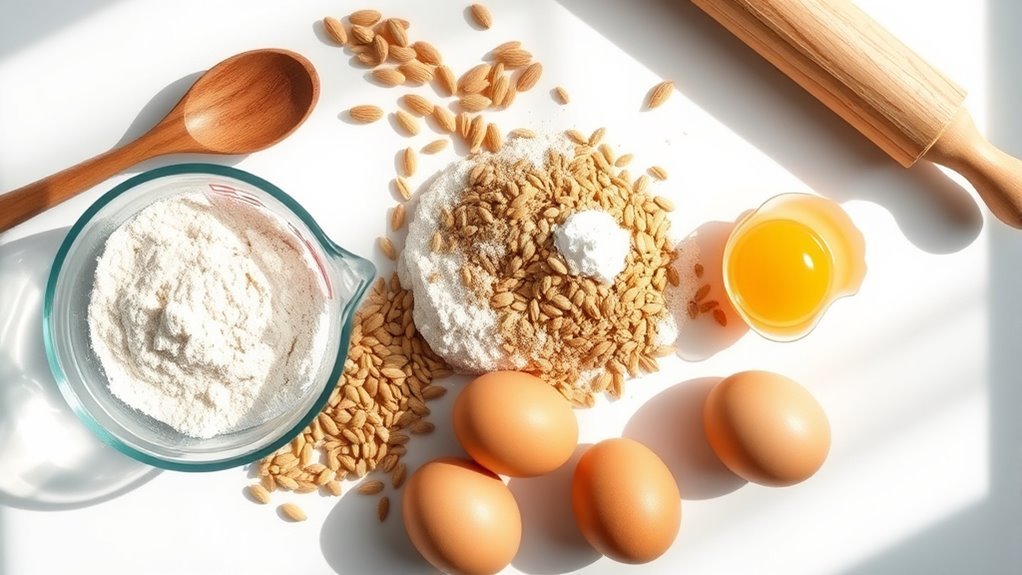
If you’re looking to satisfy your bread cravings while sticking to a keto diet, a basic keto bread recipe can be a game changer. This recipe uses almond flour and eggs, providing a fantastic gluten-free alternative that aligns with your keto lifestyle. Here’s a simple breakdown of the ingredients and steps:
| Ingredient | Quantity |
|---|---|
| Almond Flour | 2 cups |
| Eggs | 4 large |
| Baking Powder | 1 tablespoon |
| Salt | 1 teaspoon |
Preheat your oven to 350°F (175°C). Mix the ingredients, pour into a greased loaf pan, and bake for about 30 minutes. Enjoy this versatile base for various keto bread types, ensuring your diet remains satisfying and delicious!
Creative Variations for Keto Bread
Sometimes, it’s fun to get a little creative in the kitchen, especially when it comes to keto bread. You can elevate your bread game with various flavor profiles and textures. Here are some ideas to inspire your next loaf:
Get creative with keto bread by exploring new flavors and textures for a delicious twist on your favorite loaves.
- Herb variations: Add rosemary or thyme for an aromatic twist.
- Sweet variations: Incorporate cinnamon or vanilla extract for a hint of sweetness.
- Savory options: Mix in garlic powder or onion flakes for bold flavors.
- Nut add-ins: Throw in crushed almonds or walnuts for added crunch.
- Seed toppings: Sprinkle sesame or sunflower seeds on top before baking.
Feel free to experiment with cheese blends, vegetable infusions, fruit flavors, spice mixes, and protein boosts to create the perfect keto bread for your taste!
Tips for Storing and Freezing Keto Bread
To keep your keto bread fresh and tasty, it’s essential to know the best storage methods. Properly sealing and storing it can extend its shelf life, while freezing can preserve its quality for longer periods. Let’s explore effective techniques for both storing and freezing your keto bread.
Best Storage Methods
Properly storing and freezing keto bread can extend its shelf life considerably, ensuring you always have a low-carb option on hand. To keep your bread fresh, consider these best storage methods:
- Optimal temperature: Store bread in a cool, dry place away from direct sunlight.
- Container selection: Use airtight containers or resealable bags to prevent moisture loss.
- Slice before freezing: Cut bread into slices for easy access and quicker thawing.
- Label and date: Mark your containers to track freshness and avoid any confusion.
- Avoid refrigeration: Storing bread in the fridge can dry it out; stick to room temperature or freezing.
Freezing Techniques Explained
Freezing keto bread is an effective way to maintain its freshness and extend its shelf life, ensuring you always have a low-carb option ready. To optimize storage, use the following freezing techniques:
| Technique | Steps | Benefits |
|---|---|---|
| Slice Before Freezing | Cut bread into slices. | Easy to grab individual pieces. |
| Wrap Tightly | Use plastic wrap or foil. | Prevents freezer burn. |
| Use Airtight Bags | Store in freezer bags. | Keeps moisture in and air out. |
| Label and Date | Mark with date and type. | Track freshness easily. |
| Thawing Properly | Leave in fridge overnight. | Maintains texture and taste. |
Delicious Ways to Enjoy Your Keto Bread
How can you elevate your keto bread experience? There are countless delicious ways to enjoy it, whether you’re crafting keto sandwich ideas or savoring it as toast. Here are some tasty options to contemplate:
- Avocado Smash: Top with smashed avocado, lime, and a sprinkle of salt for a creamy delight.
- Nut Butter Spread: Slather on your favorite nut butter and add berries for a satisfying breakfast.
- Egg and Cheese: Make a quick keto sandwich with scrambled eggs and cheese for a filling meal.
- Pesto and Mozzarella: Spread pesto and layer with mozzarella for a savory snack.
- Cream Cheese and Smoked Salmon: Combine for a luxurious brunch option that’s low in carbs.
These ideas will surely enhance your keto bread experience!
Frequently Asked Questions about Making Keto Bread
1. What ingredients are needed to make keto bread?
To make keto bread, you typically need almond flour or coconut flour, eggs, baking powder, and a source of fat such as olive oil or butter. Some recipes may also include psyllium husk for added fiber and a better texture. Sweeteners like erythritol or stevia can be used if you prefer a sweeter bread.
2. Can I use regular flour in keto bread recipes?
No, regular flour is not suitable for keto bread as it is high in carbohydrates, which contradicts the principles of a ketogenic diet. Instead, you should use low-carb alternatives like almond flour or coconut flour, which provide the necessary texture while keeping the carb count low.
3. How do I achieve the right texture in keto bread?
To achieve the right texture in keto bread, using a combination of almond flour and coconut flour often yields the best results. Adding eggs is essential for binding, while psyllium husk can help mimic the elasticity of gluten. Ensure you mix the ingredients well and avoid overmixing, which can lead to a dense loaf.
4. How do I store keto bread to keep it fresh?
Keto bread can be stored at room temperature for a few days if kept in an airtight container. For longer storage, consider refrigerating it, which can extend its freshness for up to a week. Alternatively, you can slice the bread and freeze it, allowing you to toast individual slices as needed.
5. Can I customize my keto bread recipes with flavors or add-ins?
Absolutely! Keto bread recipes are highly customizable. You can add herbs, spices, cheese, or seeds to enhance the flavor. For a sweeter option, consider adding cinnamon, vanilla extract, or nuts. Just be mindful of the carb content of any add-ins to maintain your ketogenic goals.