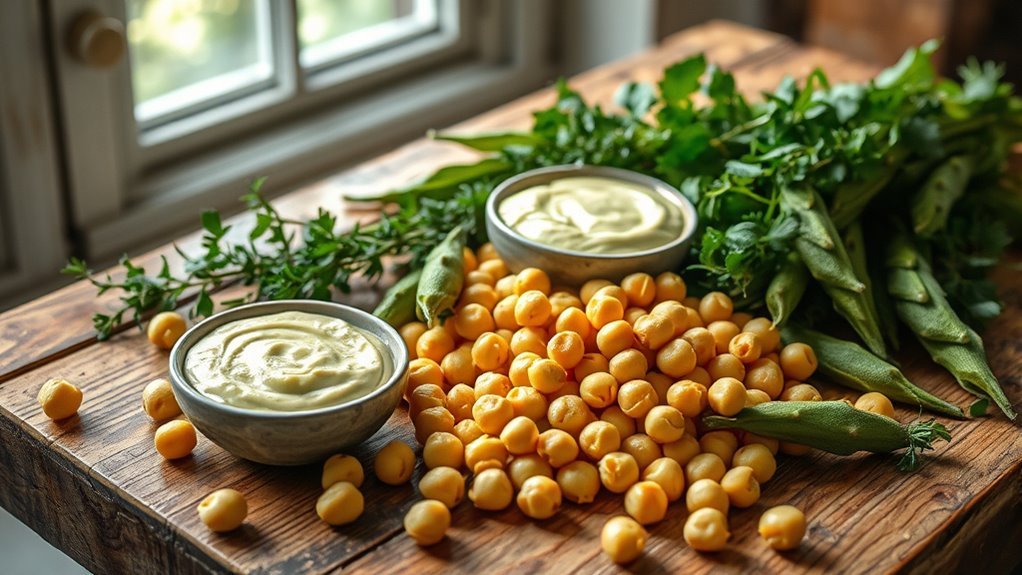

Chickpeas aren’t typically keto-friendly due to their higher carbohydrate content. One cup of cooked chickpeas has about 45 grams of carbs, which can exceed your daily keto limits. However, with careful portion control and mindful preparation, you can enjoy them in moderation. Using chickpea flour or incorporating them into dips like hummus can also be options. If you’re keen on learning how to balance chickpeas with your keto goals, there are more strategies to contemplate.
Nutritional Profile of Chickpeas

Chickpeas, often hailed as a nutritional powerhouse, offer a rich profile that can be surprising for those familiar with their culinary uses. You’ll find that different chickpea varieties, such as Kabuli and Desi, provide distinct flavors and textures, but they also share impressive nutritional benefits. They’re packed with protein, fiber, vitamins, and minerals, making them a valuable addition to your diet. Nutritional comparisons show that chickpeas are lower in fat and higher in protein compared to many other legumes, presenting a great plant-based protein source. Additionally, their fiber content supports digestive health, while essential nutrients like iron and magnesium contribute to overall well-being. Embracing chickpeas can enhance your meals and support your nutritional goals, but their high carbohydrate content can be a concern for those following a ketogenic diet.
Carbohydrate Content and Keto Guidelines
When it comes to the keto diet, understanding the carbohydrate content of chickpeas is essential. With approximately 27 grams of carbs per cup, they may exceed your daily carb limit on a strict keto plan. Knowing these numbers can help you make informed choices about including chickpeas in your meals. Additionally, considering alternatives like low-carb bean options can help you stay within your carbohydrate limits while still enjoying similar textures and flavors.
Chickpea Carb Count
Although they’re a popular source of plant-based protein, chickpeas have a notable carbohydrate content that can impact your keto diet. One cup of cooked chickpeas contains about 45 grams of carbs, which may exceed your daily limit on keto. If you’re looking for chickpea recipes, consider using them sparingly or finding carb alternatives. Additionally, understanding their nutritional profile can help you make informed choices while meal planning.
| Serving Size | Carbohydrates (g) | Net Carbs (g) |
|---|---|---|
| 1/4 cup | 11.5 | 8.5 |
| 1/2 cup | 22.5 | 18.5 |
| 1 cup | 45 | 40 |
| 1 tablespoon | 2.3 | 1.3 |
| 1 ounce | 8.4 | 6.4 |
Using this information, you can better navigate your keto-friendly meal planning.
Keto Diet Restrictions
To successfully adhere to a keto diet, you need to be mindful of your carbohydrate intake, as exceeding your daily limit can hinder ketosis, the metabolic state where your body primarily burns fat for fuel. Typically, the keto guideline suggests limiting carbs to about 20-50 grams per day. This means you’ll need to make strategic food substitutions. Instead of high-carb foods like grains and legumes, opt for non-starchy vegetables, nuts, and seeds. Chickpeas, while nutritious, are relatively high in carbs and may not fit into your daily carb count. By choosing low-carb options, you can maintain freedom in your meal planning while effectively supporting your weight loss and health goals on the keto diet. Incorporating low-carb beans can enhance dietary variety while supporting keto goals.
The Role of Fiber in Chickpeas
Chickpeas are packed with fiber, which plays an essential role in your overall health. This high fiber content not only supports digestive health but can also enhance feelings of fullness, aiding in weight management. By incorporating chickpeas into your diet, you can take advantage of these benefits while still adhering to keto guidelines.
High Fiber Content
While many might overlook the nutritional benefits of chickpeas in a keto diet, their high fiber content plays a crucial role in promoting digestive health and satiety. Chickpeas are an excellent fiber source, providing both soluble and insoluble fiber types. Soluble fiber can help regulate blood sugar levels, while insoluble fiber aids in digestion and promotes regularity. Including chickpeas in your diet can enhance feelings of fullness, making it easier to stick to your dietary goals. This high fiber content not only supports your gut health but also helps mitigate cravings, giving you more freedom in your food choices. So, consider incorporating chickpeas into your meals for a satisfying and nutritious option while following a keto lifestyle.
Digestive Health Benefits
Although you may not think of chickpeas as a staple in a keto diet, their fiber content is key to enhancing digestive health. Chickpeas are rich in soluble and insoluble fiber, which can promote a healthy gut microbiome. This fiber acts as a prebiotic, feeding beneficial gut bacteria and supporting their growth. A healthier gut microbiome can improve the production of digestive enzymes, aiding in nutrient absorption and reducing bloating. Additionally, fiber helps regulate bowel movements, preventing constipation and promoting overall gut health. Incorporating chickpeas into your meals can offer these digestive benefits while still aligning with your keto goals, allowing you to enjoy their unique taste and texture without compromising your dietary freedom.
Satiety and Weight Management
When it comes to managing weight effectively, incorporating fiber-rich foods like chickpeas into your diet can make a significant difference. Chickpeas are loaded with dietary fiber, which helps enhance feelings of fullness, activating satiety hormones in your body. This means you’re likely to feel satisfied longer, reducing the temptation to snack between meals. Studies show that a high-fiber diet can support weight loss by naturally lowering calorie intake without sacrificing nutrition. By adding chickpeas to salads, soups, or spreads, you not only boost your fiber intake but also enjoy a versatile ingredient that supports your weight management goals. Embracing chickpeas can empower your journey to healthier eating and weight loss, giving you the freedom to enjoy satisfying meals. However, it’s important to be mindful of their higher carbohydrate content, as excessive intake may hinder ketosis.
Comparing Chickpeas to Other Legumes
Chickpeas, often praised for their versatility and nutritional benefits, stand out when compared to other legumes like lentils, black beans, and kidney beans. When you look at chickpea varieties, you’ll find options like garbanzo beans and split peas, each offering unique flavors and textures. In legume comparisons, chickpeas generally provide a higher protein content, making them a great choice for those seeking plant-based protein sources. While black beans and kidney beans offer their own health benefits, chickpeas are lower in carbohydrates, appealing to those on a keto diet. However, it’s important to note that their carbohydrate content can still impact achieving ketosis, so portion control is key. Ultimately, understanding these differences helps you make informed choices that align with your dietary preferences while enjoying the freedom to explore diverse flavors and nutrients.
Potential Health Benefits of Chickpeas
While many people appreciate chickpeas for their culinary versatility, they also pack a punch when it comes to health benefits. Incorporating chickpeas into your diet can offer several advantages, thanks to their rich nutritional profile. Here are some key health benefits of chickpeas nutrition:
- High in Protein: A great plant-based protein source, ideal for muscle health.
- Rich in Fiber: Promotes digestive health and helps maintain a healthy weight.
- Low Glycemic Index: Supports stable blood sugar levels, making them a smart choice for energy.
- Packed with Vitamins and Minerals: Provides essential nutrients like folate, iron, and magnesium. Additionally, chickpeas are a nutritious choice, but their high carb content may affect those following a strict keto diet.
Incorporating Chickpeas Into a Keto Diet
Incorporating chickpeas into a keto diet can be challenging due to their higher carbohydrate content compared to other legumes. However, you can enjoy chickpeas in moderation if you’re strategic. Consider using chickpea flour for keto-friendly recipes; it’s lower in carbs than whole chickpeas. You might whip up chickpea pancakes or use it as a base for keto snacks like falafel. Another option is to blend chickpeas into dips, like hummus, but keep portions small to manage carb intake. Balancing your meals with other low-carb vegetables will help you stay within your limits. Remember, the key is moderation; small servings can still provide flavor and nutrition without derailing your keto goals. Additionally, understanding the carb content of foods is essential for making informed choices in your keto journey. Explore various chickpea recipes to enhance your culinary freedom!
Frequently Asked Questions
Can I Eat Chickpeas on a Strict Keto Diet?
You can’t eat chickpeas on a strict keto diet due to their higher carb content. Instead, consider chickpea substitutes like cauliflower or zucchini for your meals. These alternatives can help you stay within your carb limits while still enjoying satisfying dishes. When you’re meal planning for keto, focus on low-carb veggies and protein sources to maintain your energy levels and keep your diet enjoyable without feeling restricted.
Are Canned Chickpeas Different From Dried Ones Nutritionally?
You can’t judge a book by its cover, and that applies to chickpeas too! Canned chickpeas offer convenience and consistent nutrition, but they can be higher in sodium. Dried chickpeas, on the other hand, provide more versatility and often pack more nutrients when cooked properly. While canned nutrition is convenient, dried benefits include reduced processing and the ability to control seasoning. Choose based on your needs, and enjoy the freedom of variety!
How Do Chickpeas Affect Blood Sugar Levels?
Chickpeas have a low glycemic index, meaning they won’t spike your blood sugar levels considerably. When you eat chickpeas, your body experiences a gradual insulin response, helping to maintain steady energy levels. This makes them a smart choice if you’re watching your blood sugar. Their fiber content also aids digestion, further supporting stable glucose levels. So, incorporating chickpeas into your meals can contribute positively to your overall blood sugar management.
What Are Alternatives to Chickpeas on a Keto Diet?
If you’re looking for alternatives to chickpeas on a keto diet, consider using keto-friendly legumes like black soybeans or green beans. These low-carb substitutes are great for maintaining your macros while still enjoying some legume-like textures. Other options include cauliflower, zucchini, or mushrooms, which can replace chickpeas in various dishes. These choices not only keep your carb count low but also provide essential nutrients, ensuring you stay healthy and satisfied.
Can Chickpeas Cause Digestive Issues on a Keto Diet?
Chickpeas can indeed stir the pot when it comes to digestion, especially on a keto diet. While they’re often viewed as keto-friendly legumes, their fiber content might lead to bloating or gas for some folks. If your stomach feels like it’s doing the cha-cha after eating them, you might consider alternatives like zucchini or cauliflower. Listening to your body is key; don’t hesitate to explore what works best for your digestion.
References
- https://www.healthline.com/nutrition/are-chickpeas-keto
- https://www.ncbi.nlm.nih.gov/pmc/articles/PMC7023195/
- https://www.medicalnewstoday.com/articles/323373
- https://www.verywellfit.com/chickpeas-on-the-keto-diet-5113635
- https://www.journalofnutrition.org/content/130/10/2516S.full
- https://www.thekitchn.com/chickpeas-keto-22912236