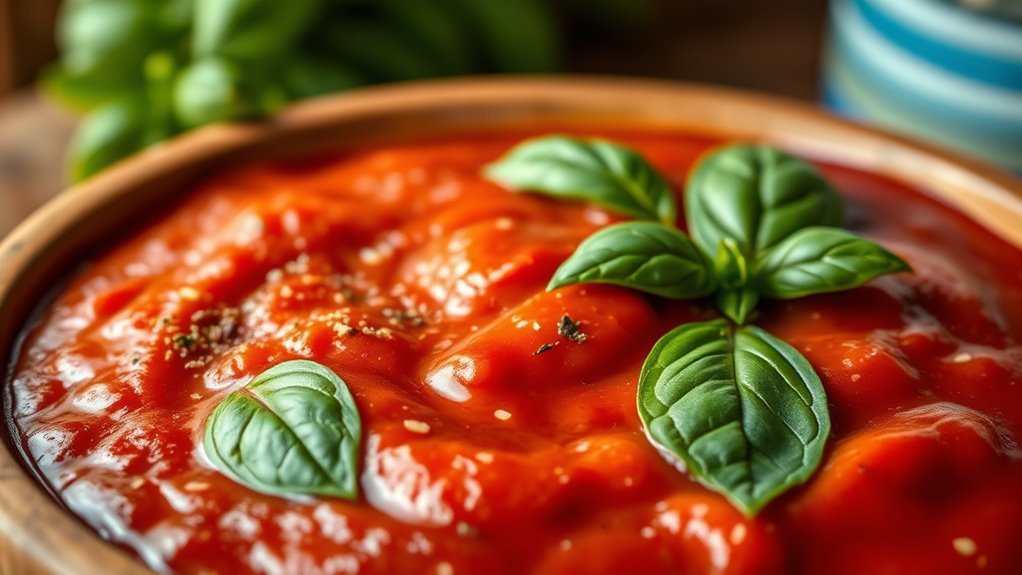

Yes, pizza sauce can be keto-friendly, but you need to choose your ingredients carefully. Many store-bought sauces have added sugars that can increase carbohydrate counts considerably. Look for options with low sugar content or consider making your own sauce using crushed tomatoes and herbs. This way, you can control the ingredients and stay within your daily carb limits. If you’re interested in more details about suitable sauces and toppings, there’s more to explore.
Understanding the Keto Diet
When you explore the keto diet, it’s essential to understand its fundamental principles. The ketogenic diet focuses on high-fat, moderate-protein, and very low-carbohydrate intake, which puts your body into a state of ketosis. In this state, your body burns fat for fuel instead of carbohydrates. Effective keto meal planning is vital for success; it involves selecting foods that align with these macronutrient ratios. Incorporate low carb snacks, like nuts or cheese, to help maintain your energy levels without exceeding carbohydrate limits. By prioritizing whole, nutrient-dense foods, you can achieve a sustainable keto lifestyle. Remember, understanding these principles empowers you to make informed choices, allowing for the freedom to enjoy meals while adhering to your dietary goals. Additionally, many individuals experience increased energy levels while in ketosis, making it easier to stay committed to your meal plan.
The Basics of Pizza Sauce
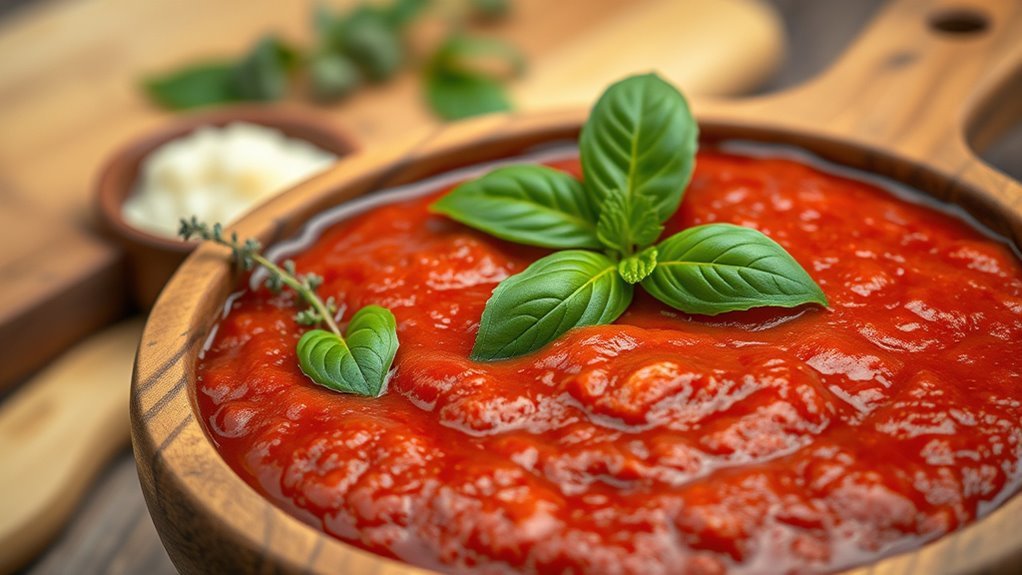
When you’re considering pizza sauce, it’s essential to know its ingredients and how they impact carb content. Common components like tomatoes, herbs, and spices can vary widely in nutritional value. Understanding these factors will help you make informed choices about including pizza sauce in your keto diet.
Ingredients in Pizza Sauce
Pizza sauce serves as the flavorful foundation for a perfect pizza, and its ingredients play a crucial role in determining its taste and nutritional profile. Typically, pizza sauce consists of crushed tomatoes, garlic, olive oil, and various herbs like oregano and basil. These ingredients create a rich and savory flavor that complements the crust and toppings. If you’re looking for ingredient substitutions, consider using fresh tomatoes or tomato paste for a thicker consistency, or add crushed red pepper for a spicy kick. You can even experiment with sugar alternatives to enhance sweetness without adding carbs. Understanding these components helps you make informed choices, especially if you’re pursuing a keto lifestyle while enjoying your favorite dish.
Carb Content Analysis
Understanding the carb content in pizza sauce is essential for those following a keto diet. Many traditional pizza sauces contain hidden carbs that can impact your daily intake. Here are some key points to take into account:
- Tomato Base: Often the primary ingredient, tomatoes do contain natural sugars.
- Added Sweeteners: Some sauces include sugars or high-fructose corn syrup, increasing carb sources.
- Serving Size: Pay attention to the serving size; even low-carb sauces can add up.
- Sauce Substitutes: Consider alternatives like pesto or olive oil to minimize carbs. Additionally, being aware of hidden carbs in various sauces can help streamline your keto meal planning.
Common Ingredients in Pizza Sauce
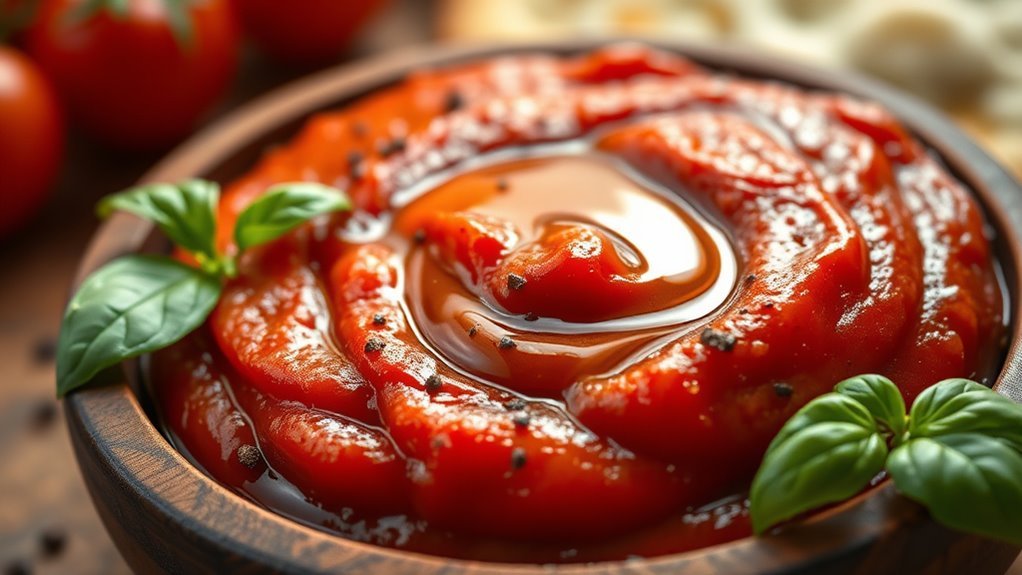
A rich, flavorful pizza sauce typically consists of a few key ingredients that contribute to its signature taste. Most recipes include crushed tomatoes or tomato paste, which provide a thick sauce consistency. You’ll also find herbs like oregano, basil, and garlic, which enhance the flavor profile. Olive oil can be added for a smoother texture and additional richness. Some variations might include red pepper flakes for heat or parmesan for depth. These ingredients not only create a robust taste but also allow for flavor variations, catering to different preferences. When making your own sauce, you can adjust the ratios to achieve your desired consistency and flavor intensity, ensuring that it aligns with your personal taste and dietary needs. Additionally, using low-carb ingredients in the sauce can help maintain a keto-friendly diet, making it suitable for those monitoring their carbohydrate intake.
Sugar Content in Store-Bought Sauces
While many people enjoy the convenience of store-bought pizza sauces, it’s important to check their sugar content, as it can vary considerably. Some sauces contain added sugars that may disrupt your keto lifestyle. Here are four key points to reflect upon when reading labels:
- Total Sugar: Some sauces can have over 6 grams of sugar per serving.
- Hidden Sugars: Look for ingredients like high fructose corn syrup.
- Sugar Alternatives: Some brands use sugar alternatives, which can be a better choice.
- Serving Size: Pay attention to the serving size; what seems low in sugar could add up quickly.
Homemade Pizza Sauce Options
Creating your own pizza sauce not only allows you to control the ingredients but also guarantees that it aligns with your keto diet. You can start with a base of crushed tomatoes or tomato puree, ensuring it’s free from added sugars. To elevate the flavor, consider incorporating fresh herb blends like basil, oregano, and thyme. These herbs not only enhance the sauce but also add essential nutrients. For additional flavor enhancements, you might include garlic powder, onion powder, or a splash of balsamic vinegar for depth without the carbs. Experiment with spices like red pepper flakes for heat or smoked paprika for a unique twist. This way, you can enjoy a delicious, keto-friendly pizza sauce that’s tailored to your taste. Additionally, using homemade tomato juice can further enhance the sauce’s flavor while keeping it low in carbs.
Low-Carb Pizza Sauce Brands
When searching for low-carb pizza sauce brands, you’ll find several options that cater to keto dietary needs. Here are four popular low-carb brands worth considering:
- Rao’s Homemade Marinara – Known for its rich flavor and minimal carbs, it’s a favorite among keto enthusiasts.
- Primal Kitchen Pizza Sauce – This brand focuses on quality ingredients, offering a tasty, low-sugar option.
- Victoria Fine Foods Marinara – With no added sugar, it’s a solid choice for low-carb sauce comparisons.
- Amy’s Organic Pizza Sauce – A well-balanced sauce that’s organic and fits within the low-carb criteria.
These low-carb pizza sauce brands provide flavorful options without compromising your keto lifestyle, allowing you to enjoy pizza with fewer carbs. Incorporating low-carb vegetables into your pizza can enhance both nutrition and taste while staying true to your keto goals.
Tips for Choosing Keto-Friendly Sauces
To guarantee you’re choosing keto-friendly sauces, it’s essential to read labels carefully and look for key indicators. Start by examining the sauce ingredients. Opt for sauces with minimal, whole-food ingredients and avoid those loaded with sugars or high-carb fillers. Check the net carb count per serving; aim for sauces with 3 grams or fewer. Flavor profiles matter too—choose sauces that enhance your dishes without compromising your carb limit. Consider options like tomato-based sauces with herbs or creamy sauces made from cheese, which can complement your meals while keeping you in ketosis. Additionally, incorporating sauces made from healthy fats can further support overall health while adhering to your keto goals. By being mindful of what you select, you can enjoy flavorful sauces that align with your keto lifestyle without sacrificing taste or freedom.
Alternative Toppings for Keto Pizza
When it comes to keto pizza, choosing the right toppings is essential for staying within your carb limits. You can explore various cheese options, select meats that are low in carbs, and incorporate a range of vegetables for added flavor and nutrition. Each of these choices can enhance your pizza while keeping it aligned with your keto lifestyle. Additionally, incorporating healthy fats into your toppings, such as avocado or olive oil, can further support your energy levels on the keto diet.
Cheese Variations for Toppings
A variety of cheese options can elevate your keto pizza experience while keeping carbs in check. By experimenting with different cheese blends and substitutes, you can create a delicious low-carb masterpiece. Here are four options to evaluate:
- Mozzarella: A classic choice, it’s low in carbs and melts beautifully.
- Parmesan: This hard cheese adds a nutty flavor and can be used in blends for a kick.
- Cream Cheese: Use it as a base for a rich, creamy texture that’s keto-friendly.
- Cheddar: A sharp option that brings depth and pairs well with other cheeses.
Incorporating high-fat content can promote satiety and support your keto lifestyle. These cheese variations not only enhance taste but also help you stick to your keto goals without sacrificing flavor.
Meat Options for Pizza
Incorporating meat into your keto pizza not only adds flavor but also boosts protein content, making it a satisfying meal choice. When considering your sausage selection, opt for varieties that are low in carbs and free from fillers. Pepperoni varieties can also enhance your pizza, providing that classic spicy kick. You might try uncured or organic options to minimize additives. Chicken toppings offer another lean alternative, whether grilled, shredded, or diced, and pair well with various sauces and seasonings. For true meatlover options, combine multiple meats like bacon, ham, or ground beef for a hearty, protein-packed pizza. These choices guarantee you can enjoy a flavorful pizza while staying within your keto guidelines. Additionally, be mindful of carb counts in various meat toppings to ensure they align with your keto goals.
Veggie Choices for Toppings
While many people think of meat as the primary topping for pizza, incorporating a variety of low-carb vegetables can enhance flavor and add nutritional value to your keto pizza. Here are some keto friendly vegetables you can use as toppings:
- Spinach – Rich in iron and vitamins, it adds a fresh taste.
- Bell Peppers – Crunchy and colorful, they bring a sweet flavor without the carbs.
- Mushrooms – Earthy and savory, they’re low in calories and high in nutrients.
- Zucchini – Thinly sliced or spiralized, it’s a versatile and hydrating option.
Using these low carb toppings not only keeps your pizza keto-compliant but also elevates its taste and health benefits, giving you the freedom to enjoy your meal without guilt. Additionally, mushrooms are a smart choice for those looking to maintain their carb limits while enjoying flavorful toppings.
Making Pizza Night Keto-Friendly
To make pizza night keto-friendly, you’ll want to focus on low-carb alternatives that satisfy your cravings without derailing your diet. Start with keto crusts; options like cauliflower, almond flour, or cheese bases deliver a delicious foundation while keeping carbs in check. Next, consider sauce alternatives; opt for a low-sugar marinara or a creamy pesto to enhance flavor without adding unnecessary carbs. Be mindful of toppings, too—choose meats like pepperoni or grilled chicken and load up on non-starchy vegetables. By making these simple swaps, you can enjoy a satisfying pizza night while adhering to your keto lifestyle. With a little creativity, you can indulge in your favorite meal without compromising your goals.
Frequently Asked Questions
Can I Use Pesto as a Pizza Sauce on Keto?
Yes, you can definitely use pesto as a pizza sauce on keto! Pesto varieties, like basil or sun-dried tomato, are usually low in carbs and packed with healthy fats, making them a great choice. Just be mindful of the ingredients in store-bought options, as some may contain added sugars. Top your pesto pizza with keto toppings like mozzarella, olives, or spinach for a delicious and satisfying meal that aligns with your keto lifestyle!
Is Tomato Sauce Inherently High in Carbs?
Tomato sauce isn’t inherently high in carbs, but its carb content can vary. Think of a ripe tomato, bursting with flavor; it has natural sugars that contribute to the overall carb count. If you’re watching your carbs, consider sauce alternatives like pesto or a homemade blend with low-carb ingredients. Always check labels, as some sauces add sugars that can sneakily spike the carb count. You can enjoy flavorful options while sticking to your goals!
How Do I Store Leftover Pizza Sauce?
To store leftover pizza sauce, you should transfer it to an airtight container and refrigerate it. It can last up to a week in the fridge, but for longer storage, consider freezing it in portion-sized containers. This way, you can enjoy your sauce later without compromising its flavor. Just remember, sauce shelf life can vary based on ingredients, so always check for any signs of spoilage before using it again.
Can I Freeze Homemade Pizza Sauce?
Absolutely, you can freeze homemade pizza sauce! Think of it like stashing away treasures in a time capsule. For best results, use airtight containers or freezer bags to avoid freezer burn. Leave some space, as the sauce will expand when freezing. When you thaw it, you might notice a change in sauce consistency; just give it a good stir before using. Remember, it’s a great way to save time and enjoy your favorite flavors later!
What Are the Best Herbs for Keto Pizza Sauce?
The best herbs for your keto pizza sauce are oregano and basil. Oregano offers a robust flavor that complements tomatoes well, while also providing antioxidants and anti-inflammatory benefits. Basil adds a fresh, aromatic quality and is known for its potential to support digestion and reduce stress. Combining these herbs not only enhances the taste but also enriches your sauce with health benefits, making your pizza both delicious and nutritious.
References
- https://en.wikipedia.org/wiki/Pizza_sauce
- https://www.healthline.com/nutrition/keto-diet-foods
- https://www.verywellfit.com/what-to-eat-on-the-keto-diet-5110497
- https://www.ncbi.nlm.nih.gov/pmc/articles/PMC6461911/
- https://www.webmd.com/diet/what-is-the-keto-diet
- https://www.mayoclinic.org/healthy-lifestyle/nutrition-and-healthy-eating/expert-answers/keto-diet/faq-20452487
- https://www.cdc.gov/healthyweight/assessing/bmi/adult_bmi/english_bmi_calculator/bmi_calculator.html