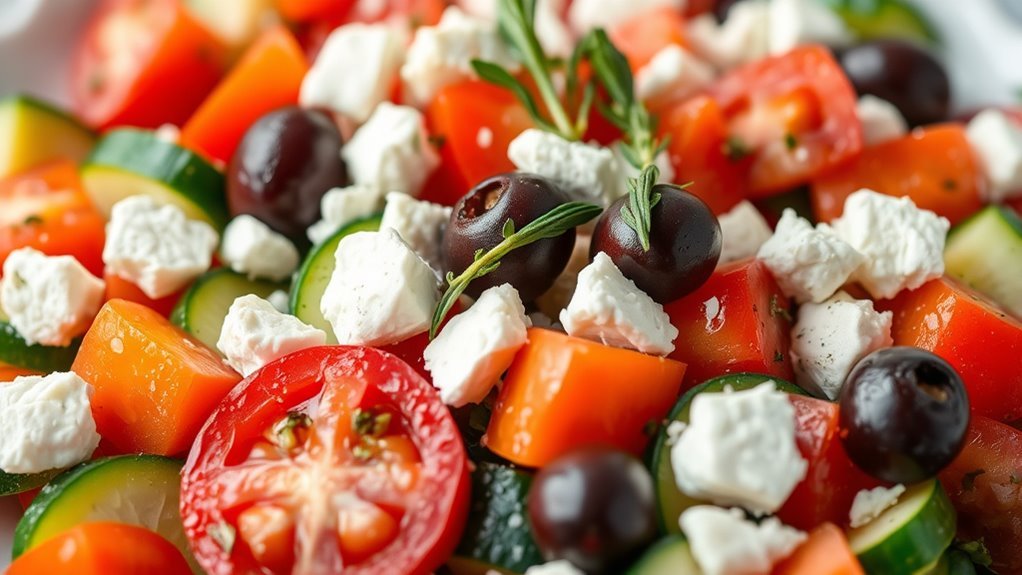

Yes, Greek salad can be keto-friendly when prepared with care. It typically includes low-carb ingredients like cucumbers, olives, and feta cheese, all of which fit well into a ketogenic diet. Using healthy fats such as olive oil and avocado enhances flavor while keeping carbs low. Just be mindful of portion sizes and avoid high-carb dressings. If you want to guarantee your salad stays within keto limits, there’s plenty more to take into account.
Understanding the Ketogenic Diet
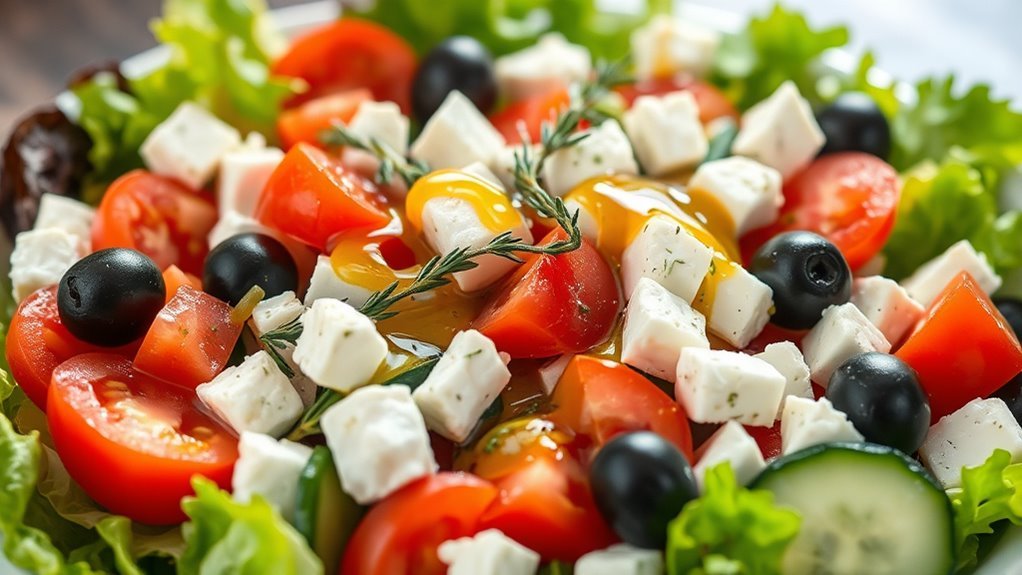
Understanding the Ketogenic Diet can be essential if you’re considering its impact on your meals, including dishes like Greek salad. The ketogenic principles focus on reducing carbohydrate intake and increasing healthy fats, shifting your body into a state of ketosis. In this state, your body relies on fat for energy instead of carbs. This approach can lead to improved energy levels and weight management for many individuals. When you think about your meals, incorporating healthy fats like olive oil and avocados can enhance flavor while adhering to keto guidelines. However, it’s important to balance food choices and monitor macronutrients to guarantee you’re meeting your dietary goals. Embracing this lifestyle can offer you freedom in your eating habits while promoting overall well-being. Additionally, understanding the importance of healthy fats is crucial for achieving and maintaining ketosis.
Key Ingredients in Greek Salad
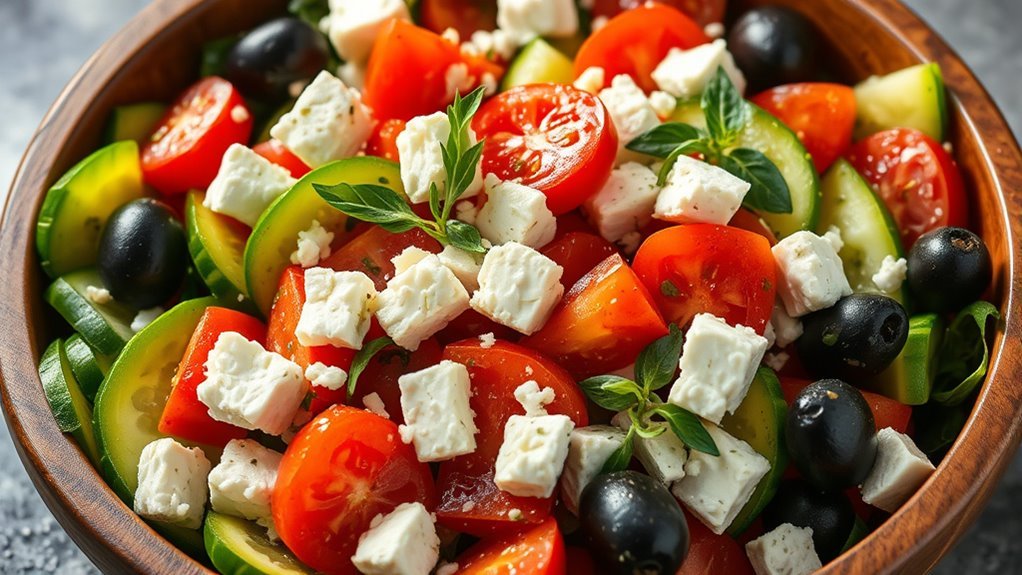
When you think about Greek salad, you’ll notice it typically includes ingredients like cucumbers, tomatoes, olives, and feta cheese. Each of these components brings its own nutritional profile, which is essential to understand, especially if you’re considering a keto diet. Analyzing these ingredients can help you determine whether this classic dish fits into your dietary preferences. Additionally, incorporating keto-friendly fruits like avocado or olives can enhance the flavor and nutritional value of your Greek salad.
Traditional Ingredients Overview
Greek salad, often celebrated for its vibrant colors and fresh flavors, typically includes a handful of key ingredients that contribute to its distinct taste and texture. Originating from Greece, this salad often features ripe tomatoes, crisp cucumbers, red onions, bell peppers, Kalamata olives, and feta cheese. The combination of these elements creates a revitalizing and tangy dish. While variations exist—some may include ingredients like capers or different types of cheese—these traditional components are what define the classic Greek salad. When you enjoy a Greek salad, you’re not just tasting a dish; you’re experiencing a piece of culinary history that embodies the essence of Mediterranean cuisine.
Nutritional Profile Analysis
Although many people enjoy Greek salad for its taste, it’s important to evaluate the nutritional profile of its key ingredients. This salad typically includes tomatoes, cucumbers, olives, feta cheese, and olive oil, each offering unique nutritional benefits. Tomatoes are rich in vitamins C and K, while cucumbers provide hydration and fiber. Olives contribute healthy fats, and feta adds protein and calcium. Incorporating low carbohydrate content from ingredients like olives and feta can enhance the salad’s suitability for a keto diet. If you’re looking to adapt the salad to fit a keto lifestyle, consider ingredient substitutions like using avocado for added healthy fats or omitting high-carb components. By making these adjustments, you can enjoy the flavors of Greek salad while maintaining your dietary goals. Balancing taste and nutrition allows you to savor your meals without compromise.
Carb Content of Greek Salad Components
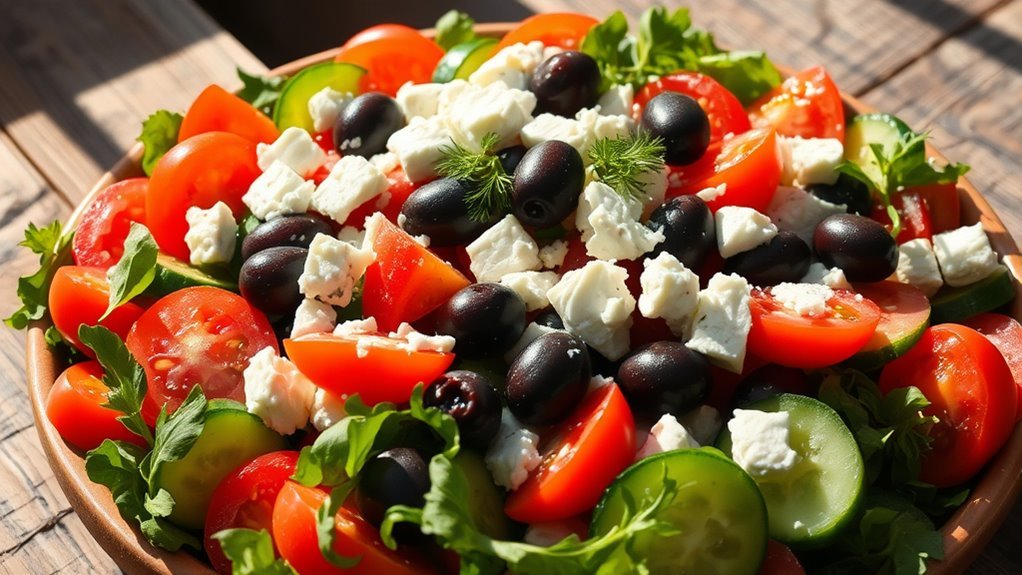
When considering the carb content of Greek salad, you’ll want to look closely at each component, starting with the vegetables, which can vary in carbohydrate levels. Then, don’t forget about the cheese and its protein content, as this can also influence your overall carb intake. Finally, the dressing you choose may add hidden carbs, so it’s essential to read labels or make it from scratch.
Vegetables and Their Carbs
While many people enjoy the fresh flavors of a Greek salad, understanding the carbohydrate content of its components is essential for those following a ketogenic diet. Here’s a quick breakdown of common vegetables found in Greek salads:
- Cucumbers: Low in carbs, they provide hydration and fiber.
- Tomatoes: Moderate carb counts but high in nutrient density and flavor.
- Bell Peppers: These add sweetness and crunch with a low carb count.
- Red Onions: They offer a sharp taste but have slightly higher carbs.
When choosing vegetable types, consider their fiber content and seasonal availability. Fresh options are preferable, and preparation methods like slicing or chopping can influence both taste and texture without adding significant carbs. Adding low-carb leafy greens can further enhance the nutritional value of your salad.
Cheese and Protein Impact
As you explore the components of a Greek salad, it’s important to contemplate the role of cheese and protein, both of which can greatly impact the overall carb count. Cheese types like feta or mozzarella are popular in Greek salads, and they generally contain low carbs while providing essential fats and protein. Feta, for example, has about 1.2 grams of carbs per ounce, making it a great choice for a keto diet. Additionally, protein sources such as grilled chicken or shrimp can enhance the salad’s nutritional profile without greatly increasing carb levels. By choosing the right cheese and protein options, you can enjoy a satisfying Greek salad while staying aligned with your keto goals, all while savoring delicious flavors. Incorporating low-carb cheeses into your meal can further support your dietary needs.
Dressing Carb Considerations
Choosing the right cheese and protein in your Greek salad sets a solid foundation, but the dressing can also greatly affect the carb count. Here are some dressing alternatives to evaluate:
- Olive Oil & Vinegar: Low in carbs and adds healthy fats.
- Lemon Juice: Fresh and zesty with minimal carbs.
- Greek Yogurt Dressing: Creamy option, but check for added sugars.
- Store-Bought Dressings: Beware of hidden sugars; opt for those labeled “keto-friendly.”
When making serving suggestions, always measure your dressing to keep track of carb intake. Enjoy experimenting with these options to find the perfect balance that fits your keto lifestyle while keeping your Greek salad delicious and satisfying! Incorporating healthy fats in your dressing can further enhance the nutritional profile of your meal.
Nutritional Benefits of Greek Salad
Greek salad offers a plethora of nutritional benefits that can complement a healthy diet. Packed with fresh vegetables, healthy fats, and protein, it’s a great way to enjoy various salad variations while reaping Greek benefits. Here’s a quick overview of its nutritional components:
| Ingredient | Nutritional Benefit | Key Nutrients |
|---|---|---|
| Tomatoes | Antioxidants | Vitamin C, Lycopene |
| Cucumbers | Hydration | Water, Fiber |
| Olives | Heart health | Monounsaturated fats |
| Feta Cheese | Protein and Calcium | Protein, Calcium |
| Red Onion | Anti-inflammatory properties | Quercetin |
Incorporating Greek salad into your meals can help enhance overall nutrition while keeping your diet exciting and varied. Additionally, the inclusion of fresh vegetables like tomatoes and cucumbers can contribute to a low-carb diet, making it an excellent option for those following a keto lifestyle.
Modifying Greek Salad for Keto
To make Greek salad keto-friendly, you’ll want to focus on low-carb vegetable options like cucumbers and bell peppers while avoiding high-carb ingredients such as tomatoes in excess. Choosing full-fat cheese, like feta or mozzarella, and incorporating olives can enhance flavor without adding too many carbs. Finally, don’t forget to modify the dressing; opting for olive oil and vinegar instead of sugary dressings is essential for staying within your keto goals. Including leafy greens can further boost nutritional value while keeping the salad low in carbs.
Low-Carb Vegetable Choices
While many traditional Greek salad ingredients are nutritious, not all are suitable for a ketogenic diet due to their carb content. To keep your salad keto-friendly, focus on incorporating low-carb vegetables. Here are some great options:
- Cucumbers: Invigorating and hydrating, they’re low in carbs and high in water content. Additionally, cucumbers have an average net carb count of around 2.6 grams per 100 grams, making them an ideal choice for maintaining ketosis.
- Bell Peppers: Colorful and crunchy, they offer vitamins while being low in carbs.
- Radishes: Spicy and crisp, they’re perfect for adding a kick without the extra carbs.
- Spinach: Nutrient-dense and versatile, it can serve as a great base for your salad.
Cheese and Olive Options
When you’re modifying a Greek salad to fit a keto diet, the choice of cheese and olives plays an essential role in maintaining both flavor and low carbohydrate content. Opt for feta varieties like sheep’s milk feta or Greek feta, as they provide protein and healthy fats while keeping carbs low. These cheeses not only add richness but also complement the salad’s other ingredients beautifully.
For olives, choose from olive types such as Kalamata or green olives, which are packed with healthy monounsaturated fats and can enhance the overall taste. Both feta and olives contribute essential nutrients without derailing your keto goals, making them ideal for a satisfying and flavorful Greek salad. Additionally, incorporating low carb options like green onions can elevate the salad’s flavor profile while keeping it keto-friendly. Enjoy the freedom to indulge while staying within your dietary limits!
Dressing Modifications Needed
With the right cheese and olives in place, the next step in creating a keto-friendly Greek salad is adjusting the dressing. Traditional dressings often contain sugar or high-carb ingredients, so it’s important to modify your dressing ingredients and measurements accordingly. Here’s how to do it:
- Use olive oil: Choose a high-quality extra virgin olive oil for healthy fats.
- Add vinegar: Opt for red wine or apple cider vinegar to keep it low-carb.
- Season wisely: Incorporate fresh herbs like oregano or basil for flavor without carbs.
- Skip the sugar: Avoid honey or other sweeteners, focusing on savory flavors instead.
Recommended Fats for a Keto Greek Salad
Choosing the right fats is essential for crafting a delicious Keto Greek salad. Start with high-quality olive oil, a staple in Mediterranean diets, providing healthy fats that support heart health and enhance flavor. Don’t overlook avocado benefits; their creamy texture adds richness, plus they’re packed with monounsaturated fats that keep you feeling full longer. Including nuts, like almonds or walnuts, not only adds a satisfying crunch but also boosts the nutritional profile with additional healthy fats and protein. These fats are vital for maintaining ketosis while ensuring your salad is both satisfying and flavorful. So, mix and match these options to create a Keto Greek salad that aligns with your dietary goals while offering a delightful eating experience.
Portion Control and Serving Sizes
Balancing the rich flavors and healthy fats in your Keto Greek salad requires careful attention to portion control and serving sizes. To keep your meal aligned with your Keto goals, consider these serving adjustments:
- Vegetables: Aim for about 1-2 cups of mixed greens and veggies.
- Fats: Limit feta cheese to 1 ounce and olives to 5-10.
- Oils: Use 1-2 tablespoons of olive oil for dressing.
- Protein: If adding grilled chicken or shrimp, stick to 3-4 ounces.
Pairing Greek Salad With Other Keto Dishes
While Greek salad is a delicious and nutritious option on its own, it can be even more satisfying when paired with other Keto-friendly dishes. When you think about pairing proteins, grilled chicken or shrimp can enhance the protein content while complementing the fresh flavors of the salad. You could also consider side dishes like cauliflower rice or zucchini noodles, which can add variety without compromising your Keto goals. Here’s a handy table to help you with your pairings:
| Protein Options | Side Dishes | Flavor Enhancements |
|---|---|---|
| Grilled Chicken | Cauliflower Rice | Feta Cheese |
| Shrimp Skewers | Zucchini Noodles | Olive Oil Dressing |
| Beef Kebabs | Roasted Asparagus | Fresh Herbs |
| Salmon Fillet | Sautéed Spinach | Lemon Juice |
| Pork Chops | Cabbage Slaw | Balsamic Vinegar |
Common Mistakes to Avoid
When enjoying Greek salad as part of your Keto journey, it’s important to be mindful of common pitfalls that can undermine your dietary goals. Here are some common keto mistakes to avoid:
- Choosing high-carb dressings: Stick to olive oil and vinegar instead of sugary dressings.
- Ignoring portion sizes: Even healthy ingredients can add up; be mindful of your servings.
- Neglecting ingredient swaps: Opt for lower-carb alternatives like feta instead of crumbled cheese or chickpeas.
- Overlooking hidden carbs: Some vegetables, like tomatoes, can be higher in carbs than you think.
Enjoying Greek Salad While Staying in Ketosis
To enjoy Greek salad while staying in ketosis, it’s essential to focus on the right ingredients and preparation methods. Start with keto-friendly vegetables like cucumbers, bell peppers, and leafy greens. Opt for full-fat feta cheese and a healthy olive oil dressing, steering clear of sugary dressings that can derail your ketosis. Be mindful of olives, as they can add healthy fats but also calories. Additionally, limit or omit high-carb ingredients like tomatoes if you’re particularly strict about your carb intake. By customizing your Greek salad, you can enjoy its flavors without sacrificing your ketogenic goals. Remember, balance is key, and with thoughtful choices, you can savor this delicious dish while maintaining your freedom within a keto lifestyle.
Frequently Asked Questions
Can I Add Grilled Chicken to My Greek Salad for More Protein?
Absolutely, you can add grilled chicken to your Greek salad for a protein boost! Grilled chicken is a great source of lean protein, which can help keep you full and support muscle health. It complements the fresh vegetables and feta cheese beautifully, enhancing the salad’s flavor and nutritional value. Just be mindful of portion sizes if you’re watching your overall calorie intake. Enjoy your delicious, protein-packed meal!
Is Feta Cheese Considered Keto-Friendly?
Yes, feta cheese is considered keto-friendly! It’s low in carbs and high in flavor, making it a great addition to your meals. Feta cheese benefits include being rich in calcium and protein, which can help you feel satisfied. If you’re looking for feta cheese alternatives, consider cream cheese or goat cheese, which also complement salads well. Just be mindful of portion sizes to stay within your daily carb limit while enjoying these flavors!
What Are Low-Carb Dressings for Greek Salad?
When it comes to dressing up your Greek salad, think of it as painting a masterpiece—your choices can make or break the flavor. For low-carb options, olive oil and vinegar are classics that keep things light yet vibrant. You might also try ranch or Caesar dressings, just confirm they’re low in sugar. Experiment with lemon juice or a sprinkle of herbs for dressing varieties that enhance your salad without the carb overload. Enjoy the freedom!
Can I Use Olives in My Keto Greek Salad?
Yes, you can definitely use olives in your keto Greek salad! Olive varieties like Kalamata and green olives not only add flavor but also come with health benefits, including healthy fats and antioxidants. They’re low in carbs, making them a perfect fit for your keto lifestyle. Just keep portion sizes in mind to maintain your carb count. Enjoy the taste and nutrition olives bring to your salad!
How Does Greek Salad Fit Into a Meal Prep Plan?
Greek salad fits perfectly into your meal prep plan. You can easily batch-make it for the week, allowing for various salad variations by mixing in different veggies or proteins like grilled chicken. Just keep the dressing separate to maintain freshness. Plus, it’s packed with nutrients, making it a balanced option. By incorporating Greek salad into your meals, you’re not only diversifying your diet but also saving time during busy weekdays. Enjoy the freedom of choice!
References
- https://en.wikipedia.org/wiki/Greek_salad
- https://www.healthline.com/nutrition/keto-diet-foods
- https://www.ncbi.nlm.nih.gov/pmc/articles/PMC6781373/
- https://www.cdc.gov/healthyweight/healthy_eating/index.html
- https://www.eatright.org/health/wellness/preventing-illness/keto-diet-what-to-know
- https://www.mayoclinic.org/healthy-lifestyle/nutrition-and-healthy-eating/expert-answers/keto-diet/faq-20427615
- https://www.webmd.com/diet/obesity/what-is-a-keto-diet
- https://www.nutrition.org.uk/healthyliving/healthyeating/keto-diet.html
- https://www.bbcgoodfood.com/howto/guide/keto-diet-what-eat-and-avoid