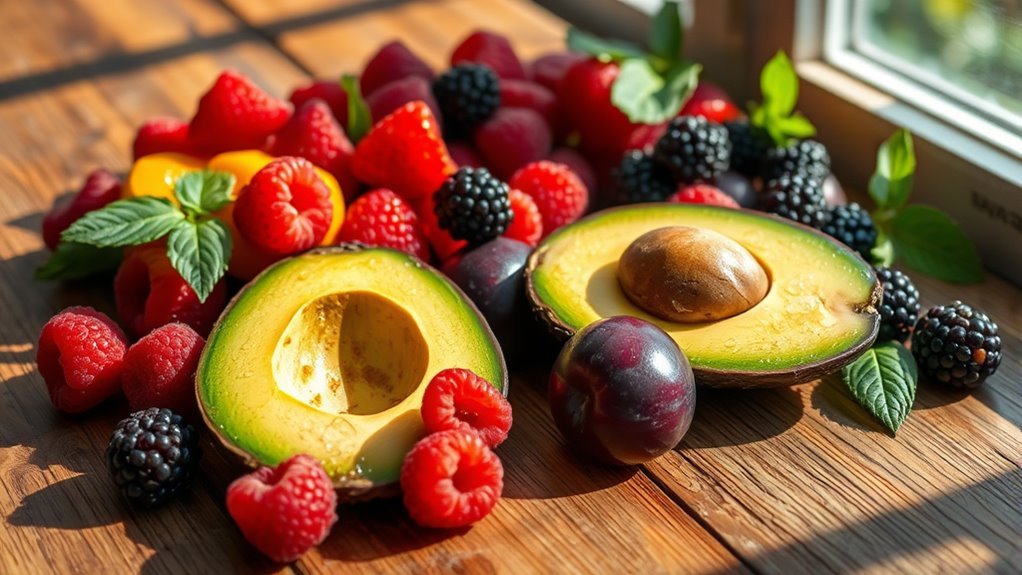

Yes, you can eat fruit on a keto diet, but your choices need to be low in carbs. Focus on berries like strawberries and raspberries, which offer antioxidants without too many carbs. Avocado and olives are excellent options due to their healthy fats. Be mindful of portion sizes to stay within your daily carb limit. With smart selections, you can enjoy fruit while keeping aligned with keto principles—there’s more to explore on how to incorporate these fruits effectively.
Understanding the Keto Diet and Its Guidelines

When you’re diving into the keto diet, it’s vital to grasp its core principles and guidelines. At the heart of the keto lifestyle are the keto principles, which emphasize high fat intake, moderate protein, and significant carbohydrate restrictions. By limiting carbs, typically to around 20-50 grams per day, your body enters a state of ketosis, where it burns fat for fuel instead of glucose. This shift can lead to weight loss and improved energy levels. However, it’s essential to choose your foods wisely. Focus on healthy fats, high-quality proteins, and non-starchy vegetables to maintain balance. Understanding these guidelines empowers you, giving you the freedom to enjoy a diverse range of foods while adhering to the keto framework.
Low-Carb Fruits That Fit the Keto Lifestyle
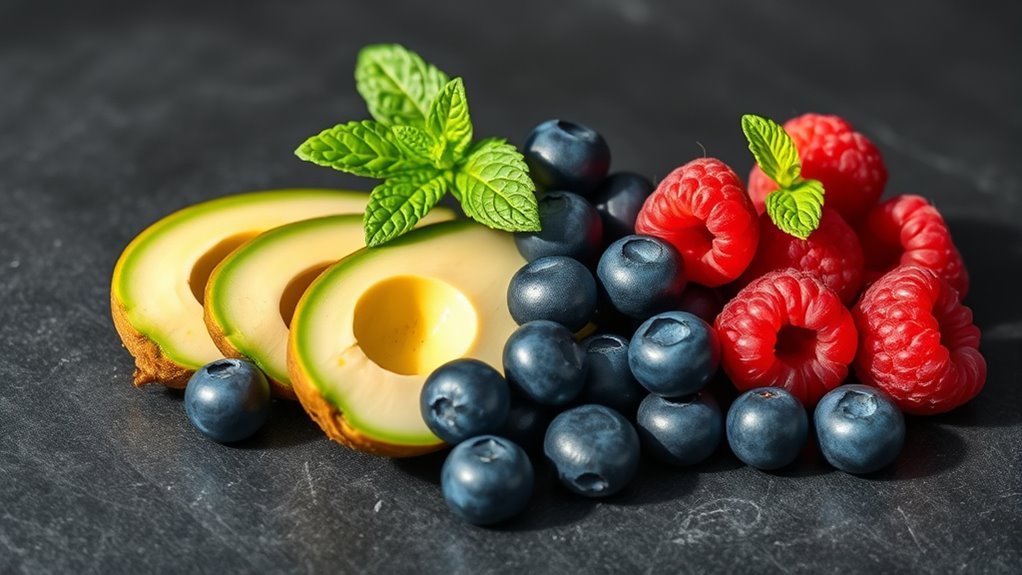
Although many fruits are high in carbohydrates, there are low-carb options that can fit seamlessly into your keto lifestyle. Incorporating these fruits can help you enjoy the natural sweetness while reaping their health benefits.
Discover low-carb fruits that enhance your keto lifestyle, allowing you to savor natural sweetness while enjoying their health benefits.
- Berries: Strawberries, blueberries, and raspberries are low in carbs and packed with antioxidants, providing numerous berries benefits.
- Avocado: This fruit is rich in healthy fats and comes in various avocado varieties, making it a versatile addition to your meals.
- Olives: Low in carbs and high in healthy fats, olives make a great snack or salad topping.
- Coconut: Fresh coconut or unsweetened coconut flakes can add texture and flavor without the carb load.
These fruits can keep your diet exciting while maintaining your keto goals.
How to Incorporate Fruits Into Your Keto Meal Plan

Incorporating fruits into your keto meal plan can be both enjoyable and beneficial, provided you choose wisely. Start by focusing on low-carb options like berries, which are nutrient-dense and lower in sugar. Practice fruit portioning to keep your carb intake in check; a small handful of raspberries or strawberries can be a satisfying addition to meals or snacks. Consider seasonal selections, as fresh fruits often taste better and can be more affordable. You can also blend fruits into smoothies with avocado or spinach for a delicious and creamy treat. By being mindful of your choices and portion sizes, you can enjoy the natural sweetness of fruits while staying aligned with your keto goals.
The Nutritional Benefits of Keto-Friendly Fruits
Choosing the right fruits can not only satisfy your sweet tooth but also provide various health benefits that complement your keto lifestyle. Incorporating keto-friendly fruits into your diet can enhance your nutrient intake while keeping carbs in check. Here are some keto fruit benefits that you shouldn’t overlook:
- High in antioxidants: Fruits like berries can help combat oxidative stress.
- Rich in fiber: Certain fruits support digestive health and help you feel full.
- Low in carbs: Options like avocados and strawberries fit perfectly within keto guidelines.
- Packed with vitamins: Essential nutrients found in fruits can boost your immune system.
Tips for Enjoying Fruits Without Overdoing Carbs
When you want to enjoy fruits on a keto diet without exceeding your carb limits, it’s essential to be mindful of portion sizes and fruit selections. Implementing effective fruit portioning strategies can help you stay within your carb range. Opt for seasonal fruit choices, as they tend to be fresher and lower in sugar.
| Fruit | Net Carbs per 100g |
|---|---|
| Raspberries | 5.4 |
| Strawberries | 7.7 |
| Blackberries | 5.3 |
| Avocado | 1.8 |
Frequently Asked Questions
1. Can you eat fruit on a keto diet?
Yes, you can eat fruit on a keto diet, but it’s important to choose low-carb options. Fruits like berries (strawberries, blueberries, raspberries) are typically lower in carbohydrates compared to other fruits. Since the keto diet focuses on keeping carbohydrate intake low to promote ketosis, moderation is key when incorporating fruits into your meals.
2. What are the best fruits to eat on a keto diet?
The best fruits to consume on a keto diet include berries such as strawberries, raspberries, blackberries, and blueberries, as they are lower in carbohydrates. Other options include avocados, olives, and certain melons like cantaloupe and watermelon. These fruits provide essential nutrients while keeping your carb intake within limits.
3. How much fruit can I eat on a keto diet?
The amount of fruit you can eat on a keto diet varies based on your individual carbohydrate allowance, which typically ranges from 20 to 50 grams of net carbs per day. A small handful of berries or a few slices of avocado can fit within this limit. It’s essential to monitor your total carbohydrate intake and adjust your fruit consumption accordingly to maintain ketosis.
4. Are there any fruits I should avoid on a keto diet?
Yes, certain fruits are high in carbohydrates and should be avoided or consumed in very small amounts on a keto diet. These include bananas, grapes, apples, oranges, and pineapples. These fruits can significantly increase your carb intake and may hinder your ability to stay in ketosis.
5. Can I have fruit smoothies on a keto diet?
Fruit smoothies can be compatible with a keto diet if made with low-carb fruits and other keto-friendly ingredients. For example, using berries, unsweetened almond milk, spinach, and a fat source like avocado or nut butter can create a nutritious smoothie. Be cautious of portion sizes and the overall carb content to ensure you stay within your daily limits.
References
- https://www.healthline.com/nutrition/keto-diet-and-fruit
- https://www.ncbi.nlm.nih.gov/pmc/articles/PMC6461294/
- https://www.ketogenic.com/what-fruits-are-keto-friendly/
- https://www.webmd.com/diet/what-is-the-keto-diet
- https://www.verywellfit.com/can-you-eat-fruit-on-keto-5191968
- https://www.mayoclinic.org/healthy-lifestyle/nutrition-and-healthy-eating/expert-answers/keto-diet/faq-20482699
- https://www.nutrition.org.uk/healthyliving/basics/what-is-the-keto-diet.html
- https://www.sciencedirect.com/science/article/pii/S221226721930168X