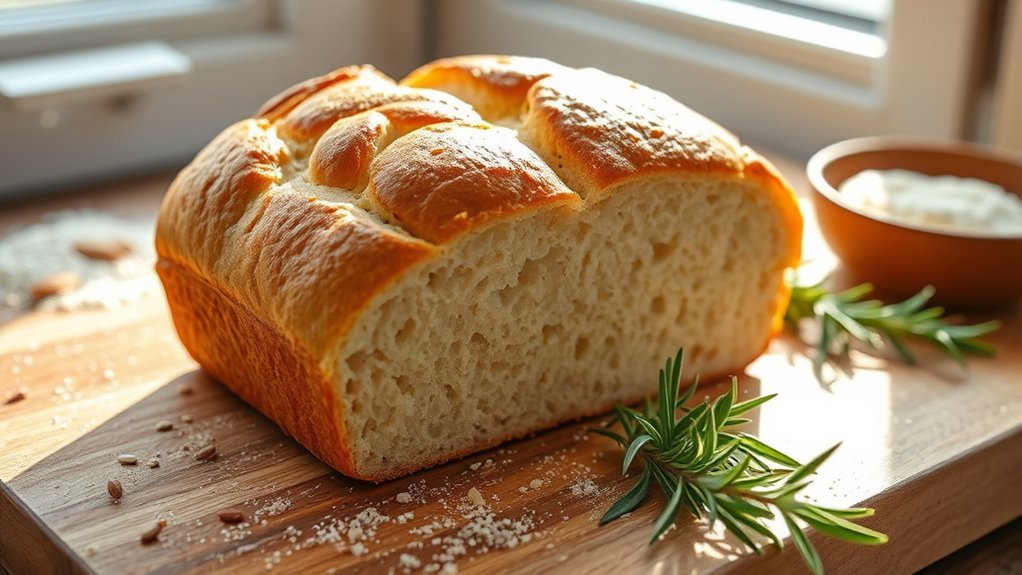

Keto bread can indeed be part of a ketogenic diet, but you need to be cautious. Not all products labeled as “keto” are genuinely low in carbs. True keto bread should primarily use low-carb ingredients like almond flour or coconut flour and contain less than 5 grams of net carbs per serving. Always check nutrition labels for hidden sugars and fillers. If you’re curious about making informed choices and alternatives, you’ll find more useful insights ahead.
Understanding the Ketogenic Diet
When you’re exploring the ketogenic diet, it’s vital to understand its core principles. At its heart, the ketogenic fundamentals focus on considerably reducing carbohydrates while increasing fat intake. This shift aims to put your body into a state of ketosis, where it efficiently burns fat for fuel. Different diet variations exist within the keto framework, such as targeted or cyclical keto, allowing for flexibility based on your lifestyle and goals. It’s important to choose a variation that resonates with you, ensuring sustainability and enjoyment. Always remember that individual responses to the diet can vary, so tuning into your body’s signals is key. Embracing these principles can empower you to make informed choices on your keto journey. Additionally, understanding the concept of ketosis is crucial for successfully transitioning your metabolism to burn fat for energy.
What Is Keto Bread?
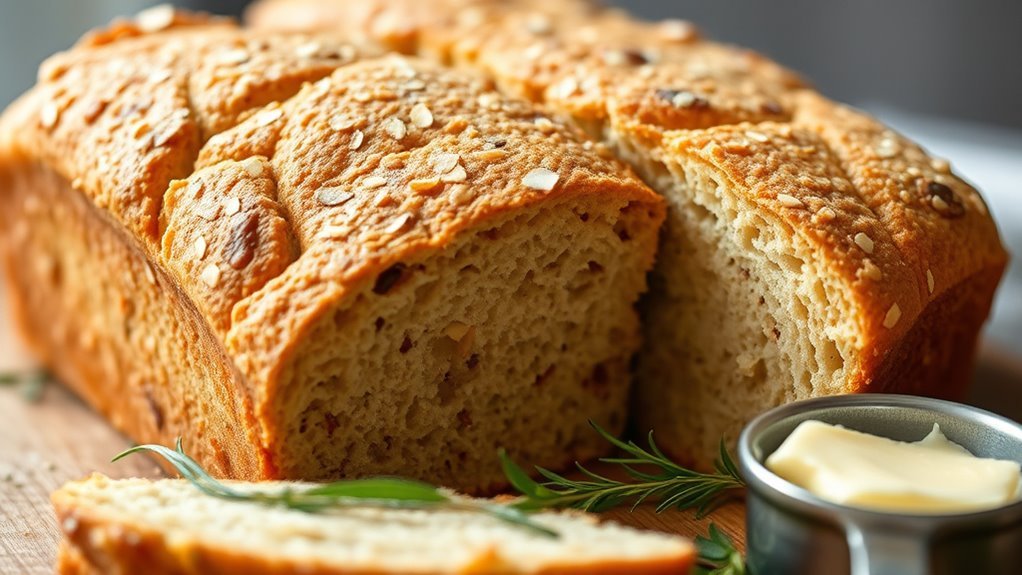
Keto bread is made using low-carb ingredients that fit within the ketogenic diet, like almond flour or coconut flour, instead of traditional wheat flour. When you compare the nutritional profiles, you’ll notice significant differences in carbohydrate content that make it suitable for keto followers. Popular recipes often incorporate ingredients such as eggs and cheese to enhance flavor and texture while keeping carbs in check. Additionally, keto bread is known for its higher fiber content which supports digestive health and stable blood sugar levels.
Ingredients Used in Keto
Bread lovers seeking a low-carb alternative often turn to keto bread, which is crafted with unique ingredients designed to align with ketogenic dietary principles. Common keto substitutions include almond flour, coconut flour, and flaxseed meal, which provide a fraction of the carbs found in traditional wheat flour. These alternatives not only lower the carb count but also add beneficial nutrients like fiber and healthy fats. Additionally, many recipes incorporate eggs and cheese, enhancing both flavor and texture while supporting your health goals. By using these ingredients, keto bread can help you enjoy the taste of bread without compromising your dietary freedom. Embracing these substitutions may lead to significant health benefits, including improved energy levels and better weight management. Understanding ingredient ratios is crucial for achieving the desired texture and consistency in keto bread recipes.
Nutritional Profile Comparison
While traditional bread is often loaded with carbohydrates, keto bread offers a much lower carb alternative, making it appealing for those following a ketogenic diet. Typically made from almond flour, coconut flour, or other low-carb ingredients, keto bread tends to have a higher nutrient density compared to conventional bread. This means you’ll get more vitamins and minerals per calorie, which is essential for maintaining your health while reducing carb intake.
Additionally, keto bread usually has a lower calorie count, allowing you to enjoy a satisfying slice without derailing your dietary goals. However, it’s vital to read labels, as some brands may still contain hidden sugars or additives. Overall, keto bread can be a viable option for those seeking freedom from high-carb choices, especially since gluten-free flours are commonly used to enhance its nutritional profile.
Popular Keto Bread Recipes
If you’ve been exploring low-carb alternatives, you might be curious about the various recipes that can help satisfy your bread cravings while sticking to a ketogenic lifestyle. Popular keto bread recipes often use almond flour, coconut flour, or flaxseed meal, providing low-carb options without sacrificing flavor. These breads not only align with your dietary goals but also offer keto bread benefits, like increased satiety and stable blood sugar levels. You can enjoy them toasted or as a base for your favorite dishes. Popular toppings include avocado, cream cheese, or even sugar-free nut butters, allowing you to customize your meals. With these recipes, you can indulge in bread without derailing your keto journey, giving you the freedom to enjoy delicious foods. Additionally, the low carbohydrate content of keto bread helps stabilize blood sugar levels, making it a favorable choice for those managing diabetes.
Common Ingredients in Keto Bread
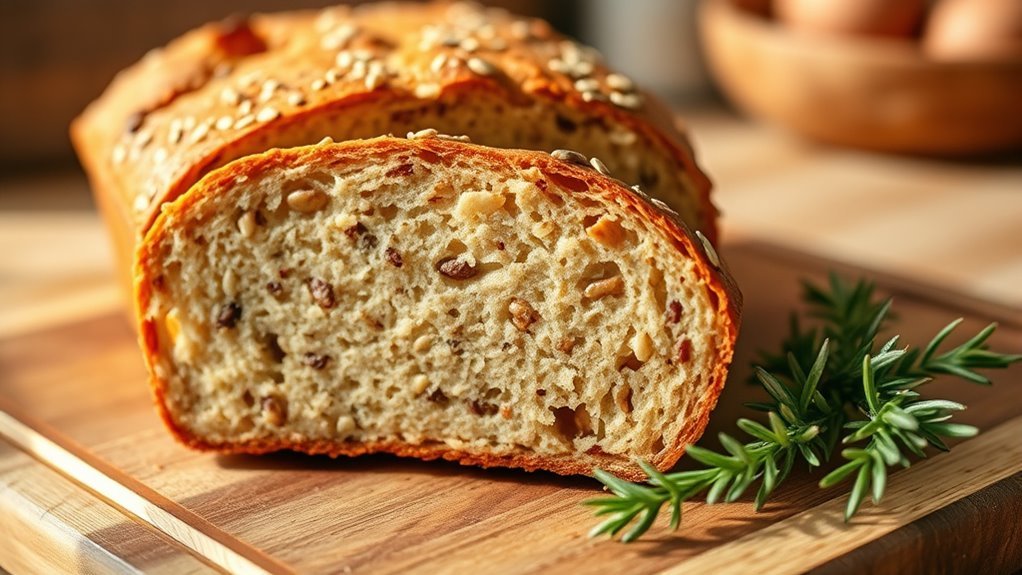
When making keto bread, you’ll often encounter popular keto flours like almond flour and coconut flour, which serve as low-carb alternatives to traditional wheat flour. Additionally, sugar alternatives such as erythritol and stevia help maintain sweetness without the carbs. Understanding these common ingredients can help you make informed choices about your keto bread options. Incorporating low carb sweeteners can enhance the flavor while keeping the bread within keto guidelines.
Popular Keto Flours
As you explore the world of keto bread, understanding the popular keto flours used in its preparation is essential. Almond flour is a favorite due to its low carb content and nutty flavor, making it a versatile choice. Coconut flour, with its high fiber content, absorbs moisture well, providing a unique texture. Flaxseed meal is rich in omega-3 fatty acids and can also act as a binding agent. Psyllium husk, known for its ability to create a bread-like structure, is often added for elasticity. Sunflower seed flour is a nut-free option that offers a mild taste, while chia seeds provide both nutrition and a gel-like consistency when mixed with liquids. Each option contributes to delicious keto bread while keeping you on track! Additionally, using almond flour in keto recipes offers heart health benefits that align perfectly with a low-carb lifestyle.
Sugar Alternatives Used
Keto bread wouldn’t be complete without the right sugar alternatives, which play a significant role in keeping the carb count low while still satisfying your sweet tooth. You’ll often find sugar alcohols and natural sweeteners in keto bread, both of which offer sweetness without the carbs of traditional sugars.
Here’s a quick overview of common sugar alternatives:
| Sugar Alternative | Type | Carb Count (per serving) |
|---|---|---|
| Erythritol | Sugar Alcohol | 0.2g |
| Stevia | Natural Sweetener | 0g |
| Monk Fruit | Natural Sweetener | 0g |
| Xylitol | Sugar Alcohol | 6g |
These alternatives help you enjoy the flavors you love while keeping your keto goals in check. Additionally, it’s important to consider carbohydrate content when choosing sweeteners to ensure they align with your dietary restrictions.
Nutritional Comparison: Keto Bread vs. Traditional Bread
While many people turn to keto bread as a low-carb alternative, it’s essential to compare its nutritional profile with that of traditional bread. Typically, keto bread contains fewer carbohydrates, focusing instead on ingredients like almond flour, coconut flour, and seeds. This can lead to a significant reduction in calories, making it appealing for those watching their weight. However, traditional bread often offers more fiber and may have added vitamins, contributing to its health benefits. Regarding taste comparison, you might find keto bread denser and nuttier, while traditional bread tends to be softer and more versatile. Ultimately, choosing between the two depends on your dietary goals and personal preferences, allowing you the freedom to enjoy your meals. Additionally, understanding the importance of low-carb vegetables can help you create more balanced meals while following a keto diet.
How to Identify True Keto Bread
How can you tell if a bread is genuinely keto-friendly? Start by checking the nutrition label for net carbs, ideally under 5 grams per serving. True keto bread brands often utilize almond flour, coconut flour, or flaxseed meal instead of traditional wheat flour. Examine ingredient sourcing as well; high-quality ingredients typically indicate a better product. Avoid any bread with added sugars or high-carb fillers. Look for brands that prioritize transparency, providing clear information about their ingredients. Remember, not all products labeled “keto” are created equal, so doing your research is essential. By staying informed and cautious, you can enjoy the freedom of keto without sacrificing quality or taste in your bread choices. Additionally, accurate measurements during the baking process can significantly impact the final product’s texture and flavor.
Homemade vs. Store-Bought Keto Bread
When considering whether to make or buy keto bread, what factors should you weigh? Homemade benefits are significant; you control the ingredients, ensuring they align with your dietary needs. When you bake at home, you can experiment with flavors and textures, creating a bread that’s truly tailored to your preferences. However, there’s also the allure of store-bought convenience. Many brands offer ready-to-eat options that save you time, making it easier to stick to your keto lifestyle. Just be sure to check labels for hidden sugars or fillers. Ultimately, the choice between homemade and store-bought keto bread comes down to your lifestyle and preferences. You can enjoy the freedom of choosing what best fits your needs.
The Role of Fiber in Keto Bread
Fiber plays an essential role in keto bread, enhancing both its nutritional profile and texture. When you choose keto bread, understanding fiber benefits can help you make informed decisions. Fiber types vary, with soluble and insoluble fibers offering unique advantages. Soluble fiber can aid in digestion and help regulate blood sugar levels, while insoluble fiber promotes bowel regularity. Incorporating these fibers into your keto bread not only improves its structure but also supports your overall health. This is particularly important in a low-carb diet where traditional sources of fiber may be limited. By prioritizing fiber-rich ingredients like almond flour, flaxseed, or psyllium husk, you can enjoy delicious keto bread that aligns with your dietary goals while ensuring you get the fiber your body needs.
Potential Pitfalls of Keto Bread
While keto bread can be a convenient alternative for those following a low-carb diet, it’s important to be aware of potential pitfalls that may arise. Many people fall victim to keto bread misconceptions, believing it’s always a healthy choice. Some varieties may be high in unhealthy fats or contain additives that could lead to potential health concerns.
Here’s a quick look at some common pitfalls:
| Misconceptions | Potential Health Concerns |
|---|---|
| All keto bread is low-carb | Some contain hidden sugars |
| It’s always gluten-free | May trigger allergies |
| It’s a free-for-all | Portion control is essential |
| It’s nutritionally complete | Lacks essential nutrients |
Stay informed and make mindful choices to truly benefit from keto bread.
Incorporating Keto Bread Into Your Diet
Incorporating keto bread into your diet can be a seamless way to enjoy familiar foods without derailing your low-carb goals. With its low-carb profile, keto bread offers benefits like satisfying cravings while supporting your keto lifestyle. When meal planning, you can use keto bread for sandwiches, toast, or even as a base for pizzas, making your meals more versatile. It’s important to choose high-quality varieties that align with your nutritional needs. By adding keto bread thoughtfully, you can enjoy the freedom of various dishes without compromising your diet. Remember, moderation is key; balance your meals with plenty of healthy fats and proteins to maximize your success on the keto journey. Enjoy the flexibility that keto bread brings to your dining experience!
Frequently Asked Questions
Can I Eat Keto Bread if I’m Not on a Ketogenic Diet?
Sure, you can enjoy keto bread even if you’re not on a ketogenic diet! Think of it like a tasty bridge between traditional bread and healthier choices. Keto bread benefits include lower carbs and higher fiber, making it a great option for non-keto consumption. It can help stabilize blood sugar levels and keep you feeling fuller, giving you freedom to savor delicious meals while still being mindful of your health.
Is Keto Bread Gluten-Free?
Keto bread can be gluten-free, but it depends on the specific recipe or brand. Many keto recipes use gluten alternatives like almond flour, coconut flour, or flaxseed meal, which are naturally gluten-free. However, it’s essential to check ingredient labels, as some brands might include gluten-containing ingredients. If you’re avoiding gluten, always look for certified gluten-free options to guarantee you’re making a safe choice for your dietary needs.
How Long Does Homemade Keto Bread Last?
Homemade keto bread typically lasts about 3 to 5 days at room temperature. To maximize its shelf life, store it in an airtight container or wrap it tightly in plastic wrap. If you want to keep it longer, consider freezing it for up to a month. Just remember to slice it before freezing for easy access. Following these storage tips can help you enjoy your bread while maintaining its freshness and flavor.
Can I Freeze Keto Bread for Later Use?
Yes, you can freeze keto bread for later use. To guarantee the best quality, use proper freezing methods. Wrap the bread tightly in plastic wrap or aluminum foil and then place it in an airtight container or freezer bag. This helps prevent freezer burn and maintains flavor. When you’re ready to enjoy it, simply thaw it in the fridge or at room temperature. Proper bread storage can extend its freshness, giving you more freedom to indulge!
Are There Any Side Effects of Eating Keto Bread?
While keto bread can be a low-carb option, it may have side effects for some. About 1 in 10 people experience digestive issues like bloating due to specific keto bread ingredients, such as almond flour or coconut flour, which can be high in fiber. Plus, if you’re sensitive to potential allergens, like nuts or gluten, it’s essential to check the ingredients. Always listen to your body and adjust your diet accordingly for your well-being.
References
- https://www.healthline.com/nutrition/keto-bread
- https://www.ncbi.nlm.nih.gov/pmc/articles/PMC6832716/
- https://www.webmd.com/diet/what-is-the-keto-diet
- https://www.mayoclinic.org/healthy-lifestyle/nutrition-and-healthy-eating/expert-answers/keto-diet/faq-20416869
- https://www.menshealth.com/nutrition/a19546376/keto-diet-explained/
- https://www.verywellfit.com/keto-bread-5189529
- https://www.jamanetwork.com/journals/jama/fullarticle/2761985
- https://www.sciencedirect.com/science/article/pii/S2212267216300267