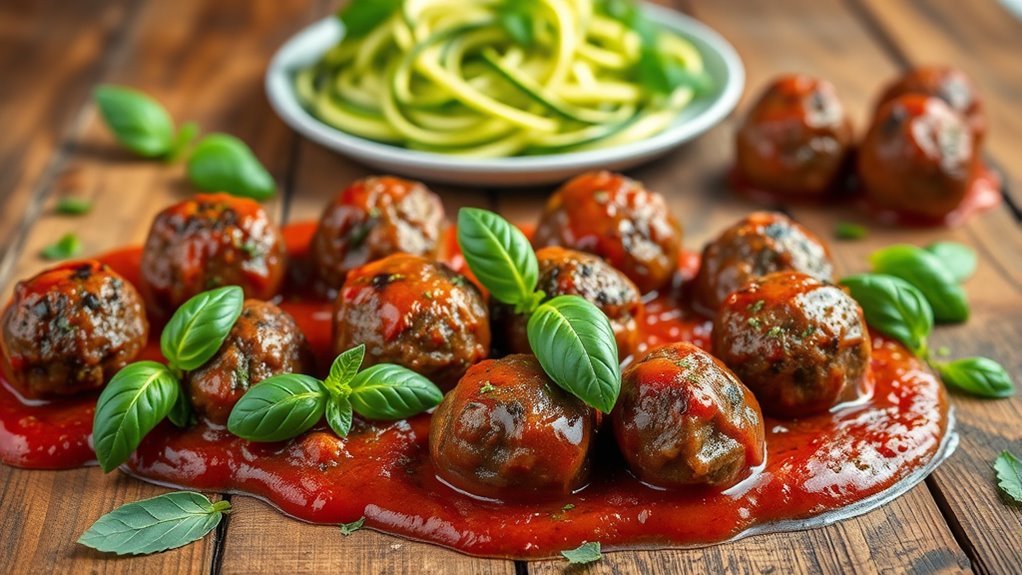

Yes, meatballs can be keto-friendly if you use low-carb ingredients. Instead of breadcrumbs, try almond flour or coconut flour as binders. Opt for meats like beef, pork, or turkey, and enhance flavors with herbs and spices. Avoid sauces high in sugar and pair your meatballs with low-carb options like zucchini noodles or cauliflower rice. With the right choices, you can enjoy them as part of your keto lifestyle. There’s more to discover about creating delicious low-carb meatball recipes.
Understanding the Traditional Meatball Ingredients
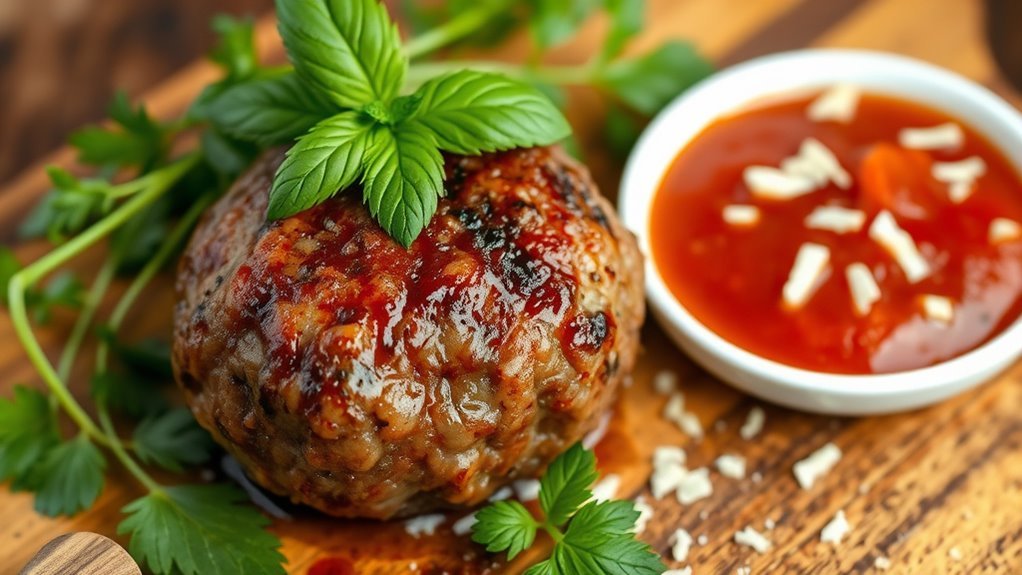
When you think of traditional meatballs, you might picture a savory blend of ground meat, breadcrumbs, and spices all rolled into a comforting bite-sized treat. The history of meatballs dates back centuries, with various cultures adapting local ingredients and traditional seasonings to create their own unique versions. Common seasonings include garlic, onion, parsley, and pepper, which enhance the flavor profile, making them irresistible. Ground meat, often beef or pork, serves as the base, while breadcrumbs provide texture and moisture. Some recipes even incorporate eggs to bind the mixture. Understanding these traditional ingredients not only enriches your culinary knowledge but also highlights the versatility of meatballs, allowing you to explore different flavors while appreciating their cultural significance. Additionally, being aware of the nutritional profile of cheese can help in creating keto-friendly meatball variations by substituting breadcrumbs with cheese for added flavor and lower carb content.
The Carb Count in Common Meatball Recipes
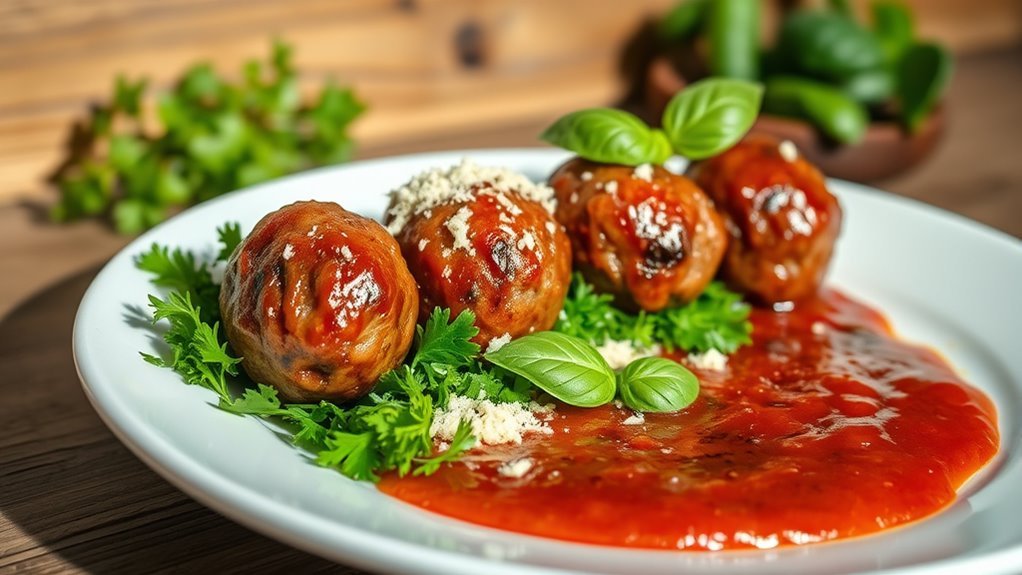
When you look at common meatball recipes, the carb count can vary considerably based on the ingredients used. Traditional recipes often include breadcrumbs, which can add up in carbs, but there are low-carb alternatives available that you might consider. Additionally, serving sizes play an important role in determining how many carbs you’re actually consuming, so it’s vital to pay attention to portions. Incorporating low-carb vegetables can also enhance the nutritional value of your meatballs while keeping the carb count down.
Traditional Meatball Ingredients
While traditional meatball recipes often feature a variety of ingredients, it’s essential to take into account the carbohydrate content if you’re aiming for a keto-friendly diet. Meatball history reveals that these savory bites often include breadcrumbs, rice, or pasta, which noticeably raise the carb count. Common meatball variations, like Italian or Swedish meatballs, can also incorporate sauces that may add hidden sugars. For example, a classic Italian meatball might have about 15-20 grams of carbs per serving, mainly from breadcrumbs and marinara sauce. If you’re following a low-carb lifestyle, understanding these ingredients can help you make informed choices. Ultimately, knowing the carb content allows you to enjoy meatballs while staying true to your dietary goals. Additionally, focusing on whole foods can enhance your meal satisfaction while adhering to keto principles.
Low-Carb Alternatives Available
If you’re looking to enjoy meatballs without the extra carbs, there are several low-carb alternatives that can keep your diet on track. Here’s a quick comparison of popular ingredients:
| Ingredient | Carb Count (per 100g) | Low-Carb Option |
|---|---|---|
| Almond Flour | 10g | Coconut Flour |
| Traditional Pasta | 25g | Zucchini Noodles |
| Bread Crumbs | 50g | Cauliflower Rice |
Using egg substitutes can help bind your meatballs without extra carbs, and cheese blends can add flavor while keeping it low-carb. Pair your meatballs with vegetable sides and low-carb sauces for a complete meal. Incorporating low-carb leafy greens alongside your meatballs not only enhances your meal’s nutrition but also supports your keto goals. Enjoying these alternatives means you can indulge without guilt, staying true to your keto lifestyle!
Serving Sizes Matter
Understanding serving sizes is essential for managing carb intake in meatball recipes. When you enjoy meatballs, portion control plays a vital role in keeping your diet keto-friendly. For instance, traditional beef meatballs can contain around 10-15 grams of carbs per serving, depending on the ingredients used. If you add breadcrumbs or sauces, that carb count can quickly rise. Additionally, being mindful of net carbs can help you enjoy meatballs while staying within your daily limits.
Key Ingredients for Keto-Friendly Meatballs
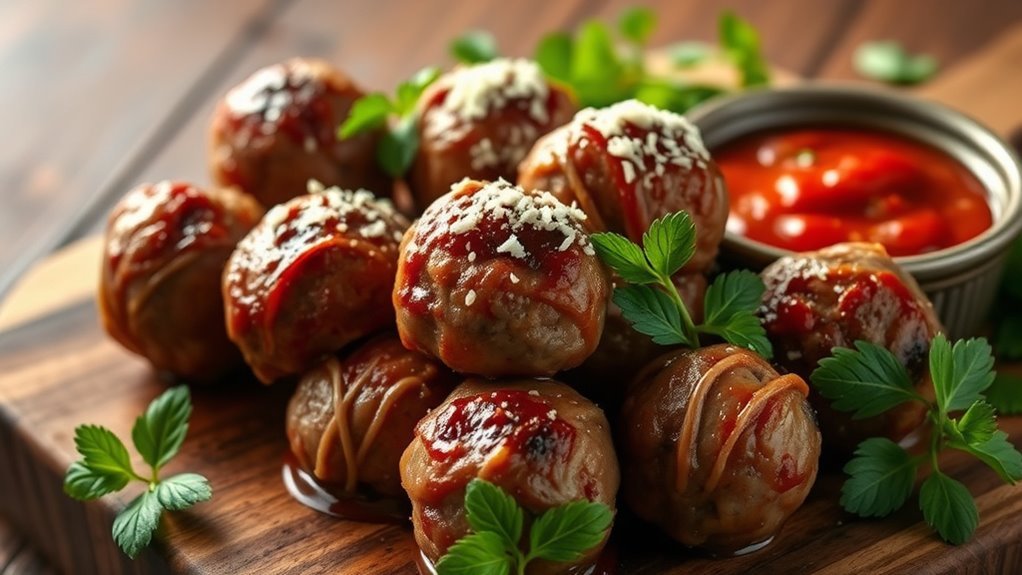
When crafting keto-friendly meatballs, selecting the right ingredients is crucial for maintaining a low-carb diet without sacrificing flavor. You can enjoy various meatball variations by focusing on key ingredients that fit your keto lifestyle.
Here’s a quick overview of some great options:
| Meat Type | Binders | Flavor Enhancers |
|---|---|---|
| Ground beef | Almond flour | Garlic |
| Ground turkey | Coconut flour | Onion |
| Ground pork | Parmesan cheese | Italian herbs |
| Chicken | Egg | Red pepper flakes |
Using these ingredients guarantees your meatballs are delicious and compliant with your dietary goals. Additionally, incorporating healthy fats into your meatball recipes enhances flavor while supporting ketosis. Experiment with different combinations to discover your favorites while keeping your carb count in check!
How to Make Your Own Keto Meatballs
Making your own keto meatballs is a straightforward process that allows you to customize flavors and ingredients to suit your taste. Start with ground meat, like beef or turkey, and mix in keto-friendly binders, such as almond flour or grated Parmesan. For your keto meatball recipes, consider adding eggs for moisture and seasoning with herbs and spices to enhance flavor. When it comes to meatball cooking techniques, you can bake, pan-fry, or even grill your meatballs for a delightful texture. Aim for an internal temperature of 160°F to guarantee they’re fully cooked. By making your own, you control the ingredients, making it easier to stick to your keto lifestyle while enjoying delicious, homemade meatballs! Additionally, incorporating low-carb options into your meatballs ensures they align with your ketogenic diet goals.
Flavor Variations for Keto Meatballs
When it comes to keto meatballs, experimenting with flavor variations can elevate your meals. You might enjoy the aromatic blend of Italian herbs, the bold kick from spicy Asian ingredients, or the indulgent richness of cheesy bacon. Each option not only enhances taste but also keeps your keto diet exciting and satisfying. Additionally, incorporating healthy fats from ingredients like ghee can further support your ketogenic goals.
Italian Herb Meatballs
Italian herb meatballs are a delicious and versatile option for those following a keto diet, combining rich flavors with low-carb ingredients. By incorporating Italian seasoning, you can elevate the taste while keeping it keto-friendly. Ground meats like beef, pork, or turkey can be used, and you can substitute breadcrumbs with almond flour or grated Parmesan for that perfect texture.
Feel free to experiment with meatball variations; adding spinach or zucchini can enhance nutrition without adding carbs. Pair these meatballs with cauliflower rice or a fresh salad for a complete meal. With their savory flavor and adaptability, Italian herb meatballs offer a satisfying, guilt-free choice that aligns with your keto lifestyle while celebrating culinary freedom. Additionally, the use of low carbohydrate content in cream cheese can further enhance your meal options. Enjoy!
Spicy Asian Meatballs
Spicy Asian meatballs offer a bold twist on traditional recipes, making them a fantastic choice for anyone on a keto diet. By incorporating a spicy sauce, you can enjoy flavor enhancements that elevate your meal without the carbs. These meatballs can be made with ground pork or chicken, combined with ingredients like ginger and garlic for a punch of flavor. Additionally, these meatballs align well with the macronutrient breakdown essential for the keto diet.
Here’s a quick reference table for your spicy Asian meatball ingredients:
| Ingredient | Quantity | Notes |
|---|---|---|
| Ground Meat | 1 lb | Pork or chicken |
| Spicy Sauce | 1/4 cup | Low-carb options |
| Green Onions | 2 tbsp, chopped | For garnish |
Try these meatballs for a satisfying, keto-friendly dish that packs a spicy punch!
Cheesy Bacon Meatballs
If you’re looking for another delicious way to enjoy keto-friendly meatballs, cheesy bacon meatballs might just be your new favorite. Combining rich, cheesy goodness with the irresistible bacon flavor, these meatballs are perfect for satisfying your cravings while sticking to your low-carb lifestyle. To make them, simply mix ground meat with shredded cheese and crispy bacon bits, plus a few seasonings for extra depth. Bake or pan-fry them until golden brown, and you’ll have a dish that’s both flavorful and filling. Each bite offers a delightful contrast of textures and tastes, ensuring you won’t miss traditional meatballs. Enjoy them with a side of low-carb veggies or cauliflower rice for a complete meal that supports your keto journey.
Serving Suggestions for Keto Meatballs
When you’re looking to elevate your keto meatballs, consider pairing them with low-carb options that enhance their flavor while keeping your meal plan intact. Here are some delicious serving suggestions:
- Zucchini Noodles: These provide a fresh, low-carb base for your meatballs.
- Keto Meatball Sauces: Opt for marinara made with no sugar or a creamy garlic sauce to complement the richness.
- Cauliflower Rice: This versatile side can soak up flavors and adds a satisfying texture.
Meatball Pairings That Keep It Low-Carb
Pairing your keto meatballs with the right ingredients can enhance both flavor and nutrition while keeping your carbohydrate intake low. Consider serving your meatballs with low carb sauces like homemade marinara or creamy garlic sauce, which not only complement the meatballs but also fit seamlessly into your keto lifestyle. For added enjoyment, try meatball dips made from avocado or Greek yogurt; these provide a creamy texture without piling on carbs. You can also add sautéed vegetables like zucchini or bell peppers as a side, offering extra nutrients without sacrificing your diet. By choosing these pairings, you can savor your meatballs while staying committed to your low-carb goals, enjoying both freedom and flavor in your meals.
Store-Bought Meatballs: What’s Keto-Friendly?
Have you ever wondered which store-bought meatballs are truly keto-friendly? It can be tricky maneuvering the aisles, but knowing what to look for makes it easier. Always check the nutrition labels to verify you’re making a smart choice.
- Look for meatballs made with lean meats like beef, turkey, or chicken.
- Avoid options with fillers like breadcrumbs or sugars.
- Check for a low net carb count—ideally under 5 grams per serving.
Some brands cater specifically to keto diets, while others may surprise you with hidden carbs. Don’t be afraid to experiment with different store-bought options, but always prioritize those that align with your dietary goals. Happy hunting!
Tips for Meal Prepping With Keto Meatballs
Meal prepping with keto meatballs can simplify your week while keeping your meals delicious and nutritious. To get started, batch-cook a large quantity of meatballs using your favorite keto ingredients, like ground beef or turkey, almond flour, and spices. Once cooked, allow them to cool before storing. For effective ingredient storage, place the meatballs in airtight containers, separating portions for easy access. You can freeze extras to enjoy later, just thaw them in the fridge overnight before reheating. Additionally, consider pairing your meatballs with low-carb sides like zucchini noodles or cauliflower rice. These meal prep tips not only save time but also help you stay on track with your keto lifestyle, giving you the freedom to enjoy satisfying meals throughout the week.
Frequently Asked Questions
Can I Use Turkey Instead of Beef for Keto Meatballs?
Yes, you can definitely use turkey instead of beef for keto meatballs! Turkey offers several benefits, like being lower in fat and calories, while still providing a good amount of protein. If you’re looking for beef alternatives, turkey can be a great choice that keeps your meals leaner. Just make sure you’re using a fatty cut, like ground turkey thigh, to maintain the flavor and moisture in your meatballs. Enjoy your cooking!
Are There Gluten-Free Options for Keto Meatballs?
Yes, there are plenty of gluten-free options for keto meatballs! When you’re making them, consider using gluten-free ingredients like almond flour or coconut flour as low carb binders. These options provide the necessary texture without the carbs found in traditional breadcrumbs. You can also experiment with grated cheese or ground flaxseed for added binding and flavor. So, you can enjoy delicious, gluten-free, keto-friendly meatballs without compromising your dietary goals!
How Can I Make Meatballs Spicy and Keto-Friendly?
To make your meatballs spicy and keto-friendly, start by incorporating spicy seasonings like cayenne pepper, chili flakes, or smoked paprika into the meat mixture. You can also mix in chopped jalapeños for an extra kick. Pair your meatballs with keto sauces, like a creamy avocado sauce or a low-carb marinara, to enhance the flavor without adding carbs. This way, you’ll enjoy a delicious, spicy dish that aligns with your keto lifestyle.
What Vegetables Can I Add to Keto Meatballs?
Let’s face it: meatballs without veggies are like a party without music! You can spice up your keto meatballs by adding finely chopped spinach, mushrooms, or bell peppers. For a fun twist, serve ‘em on zucchini noodles or alongside cauliflower rice. These veggies not only enhance flavor but also keep your dish low-carb. So, go ahead, embrace the veggie revolution—your taste buds (and waistline) will thank you!
How Do I Store Leftover Keto Meatballs?
To store leftover keto meatballs, let ’em cool completely before placing them in an airtight container. You can refrigerate them for up to four days. If you want to keep them longer, use freezing techniques: wrap each meatball in plastic wrap, then place them in a freezer-safe bag. They can last for up to three months in the freezer. Just thaw them overnight in the fridge when you’re ready to enjoy them again!