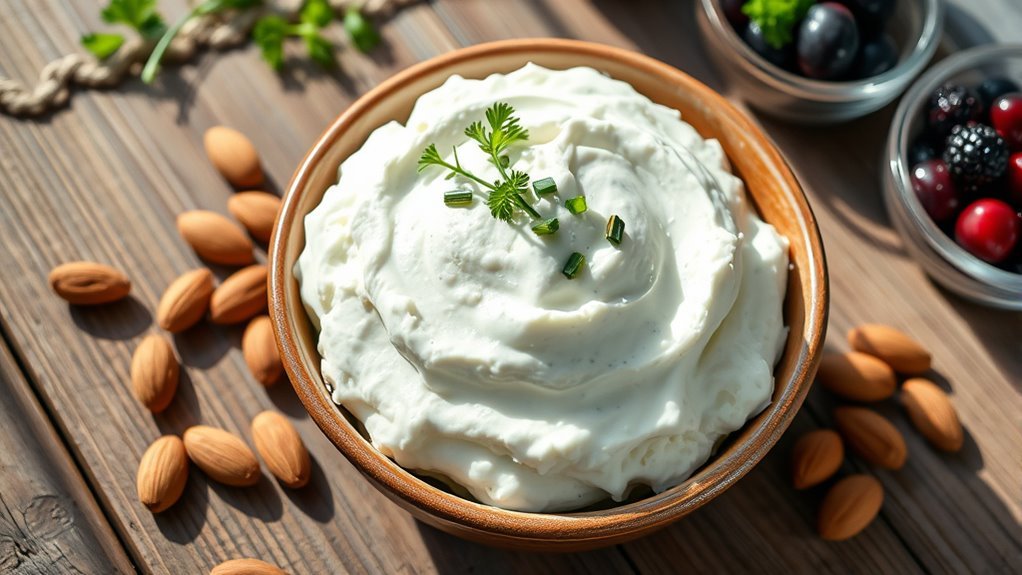

Yes, you can definitely have cottage cheese on keto! It’s high in protein and low in carbohydrates, with about 6 grams of carbs per cup, making it a great fit for your daily limits. The calcium content supports bone health, too. Just be mindful of choosing full-fat options to maximize healthy fat intake, and check labels for added sugars. Discovering how to incorporate it into your meals can add delicious variety to your keto diet.
Nutritional Profile of Cottage Cheese
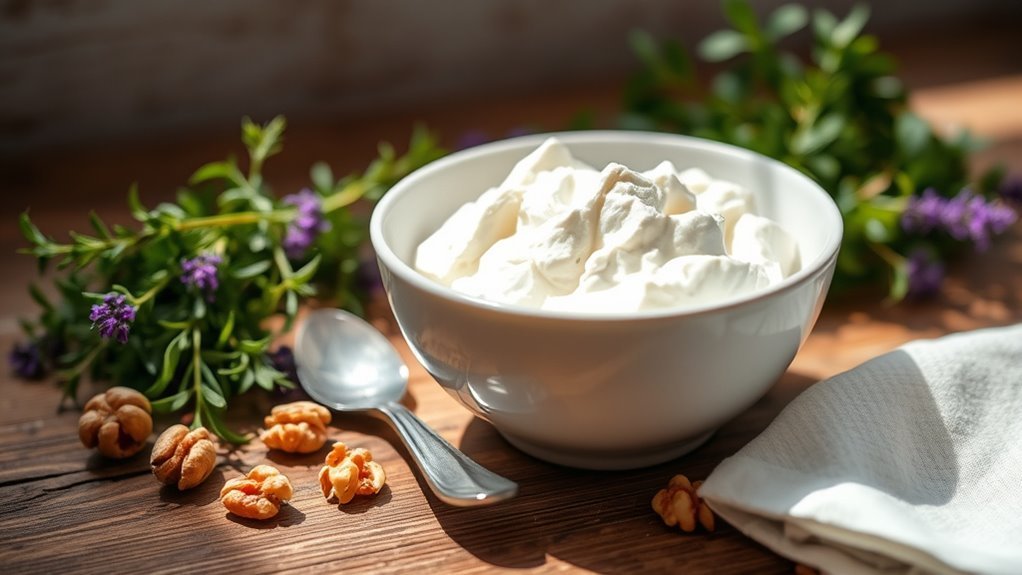
Cottage cheese is a nutrient-dense option that can fit well into a keto diet. As a high-quality protein source, it supports muscle maintenance and helps keep you feeling full longer. With its impressive calcium content, cottage cheese also promotes bone health, which is essential for overall well-being. The dietary benefits of this versatile ingredient extend beyond protein and calcium; it’s low in carbs, making it an ideal choice for your keto lifestyle. You can enjoy it in various ways—mix it with berries for a quick snack, use it in savory dishes, or blend it into smoothies. The meal versatility of cottage cheese guarantees you can incorporate it into your diet while enjoying the freedom of flavors and textures. Additionally, its low carb content fits perfectly in a keto diet, helping maintain ketosis.
Carbohydrate Content and Keto Guidelines

While many dairy products can be high in carbohydrates, cottage cheese stands out as a keto-friendly option due to its relatively low carb content. Typically, one cup of low-fat cottage cheese contains around 6 grams of carbs, making it manageable within your daily carb limits. This allows you the freedom to enjoy it without derailing your keto diet. When you’re monitoring your carbohydrate intake, choosing foods like cottage cheese that provide protein and essential nutrients is vital. It’s important to check labels, as carb content can vary between brands. By incorporating cottage cheese into your meals, you can maintain your keto lifestyle while still enjoying delicious and nutritious foods that support your health goals. Additionally, its high protein content helps maintain muscle mass during ketosis.
Benefits of Cottage Cheese for Keto Dieters

When you’re on a keto diet, incorporating cottage cheese can offer several important benefits that enhance your nutritional profile. This versatile dairy product serves as an excellent protein source, supporting muscle maintenance and recovery while keeping you satiated. Plus, it’s rich in calcium, which is essential for bone health, especially when you’re limiting other dairy options.
Consider these benefits:
- High protein content helps curb hunger.
- Low in carbs, fitting perfectly within keto macros.
- Contains calcium benefits for strong bones.
- Easily paired with keto-friendly toppings for variety.
- Additionally, the high protein content in cottage cheese can help maintain muscle mass during weight loss.
How to Incorporate Cottage Cheese Into Your Meals
Incorporating cottage cheese into your meals is easier than you might think. You can start your day with a protein-packed breakfast, enjoy it as a savory snack, or even use it in creative recipes. With its versatility and nutritional benefits, cottage cheese can enhance your keto diet and keep your meals satisfying. Additionally, its low carbohydrate profile allows you to enjoy it while staying within your daily macro goals.
Breakfast Ideas With Cottage
Cottage cheese is a versatile ingredient that can elevate your breakfast options while keeping your meal keto-friendly. Packed with protein and low in carbs, it’s an excellent choice. Here are some delicious ways to incorporate cottage cheese into your morning routine:
- Blend cottage cheese smoothies with spinach, avocado, and a splash of almond milk for a nutrient boost.
- Whip up fluffy cottage cheese pancakes using almond flour for a satisfying, low-carb breakfast.
- Top your cottage cheese with berries and nuts for a quick, invigorating bowl.
- Mix it with eggs and spinach for a savory scramble that’s sure to energize your day.
With these ideas, you can enjoy the freedom of delicious, healthy breakfasts while staying true to your keto goals!
Savory Snack Combinations
While you might think of cottage cheese primarily as a breakfast staple, it can also serve as a creamy, protein-rich base for a variety of savory snacks throughout the day. You can elevate your snack game with cottage cheese dips and savory toppings that keep your meals exciting and nutritious.
Here’s a quick guide to inspire you:
| Cottage Cheese Base | Savory Toppings | Pairing Ideas |
|---|---|---|
| Plain | Chopped herbs | Cucumber slices |
| Garlic & herb | Sliced olives | Bell pepper strips |
| Spicy jalapeño | Diced tomatoes | Celery sticks |
| Ranch seasoning | Crumbled feta | Cherry tomatoes |
| Pesto | Avocado slices | Radishes |
Experiment with these combinations to enjoy the freedom of tasty, healthy snacking!
Cottage Cheese Recipes
When you’re looking to boost your meals with a healthy dose of protein and calcium, cottage cheese can be a versatile ingredient that’s easy to add to various dishes. Here are some tasty ways to incorporate cottage cheese into your meals:
- Cottage Cheese Pancakes: Mix cottage cheese with eggs and almond flour for a fluffy, low-carb breakfast.
- Savory Cottage Dip: Blend cottage cheese with herbs and spices for a delicious dip that pairs well with veggies or low-carb crackers.
- Smoothies: Add a scoop of cottage cheese to your smoothie for extra creaminess and protein.
- Toppings: Use it as a topping for salads or baked dishes to enhance flavor and nutrition.
Embrace the freedom of creativity in your cooking with these simple, nutritious recipes!
Choosing the Right Type of Cottage Cheese
When choosing cottage cheese for your keto diet, pay attention to the fat content, as higher-fat options can help you meet your macro goals. You’ll find low-carb varieties available that still deliver a satisfying texture and flavor. Selecting the right type can enhance your meals while keeping you aligned with your nutritional needs.
Fat Content Matters
Choosing the right type of cottage cheese is essential for anyone on a keto diet, as its fat content can greatly impact your macronutrient balance. To maintain a healthy protein balance while incorporating this dairy into your meals, consider the following:
- Full-fat cottage cheese: Higher in fat, providing excellent fat sources for keto.
- Low-fat varieties: Often contain added sugars, which can disrupt your carb intake.
- Organic options: Typically free from additives, making them a cleaner choice.
- Check labels: Focus on protein content and avoid those with excessive carbs. Additionally, keep in mind that cheese varieties like full-fat cottage cheese can offer similar benefits as other keto-friendly cheeses.
Low-Carb Options Available
While it’s easy to assume that all cottage cheese is keto-friendly, not all varieties fit seamlessly into a low-carb lifestyle. When choosing the right type, opt for full-fat, low-sodium cottage cheese with minimal added ingredients. Look for brands that offer around 5 grams of carbs per serving—great for low carb snacks. You can enjoy it plain or mix it with keto-friendly toppings like berries or nuts for added flavor. Additionally, cottage cheese can be a versatile ingredient in keto desserts, like cheesecake or pancakes, allowing you to indulge without derailing your diet. By selecting the right options, you can enjoy cottage cheese while staying true to your low-carb goals, savoring the freedom of delicious, nutritious choices.
Alternatives to Cottage Cheese on Keto
If you’re looking for alternatives to cottage cheese on a keto diet, there are several nutritious options that can fit seamlessly into your meal plan. Whether you prefer plant-based alternatives or dairy-free options, you’ve got choices that are low in carbs and high in healthy fats. Consider these alternatives:
- Greek yogurt (opt for unsweetened, full-fat)
- Ricotta cheese (great for adding creaminess)
- Silken tofu (a versatile plant-based alternative)
- Chia seed pudding (packed with omega-3s and fiber)
These options provide the protein and healthy fats you need while keeping your meals exciting. Additionally, many of these alternatives, such as Greek yogurt, are also low in carbohydrates, making them suitable for your keto lifestyle. Experiment with these alternatives to maintain variety and satisfy your cravings without straying from your keto goals. Enjoy the freedom of choice on your keto journey!
Common Misconceptions About Dairy on Keto
Many people mistakenly believe that all dairy products are off-limits on a keto diet, but this isn’t the case. In fact, many dairy options, like cheese and heavy cream, can fit perfectly into your low-carb lifestyle. Dairy myths often stem from misconceptions about lactose intolerance; just because some people can’t digest lactose doesn’t mean everyone should avoid dairy. Full-fat dairy is nutrient-dense and can provide healthy fats, protein, and essential vitamins. Choosing low-carb options can help you enjoy the benefits of dairy without compromising your keto goals. It’s all about balance and moderation, so feel free to incorporate quality dairy products into your meals while staying mindful of your overall carb intake. Embrace the freedom that comes with informed choices! Additionally, incorporating low-carb options like cheese can enhance your meals without disrupting your ketogenic diet.
Tips for Monitoring Dairy Intake on a Keto Diet
Incorporating dairy into your keto diet can be a delicious way to boost your nutrient intake, but it’s important to monitor your consumption to stay within your carb limits. Here are some tips for balancing dairy while keeping an eye on your macros:
- Track your dairy intake using a food diary or app.
- Choose high-fat, low-carb dairy options like cheese and heavy cream.
- Experiment with dairy alternatives like almond or coconut milk.
- Always read labels to check for hidden sugars and carbs.
- Consider that nutrient-dense vegetables can also complement your dairy choices, ensuring a well-rounded intake of essential nutrients.
Frequently Asked Questions
Is Cottage Cheese Suitable for a Dairy-Free Keto Diet?
Cottage cheese isn’t suitable for a dairy-free keto diet since it’s a dairy product. However, if you’re lactose intolerant or prefer dairy alternatives, there are plenty of options like almond or coconut yogurt. These alternatives can still provide healthy fats and protein while keeping your carb intake low. Just be sure to check labels for added sugars and other ingredients to maintain a balanced, keto-friendly approach that allows for freedom in your diet.
Can I Eat Flavored Cottage Cheese on Keto?
Flavored cottage cheese can be like a sweet melody, tempting yet tricky on your keto journey. While some flavored options may fit into your plan, watch for added sugars that can sneak in. Keto-friendly brands often offer low-carb varieties, so you can enjoy a bit of flavor without derailing your goals. Choose wisely, and remember that moderation is key. You can savor the taste while staying true to your keto freedom!
How Does Cottage Cheese Affect Ketosis Levels?
Cottage cheese can impact your ketosis levels due to its carb content. While it’s relatively low in carbs compared to other dairy, moderation’s key. The ketosis benefits, like increased fat-burning and improved energy, can still be achieved if you track your intake carefully. If you enjoy cottage cheese, opt for plain varieties to minimize added sugars, and guarantee it fits your daily carb limit for maintaining ketosis. Enjoying it wisely can enhance your ketogenic journey!
Is Cottage Cheese High in Protein for Muscle Gain?
Yes, cottage cheese is high in protein, making it an excellent option for muscle gain. Its protein quality is impressive, containing all essential amino acids, which aids in muscle recovery after workouts. By incorporating cottage cheese into your diet, you can enjoy a nutrient-rich source of protein that supports your fitness goals without feeling restricted. It’s a versatile food, allowing you the freedom to mix it with fruits or savory dishes.
Can I Consume Cottage Cheese While Intermittent Fasting?
When it comes to intermittent fasting, you can’t have your cake and eat it too. Cottage cheese, rich in protein and low in carbs, can be a great choice during your eating window. It supports muscle maintenance and keeps you satiated, but it’s not for breaking your fast. If you’re looking for nutrient-dense options while enjoying the freedom of intermittent fasting, cottage cheese might just fit the bill!
Frequently Asked Questions about Cottage Cheese and Keto
1. Can I eat cottage cheese on a keto diet?
Yes, you can eat cottage cheese on a keto diet, but it’s important to choose the right type and monitor your portion sizes. Cottage cheese typically contains carbohydrates, so opt for full-fat varieties and be mindful of your daily carb limits to ensure you stay within the ketogenic range.
2. How many carbs are in cottage cheese?
The carbohydrate content in cottage cheese can vary depending on the brand and type. On average, a 1-cup serving of full-fat cottage cheese contains about 6-8 grams of carbs. If you’re following a strict keto diet, it’s best to check nutrition labels to ensure it fits within your daily carb allowance.
3. What are the best types of cottage cheese for a keto diet?
For a keto diet, full-fat cottage cheese is the best option as it is lower in carbohydrates and higher in fat compared to low-fat or non-fat versions. Look for brands that do not contain added sugars or fillers to keep your carb intake minimal and maintain the ketogenic benefits.
4. Can cottage cheese help me meet my protein goals on keto?
Yes, cottage cheese is an excellent source of protein, which can help you meet your protein goals on a keto diet. A 1-cup serving of full-fat cottage cheese typically contains around 25 grams of protein, making it a great addition to your meals to support muscle maintenance and overall health while on keto.
5. Are there any alternatives to cottage cheese for keto dieters?
Yes, there are several alternatives to cottage cheese that are suitable for a keto diet. Options include Greek yogurt (full-fat and unsweetened), ricotta cheese, or even cream cheese. Each of these alternatives can be used in similar ways and provide various flavors and textures while aligning with your keto macronutrient goals.
References
- https://www.healthline.com/nutrition/cottage-cheese-keto
- https://www.medicalnewstoday.com/articles/318616
- https://www.ncbi.nlm.nih.gov/pmc/articles/PMC6520954/
- https://www.eatright.org/health/wellness/healthy-eating/what-is-the-ketogenic-diet
- https://www.webmd.com/diet/what-is-the-keto-diet
- https://www.cdc.gov/healthyweight/healthy_eating/index.html