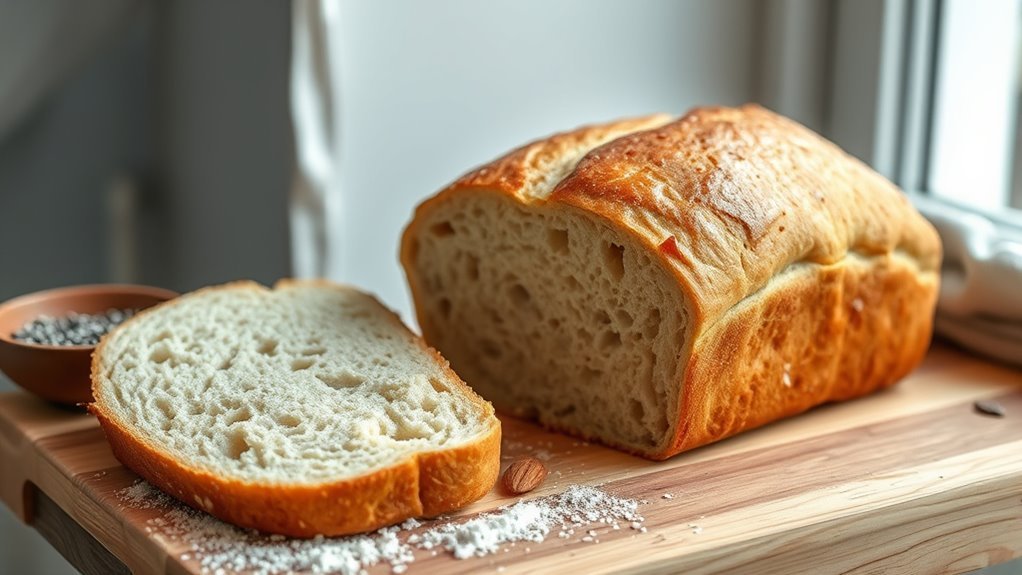

Yes, you can make keto sourdough bread using low-carb flours like almond and coconut. This approach combines traditional sourdough fermentation techniques with healthier ingredients, creating a delicious bread that fits your keto diet. You’ll need to create a keto sourdough starter and use specific ingredients like psyllium husk for texture. It’s an enjoyable process that can yield a flavorful loaf. If you’re curious about the detailed methods and tips to perfect your baking, there’s more to explore.
Understanding the Basics of Keto Diet
The ketogenic diet, often simply called keto, is a low-carbohydrate, high-fat eating plan designed to shift your body into a state of ketosis. By following keto principles, you drastically reduce your carbohydrate intake, which encourages your body to burn fat for fuel instead of glucose. This shift can enhance energy levels and promote weight loss, but it does come with dietary restrictions. You’ll need to limit foods high in sugars and starches, such as bread, pasta, and certain fruits. However, with creativity and flexibility in your cooking, you can still enjoy delicious alternatives, like keto sourdough bread. Embracing these changes can lead to a rewarding journey toward better health and freedom in your food choices.
What Makes Traditional Sourdough Bread Different?
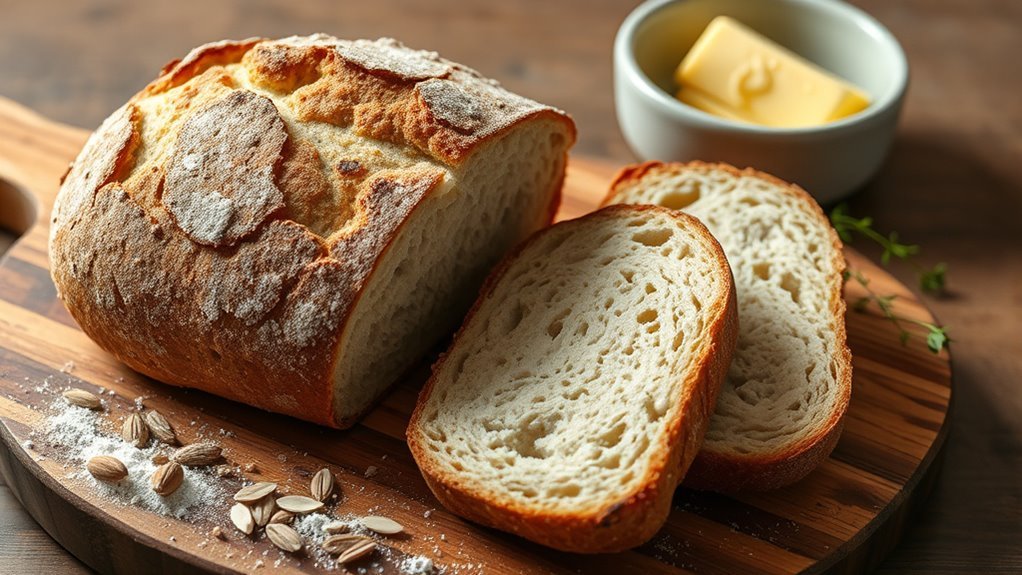
Traditional sourdough bread stands apart from other types of bread primarily due to its unique fermentation process. Sourdough fermentation involves a natural leavening method, relying on wild yeast and lactic acid bacteria present in the environment. This differs from commercial yeast used in conventional bread-making. The slow fermentation not only enhances the bread’s flavor but also improves its digestibility and nutrient availability. As the dough rises, the beneficial bacteria break down gluten and phytic acid, making minerals more accessible. This process creates a distinct sour taste and chewy texture that many people love. In choosing sourdough, you’re embracing a time-honored method that respects the art of baking while providing a wholesome, flavorful experience.
Key Ingredients for Keto Sourdough Bread
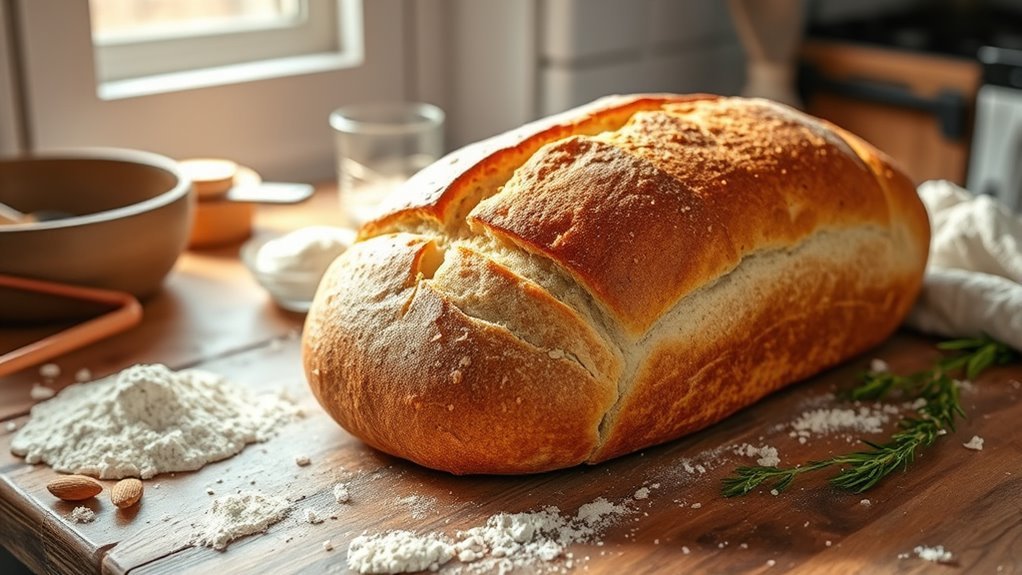
When making keto sourdough bread, you’ll need to choose the right flours that fit a low-carb lifestyle. Fermentation agents play a vital role in achieving that signature sour flavor, while low-carb additives and toppings can enhance both taste and texture. Understanding these key ingredients will help you create a delicious and satisfying bread without compromising your dietary goals.
Essential Flours for Keto
While many flours aren’t suitable for a ketogenic diet, several alternatives can create a delicious and satisfying keto sourdough bread. Two popular choices are almond flour and coconut flour, each offering unique benefits. Here’s what you should know:
- Almond Flour Benefits: It’s low in carbs, high in healthy fats, and provides a nutty flavor, making it a fantastic base for your bread.
- Coconut Flour Alternatives: This flour absorbs moisture well, so you need less of it, and it’s rich in fiber, which can aid digestion.
- Flaxseed Meal: Another great addition, it’s packed with omega-3s and can help bind your ingredients together.
Fermentation Agents Needed
To create a successful keto sourdough bread, you’ll need a few key fermentation agents that help mimic the sourdough process while keeping the recipe low in carbs. While traditional sourdough relies on wild yeast, you can use yeast alternatives like almond flour-based starters, or even psyllium husk for texture. Fermentation timing is essential; allowing the dough to ferment longer can enhance the flavor and texture.
| Fermentation Agent | Role | Yeast Alternative |
|---|---|---|
| Almond Flour Starter | Provides flavor | Yes |
| Psyllium Husk | Improves texture | Yes |
| Baking Soda | Adds lift | No |
| Vinegar | Enhances sour flavor | Yes |
Experiment with these options to find what suits your taste!
Low-Carb Additives and Toppings
Incorporating low-carb additives and toppings into your keto sourdough bread can elevate both its flavor and nutritional profile. You can truly enhance your bread experience with the right choices. Consider these options:
- Seeds and Nuts: Chia seeds, flaxseeds, or chopped walnuts not only add crunch but also boost healthy fats and fiber.
- Herbs and Spices: Fresh rosemary, garlic powder, or onion flakes can infuse your bread with aromatic flavors without adding carbs.
- Keto Spreads: Cream cheese, avocado, or a low-carb pesto can serve as delicious toppings, providing richness while keeping your meal low in carbs.
How to Create a Keto Sourdough Starter
Creating a keto sourdough starter is an essential step if you want to enjoy the tangy flavor and texture of sourdough bread while adhering to a low-carb lifestyle. To begin, you’ll need almond flour or coconut flour as your base, mixed with water to create a thick paste. Over several days, you’ll introduce wild yeast from the environment by feeding your starter regularly with more flour and water. This process encourages fermentation and the development of a bubbly texture. Remember, starter maintenance is vital; you’ll need to feed it consistently and keep it in a warm place. With patience and care, your keto sourdough starter will become a flavorful foundation for your low-carb baking adventures.
Step-by-Step Guide to Making Keto Sourdough Bread
To make delicious keto sourdough bread, you’ll need to gather essential ingredients that align with your dietary goals. Understanding the fermentation process is vital for developing flavor and texture, and having the right baking tips can elevate your bread-making experience. Let’s walk through each step to guarantee you achieve a satisfying loaf.
Essential Ingredients Required
Crafting keto sourdough bread requires a careful selection of ingredients that align with your dietary goals while still delivering on flavor and texture. To get started with keto baking, consider these essential ingredients:
- Almond flour – A popular low-carb substitute for traditional wheat flour.
- Psyllium husk – This acts as a binding agent, helping to replicate the elasticity of gluten.
- Apple cider vinegar – It aids in the fermentation process and enhances the sourdough flavor.
These ingredient substitutes not only keep your bread low in carbs but also guarantee it remains delicious and satisfying. By choosing the right components, you can enjoy the freedom of keto-friendly sourdough without compromising on taste or texture. Happy baking!
Fermentation Process Explained
While many may think of fermentation as a complex process, it’s actually quite straightforward, especially with keto sourdough bread. You start by mixing your flour, water, and a sourdough starter, which is teeming with wild yeast. This wild yeast, combined with beneficial bacteria, begins to ferment the mixture, creating carbon dioxide and organic acids. Over several hours, this fermentation enhances the flavor and texture of your bread while also providing various sourdough benefits, like improved digestibility and lower glycemic impact. As you allow the dough to rise, you’re not just waiting; you’re fostering a thriving ecosystem that transforms simple ingredients into a delicious, health-conscious alternative to traditional bread. Embrace this freedom in baking!
Baking Tips and Techniques
Getting started with baking keto sourdough bread requires a few essential techniques to guarantee success. Mastering these keto baking techniques can elevate your bread-making game. Here are some sourdough tips to keep in mind:
- Hydration: Confirm your dough has the right moisture level; too dry or too wet can affect fermentation.
- Temperature: Maintain a warm environment for fermentation, usually around 75°F to 80°F, to promote yeast activity.
- Patience: Allow sufficient time for proofing and baking; rushing can lead to dense bread.
Tips for Achieving the Perfect Texture
To achieve the perfect texture in keto sourdough bread, it’s essential to understand the unique properties of low-carb ingredients. Start with a high-quality keto flour blend, as this can greatly affect the bread’s structure. Almond flour and coconut flour are popular choices, but combining them can yield better results. Pay attention to your sourdough hydration; maintaining the right moisture level is vital for achieving that airy crumb. Aim for a hydration level around 70% to help the dough rise properly without becoming too sticky. Finally, don’t rush the fermentation process—allowing the dough to rise fully develops the texture you crave. With these tips, you’ll be well on your way to creating a satisfying keto sourdough loaf.
Flavor Enhancements for Your Keto Sourdough
Achieving the perfect texture in your keto sourdough is just the beginning; enhancing the flavor can elevate your bread to a whole new level. To create a delightful taste experience, consider incorporating these enhancements:
- Herb Infusions: Fresh herbs like rosemary or thyme can add a fragrant touch.
- Nut Toppings: Chopped nuts provide both crunch and flavor, enhancing your bread’s texture.
- Citrus Zest: A hint of lemon or orange zest can brighten the overall taste.
You might also experiment with cheese blends for richness, spice variations for warmth, or sweetener options for a hint of sweetness. Don’t forget vinegar enhancements and seed additions to deepen the flavor profile. Each addition can turn your keto sourdough into a culinary masterpiece!
Troubleshooting Common Issues
When making keto sourdough bread, you might encounter issues with dough consistency or the rise and texture of your loaf. These problems can often stem from ingredient ratios, hydration levels, or fermentation times. Understanding the common challenges can help you achieve the perfect loaf every time.
Dough Consistency Challenges
Although creating the perfect keto sourdough bread can be a rewarding experience, many bakers encounter challenges with dough consistency that can hinder their results. Achieving the right balance of dough hydration and dough elasticity is essential. If your dough feels too dry or too sticky, it can lead to disappointing outcomes. To troubleshoot these consistency issues, consider the following:
- Adjust Hydration: Experiment with adding more water or almond milk to achieve the desired moisture level.
- Check Ingredients: Verify you’re using the right flour blend, as some alternatives absorb more liquid than others.
- Kneading Technique: Proper kneading can enhance dough elasticity, so don’t skip this vital step.
Rise and Texture Issues
Even the most experienced bakers can face rise and texture issues with keto sourdough bread, which often stems from the unique properties of low-carb ingredients. To achieve a good rise, consider using rise techniques like adding more yeast or incorporating egg whites for added lift. Additionally, don’t underestimate the power of texture enhancers. Ingredients like psyllium husk or almond flour can improve the dough’s structure and moisture retention, helping to create a more enjoyable bread. Experimenting with fermentation times can also make a difference; longer fermentation can enhance flavor and texture. If your bread doesn’t turn out as expected, don’t be discouraged. Learning from each attempt will help you refine your approach to creating the perfect keto sourdough loaf.
Serving Suggestions and Pairings
Keto sourdough bread opens up a world of delicious serving suggestions and pairings that can enhance your low-carb lifestyle. You can enjoy this bread in versatile ways that cater to your cravings. Here are some ideas to get you started:
Keto sourdough bread offers endless delicious serving options to elevate your low-carb meals and satisfy your cravings.
- Breakfast Options: Top it with avocado and poached eggs for a fulfilling morning meal.
- Sandwich Ideas: Use it for turkey and cheese sandwiches, adding leafy greens for crunch and nutrition.
- Soup Accompaniments: Serve it alongside a warm bowl of low-carb chili or vegetable soup for a hearty experience.
Feel free to experiment with various keto toppings and flavor pairings, such as cream cheese or almond butter, making it perfect for snacks or light meals. Enjoy the freedom to create!
Storage Tips for Keto Sourdough Bread
To guarantee your keto sourdough bread remains fresh and delicious, proper storage is essential. First, consider using a bread box or a sealed container to maintain peak bread freshness. If you plan to eat it within a few days, simply store it at room temperature. For longer storage, slice the bread and freeze it, as this method locks in freshness without compromising texture. When you’re ready to enjoy it, just toast the slices directly from the freezer. Avoid storing your bread in the fridge, as this can lead to a stale texture. By using these storing methods, you can savor the delightful taste of your keto sourdough bread for days to come, ensuring it’s always a treat.
Frequently Asked Questions
Can I Use Almond Flour Instead of Coconut Flour?
Yes, you can use almond flour instead of coconut flour, but there are some differences. Almond flour is higher in healthy fats and lower in carbs, making it a great choice for keto diets. However, it’s less absorbent than coconut flour, which can affect texture. If you’re looking for a nutty flavor and moist results, almond flour might be your best bet. Just remember to adjust liquid ingredients accordingly for the best outcome.
Does Keto Sourdough Bread Rise Like Traditional Sourdough?
Doesn’t the idea of a fluffy loaf of keto bread sound appealing? While keto sourdough doesn’t rise as dramatically as traditional sourdough due to the absence of gluten, effective sourdough fermentation can still create a satisfying texture. You’ll find delicious gluten-free options by experimenting with different baking techniques. Just remember, the key lies in balancing ingredients and allowing your dough enough time to ferment for the best results!
How Many Carbs Are in Keto Sourdough Bread?
Keto sourdough bread typically contains around 2-5 grams of net carbs per slice, depending on the recipe. When you’re carb counting, this makes it a great low-carb option compared to traditional bread. It allows you to enjoy the unique flavors of sourdough while staying within your dietary goals. Just remember to check the specific ingredients used, as variations can affect the carb content. Enjoy the freedom of delicious, low-carb bread!
Can I Freeze Keto Sourdough Bread?
Yes, you can freeze keto sourdough bread! For best results, slice the bread before freezing, as this makes it easier to grab just what you need. Wrap the slices tightly in plastic wrap or aluminum foil, then place them in an airtight container or freezer bag. This prevents freezer burn. When you’re ready to enjoy it, simply toast or let it thaw at room temperature. Following these freezing methods will keep your bread fresh!
How Long Does Keto Sourdough Starter Last?
A well-fed sourdough starter is like a garden in full bloom; it thrives with the right care. Your keto sourdough starter can last indefinitely with proper maintenance. Store it in the fridge, feeding it weekly to keep it active. If you neglect it, though, it can become inactive within a couple of weeks. Just remember, regular sourdough storage and care can keep your starter ready for delicious baking adventures anytime you crave them!
Frequently Asked Questions about Keto Sourdough Bread
1. What is keto sourdough bread?
Keto sourdough bread is a low-carbohydrate version of traditional sourdough bread, specifically designed for those following a ketogenic diet. Instead of using regular flour, it typically incorporates almond flour or coconut flour, which are lower in carbs. The fermentation process may still be used to develop a sour flavor and improve digestibility, similar to traditional sourdough.
2. Can you achieve the same texture and flavor as traditional sourdough?
While keto sourdough bread may not replicate the exact texture and flavor of traditional sourdough, it can come quite close with the right ingredients and techniques. The use of nut flours and a sourdough starter can create a tangy flavor profile, and adding ingredients like psyllium husk can help improve the texture, giving it a more bread-like consistency.
3. How do you make a keto sourdough starter?
To make a keto sourdough starter, you can use a mixture of almond flour and water to cultivate wild yeast. Combine equal parts of almond flour and water in a jar, cover it loosely, and leave it at room temperature for several days, feeding it daily by adding more almond flour and water. Once it becomes bubbly and has a pleasant sour smell, it’s ready to use in your keto sourdough recipes.
4. Are there any store-bought keto sourdough breads?
Yes, there are several brands that offer store-bought keto sourdough breads. These products are specifically formulated to be low in carbs and often use a mix of alternative flours such as almond and coconut flour. However, it’s important to check the ingredient list and nutritional information to ensure that they align with your dietary needs, as some may still contain higher levels of carbs than expected.
5. How can I store keto sourdough bread?
Keto sourdough bread can be stored in an airtight container at room temperature for a few days. For longer storage, it’s best to slice the bread and freeze it. Wrap slices in parchment paper and place them in a freezer-safe bag or container. This way, you can easily toast or warm individual slices without defrosting the entire loaf.
References
- https://www.ncbi.nlm.nih.gov/pmc/articles/PMC6472021/
- https://www.wikiHow.com/Make-Keto-Sourdough-Bread
- https://www.healthline.com/nutrition/keto-sourdough-bread
- https://www.cdc.gov/healthyweight/healthy_eating/creating-a-healthy-eating-plan.html
- https://www.journalofnutrition.org/content/early/2021/03/10/jn.120.000145
- https://www.bbcgoodfood.com/recipes/keto-sourdough-bread
- https://www.verywellfit.com/keto-sourdough-bread-5182957

