

Yes, you can eat pork rinds on a keto diet! They’re high in protein and low in carbohydrates, making them a great snack that aligns with your macronutrient goals. Typically, they contain around 40% to 50% fat, helping you maintain ketosis. Enjoy them on their own or as a crunchy topping for salads or casseroles. However, moderation is key, so be mindful of portion sizes. If you’d like to learn more about incorporating pork rinds, keep going!
Understanding the Keto Diet
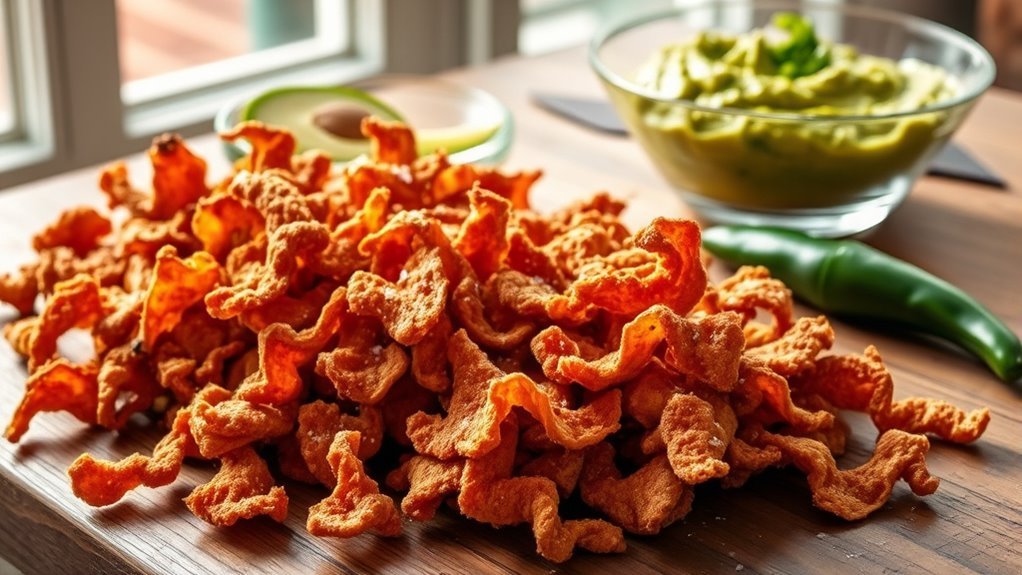
When you’re looking to understand the keto diet, it is essential to know that this high-fat, low-carbohydrate eating plan aims to shift your body into a state of ketosis. The keto fundamentals revolve around drastically reducing carbohydrate intake while increasing fat consumption. Typically, the macro ratios you’ll follow are about 70-75% fat, 20-25% protein, and only 5-10% carbohydrates. This shift encourages your body to burn fat for fuel instead of glucose, providing a different source of energy. Many people find this enables greater freedom in food choices, as they can enjoy satisfying meals without constant hunger. Understanding these principles can help you navigate the keto lifestyle more effectively, ensuring you reap the benefits it offers.
Nutritional Profile of Pork Rinds
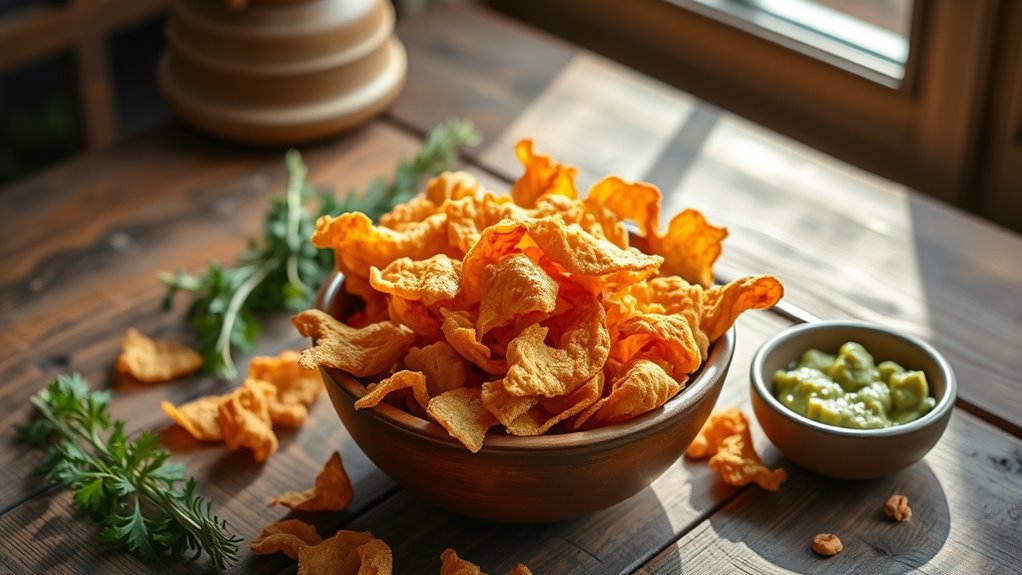
When considering pork rinds as a keto snack, it’s important to look at their nutritional profile. You’ll find that they offer a significant amount of protein while being low in carbohydrates, making them a popular choice for keto dieters. Additionally, they contain various vitamins and minerals that can contribute to your overall nutrition.
Protein Content Analysis
Pork rinds are a surprisingly rich source of protein, delivering around 17 grams per ounce. This makes them an excellent choice for those on a keto diet looking for high-quality protein sources. Unlike many snack foods, pork rinds provide crucial amino acids that your body needs to function effectively. They’re especially beneficial for muscle repair and growth, making them a great post-workout snack. Additionally, the protein in pork rinds can help you feel full longer, which may aid in weight management. While enjoying pork rinds, it’s important to balance them with other protein sources to guarantee you’re getting a variety of nutrients. Overall, they can be a flavorful, satisfying addition to your low-carb lifestyle.
Fat and Carb Breakdown
With their crunchy texture and savory flavor, pork rinds offer a unique nutritional profile that’s particularly appealing for those following a keto diet. These snacks are rich in fat, with a fat content typically ranging from 40% to 50% per serving, making them an excellent source of energy for your low-carb lifestyle. When you do a carb comparison, you’ll notice that pork rinds contain virtually no carbohydrates, which helps maintain ketosis. This combination of high fat and low carbs aligns well with keto principles, allowing you to enjoy a satisfying crunch without jeopardizing your dietary goals. So, if you’re craving something crispy, pork rinds might just be the perfect choice for your next snack.
Vitamins and Minerals Overview
While enjoying the satisfying crunch of pork rinds, it’s important to contemplate their nutritional profile, particularly regarding vitamins and minerals. Pork rinds are low in nutrients, offering minimal vitamin and mineral content compared to other snacks. They’re primarily made of protein and fat, making them appealing on a keto diet, but their nutrient density is lacking. The health impacts of consuming pork rinds can vary; while they provide a satisfying crunch and help maintain ketosis, relying on them exclusively may lead to deficiencies in essential vitamins and minerals. To guarantee a balanced diet, pair pork rinds with nutrient-rich foods like leafy greens or nuts, helping to mitigate any potential health impacts while enjoying your favorite snack.
Health Benefits of Pork Rinds
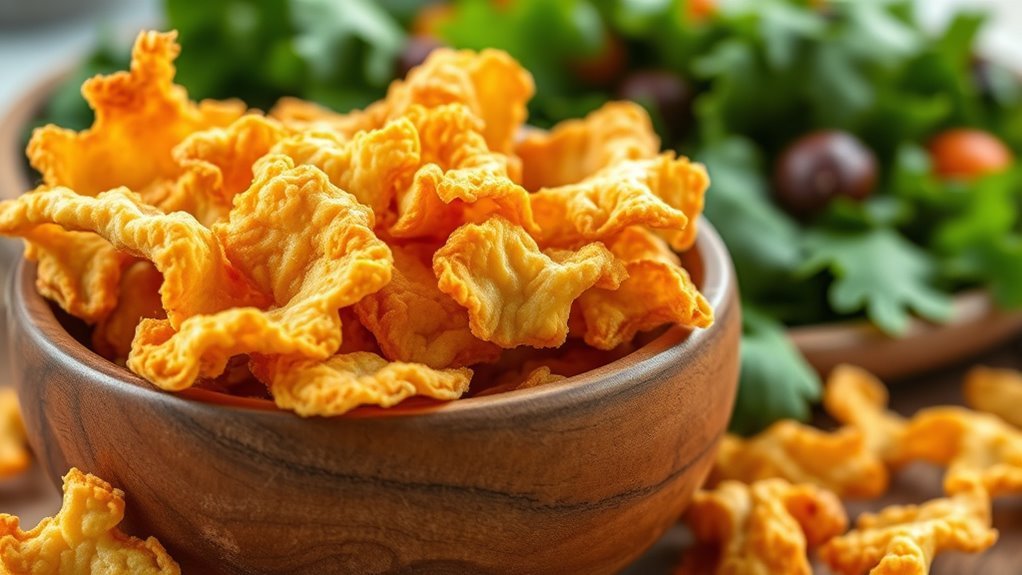
If you’re following a ketogenic diet, you might be pleased to know that pork rinds offer several health benefits that align well with low-carb eating. These crunchy snacks are primarily made of protein and fat, providing a high nutritional value while keeping your carb intake low. Rich in collagen, pork rinds can support joint health and skin elasticity, contributing to overall wellness. Additionally, their high protein content can help you feel full longer, reducing cravings and aiding in weight management. Since they contain no carbohydrates, they won’t disrupt ketosis, making them a guilt-free snack. By incorporating pork rinds into your diet, you’re not just indulging; you’re also enjoying the health benefits that can support your ketogenic lifestyle.
How to Incorporate Pork Rinds Into Your Diet
Incorporating pork rinds into your diet can be both tasty and versatile. You can enjoy them as a crunchy snack or use them as a flavorful ingredient in your favorite recipes. Whether you’re topping a salad or using them in keto-friendly dishes, there are plenty of ways to enjoy this low-carb treat.
Snack Ideas With Rinds
Pork rinds can be a versatile addition to your keto diet, offering not only a satisfying crunch but also a low-carb alternative to traditional snacks. Here are some fun ways to incorporate them:
- Pork Rind Dips: Pair crispy pork rinds with creamy dips like guacamole or spinach artichoke for a tasty treat.
- Crunchy Toppings: Crush pork rinds and sprinkle them over salads or casseroles for added texture and flavor.
- Pork Rind Recipes: Use them as a breading substitute for chicken or fish, giving your meals a satisfying crunch without the carbs.
These ideas not only keep your snacks exciting but also guarantee you stay on track with your keto lifestyle. Enjoy the freedom to indulge without the guilt!
Cooking With Pork Rinds
While you might think of pork rinds solely as a snack, they can actually be a fantastic ingredient in various dishes, enhancing both flavor and texture. You can use them in pork rind recipes like crunchy breading for chicken or fish, adding a satisfying crunch without the carbs. Try crushing them and mixing with spices for a tasty coating. Another cooking technique is using pork rinds as a substitute for breadcrumbs in meatballs or casseroles. They also work well in salads, providing a delightful crunch. For a creative twist, consider incorporating them into soups for added thickness. With their versatility, pork rinds can easily fit into your keto lifestyle while keeping meals exciting and flavorful.
Portion Control: How Much Is Too Much?
Understanding portion control is essential when enjoying pork rinds on a keto diet, as overindulgence can lead to unintended weight gain and disrupt your progress. To help you navigate healthy snacking, consider these moderation guidelines:
Mastering portion control is key to enjoying pork rinds on a keto diet without hindering your progress.
- Serving Sizes: Stick to a serving size of about 1 ounce (28 grams) to maintain your macros.
- Mindful Eating: Pay attention to your hunger cues—eat slowly and savor each bite to prevent overeating.
- Frequency: Limit your pork rind consumption to a few times a week, ensuring variety in your snacks.
Flavoring Options for Pork Rinds
If you’re looking to elevate your pork rinds beyond their natural flavor, there are plenty of delicious seasoning options to try. Consider using spicy seasonings like cayenne or chili powder for a kick, or sprinkle on some cheese dusting for a savory twist. If you prefer something sweet, a light dusting of cinnamon or even a sweet seasoning blend can be delightful. BBQ rubs add a smoky richness, while garlic powder and ranch seasoning bring a creamy, tangy flavor. For a zesty touch, drizzle hot sauce or add lemon zest. Herb blends can also enhance the flavor profile, and pairing rinds with sour cream creates a satisfying dip experience. Enjoy experimenting!
Alternatives to Pork Rinds
For those who might want to explore alternatives to pork rinds, there are several keto-friendly snacks that can satisfy your cravings for crunch and flavor. Consider these pork rinds alternatives that pack a punch without the carbs:
- Cheese Crisps: Made from baked cheese, they’re rich in flavor and protein.
- Nuts and Seeds: Almonds and pumpkin seeds offer a satisfying crunch and healthy fats.
- Vegetable Chips: Kale or zucchini chips can be seasoned to your liking, providing a low-carb option.
These keto snack substitutes not only keep your diet on track but also let you enjoy that satisfying crunch you crave. Experiment with these options to find what works best for you while sticking to your keto lifestyle!
Common Myths About Pork Rinds
What do you really know about pork rinds? Many people fall for pork rind misconceptions, believing they’re unhealthy or unfit for a keto diet. In reality, pork rinds are high in protein and low in carbs, making them a great snack option for keto enthusiasts. Another common myth is that they’re overly processed; while some brands add flavorings, many offer simple, clean ingredients. Additionally, you might hear that pork rinds lead to weight gain, but when consumed in moderation, they can actually support your dietary goals. By debunking these keto diet myths, you can enjoy pork rinds guilt-free. Embrace this crunchy snack as part of your keto journey and enjoy the freedom of delicious choices!
Tips for Choosing the Right Pork Rinds
Understanding the myths around pork rinds can help you make informed choices when selecting the best options for your keto diet. Here are some tips to guide you in your variety selection:
- Check the Ingredients: Look for pork rinds with minimal ingredients. Ideally, they should contain just pork skin, salt, and perhaps some seasoning.
- Consider Sourcing: Opt for brands that prioritize quality sourcing. Organic or pasture-raised pork rinds often have better nutritional profiles.
- Watch for Additives: Avoid rinds with artificial flavors, preservatives, or added sugars. These can derail your keto goals.
Frequently Asked Questions
Are Pork Rinds Gluten-Free and Safe for Celiac Disease?
Yes, pork rinds are generally gluten-free, making them a safe option for those with celiac disease, as long as you check the pork rind ingredients for any potential cross-contamination. Celiac symptoms can arise from gluten exposure, so it’s essential to verify the product is certified gluten-free. Enjoying pork rinds can offer a crunchy snack alternative, but always read labels to maintain your dietary freedom and avoid any unwanted reactions.
Can Vegans or Vegetarians Eat Pork Rinds?
If you’re vegan or vegetarian, pork rinds just aren’t on your menu. These crunchy bites are made from pig skin, so they don’t fit your lifestyle. But don’t fret! There are plenty of pork rinds alternatives out there. Think about crispy chickpeas or baked vegetable chips as your new go-to vegan snack options. They’ll satisfy that crunch craving while keeping you aligned with your values, offering freedom in your snacking choices.
How Do Pork Rinds Compare to Other Snacks in Terms of Calories?
Pork rinds typically have a lower calorie count compared to many other snack alternatives, making them a popular choice for those watching their intake. For instance, a one-ounce serving of pork rinds can contain around 150 calories, while chips or traditional crackers often exceed that. When considering caloric comparison, pork rinds offer a crunchy, satisfying option that aligns well with a low-carb lifestyle, providing freedom to snack without excessive calorie consumption.
What Are the Best Brands of Pork Rinds for Keto?
When it comes to the best brands of pork rinds for keto, some popular brands include Epic, Utz, and Chicharrones. Epic offers a variety of flavors, while Utz is known for its classic crunch. Chicharrones can be found in many local stores and are often a favorite. Make sure to check the ingredient list and nutritional info, as some brands can add unnecessary carbs. Enjoy your snacking freedom with these tasty options!
Are Homemade Pork Rinds Healthier Than Store-Bought Options?
Homemade pork rinds can be healthier than store-bought options. In fact, a study found that homemade snacks often contain up to 50% less sodium than their pre-packaged counterparts. When you prepare them yourself, you control the ingredients and can enhance their nutritional benefits by using healthier oils or seasonings. This freedom allows you to enjoy a delicious snack while also tailoring it to fit your dietary needs and preferences.
Frequently Asked Questions about Eating Pork Rinds on Keto
1. Are pork rinds keto-friendly?
Yes, pork rinds are considered keto-friendly. They are high in healthy fats and protein while being low in carbohydrates, making them an ideal snack for those following a ketogenic diet. A typical serving of pork rinds contains zero carbohydrates, which helps maintain the state of ketosis essential for weight loss and energy on a keto diet.
2. How do pork rinds fit into a ketogenic diet?
Pork rinds can be used as a crunchy snack or as a substitute for breadcrumbs in various recipes, making them versatile in a ketogenic diet. Because they are high in protein and fat, they can help keep you satiated. You can enjoy them plain, with dips, or as toppings for salads and casseroles, enhancing flavor without adding carbs.
3. Are there any health concerns with eating pork rinds?
While pork rinds can be a healthy snack option on keto, moderation is key. They are high in saturated fats and sodium, which may not be suitable for everyone, particularly those with heart conditions or high blood pressure. It’s important to choose high-quality pork rinds that are free from artificial ingredients and preservatives, and to balance them with a variety of other nutrient-dense foods in your diet.
4. Can I make my own pork rinds at home?
Yes, you can make your own pork rinds at home using pork skin. To do this, you need to clean, season, and bake or fry the skins until they are crispy. This method allows you to control the seasoning and avoid preservatives found in store-bought options. Homemade pork rinds can be a healthier alternative while still being keto-friendly.
5. What are some popular ways to enjoy pork rinds on a keto diet?
Pork rinds can be enjoyed in numerous ways on a keto diet. Some popular options include using them as a crunchy topping for salads, dipping them in guacamole or salsa, incorporating them into keto-friendly recipes like casseroles or meatloaf, or simply enjoying them as a snack with cheese. Their versatility makes them a favorite among keto enthusiasts for adding texture and flavor without carbs.