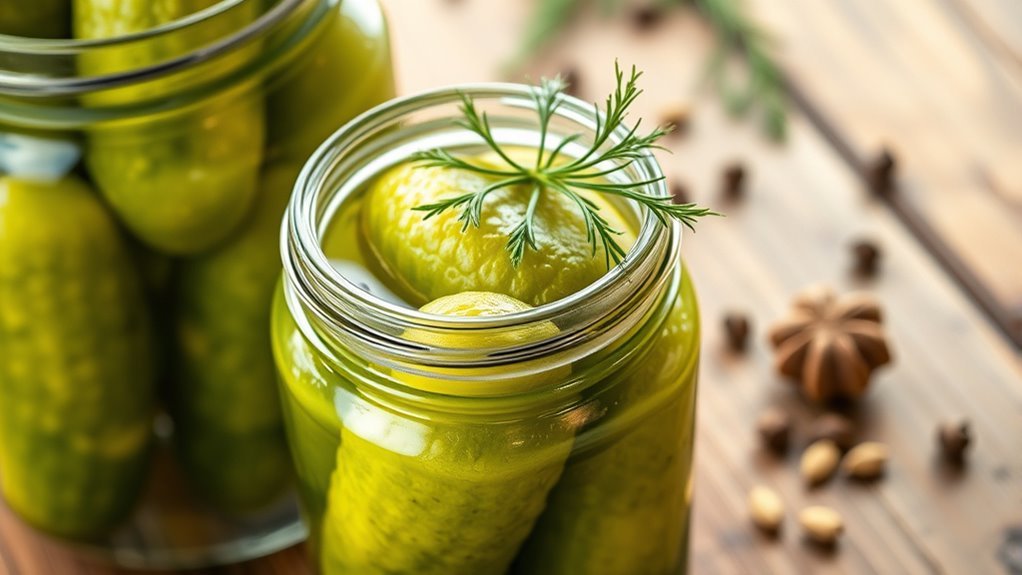

Yes, pickles can be keto diet-friendly, especially dill pickles which are low in carbohydrates, usually containing just 1-2 grams per serving. Their low-calorie profile and probiotic content can support gut health while maintaining ketosis. However, watch out for varieties with added sugars, like sweet pickles, as they can disrupt your carb limits. Also, keep an eye on sodium intake to avoid health issues. Discover how to incorporate pickles into your keto meal plan for added benefits.
Understanding the Keto Diet Basics
When you explore the keto diet, you’ll find it focuses on drastically reducing carbohydrate intake while increasing fats, which shifts your body into a state of ketosis. Understanding the keto diet fundamentals is vital for success. Typically, you’ll aim for a macronutrient balance of about 70% fats, 25% protein, and only 5% carbohydrates. This shift encourages your body to burn fat for fuel instead of glucose, potentially leading to weight loss and improved energy levels. However, it’s important to choose healthy fats, such as avocados and olive oil, while avoiding trans fats. A well-planned keto diet can offer freedom from traditional eating patterns, but it’s imperative to listen to your body and consult a healthcare professional before making significant dietary changes.
Nutritional Profile of Pickles
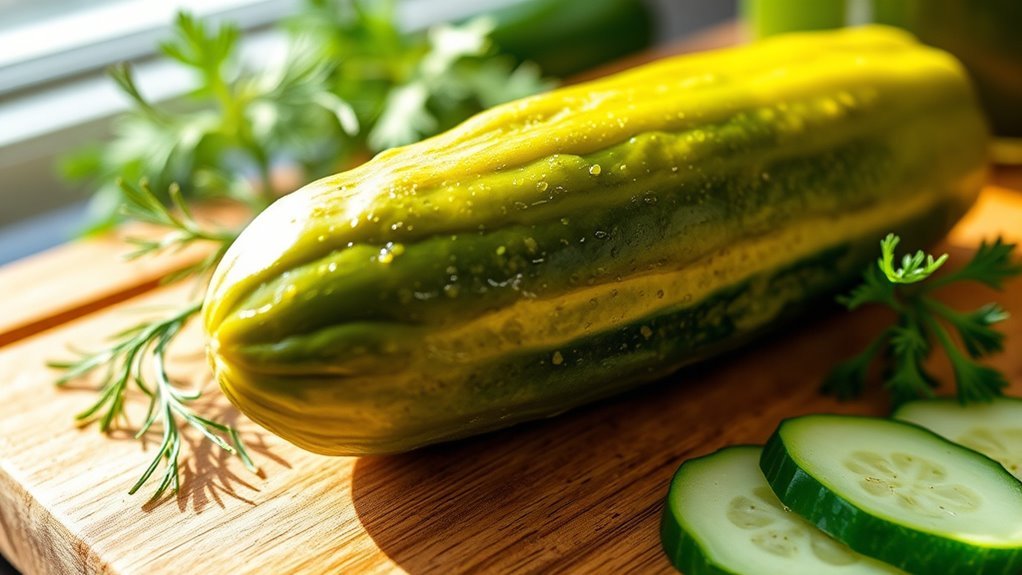
While many people enjoy pickles as a crunchy snack or condiment, their nutritional profile offers more than just flavor. Different pickle varieties—like dill, bread and butter, and even spicy options—can provide various nutritional benefits. Generally low in calories, pickles are rich in electrolytes, particularly sodium, which can be helpful for those on a keto diet. They also contain small amounts of vitamins A and K, along with antioxidants that can support overall health. However, it’s important to be mindful of added sugars in certain varieties, as they can increase carbohydrate content. Ultimately, pickles can be a satisfying addition to your diet, providing both crunch and vital nutrients while aligning with your dietary choices.
Types of Pickles and Their Carbohydrate Content
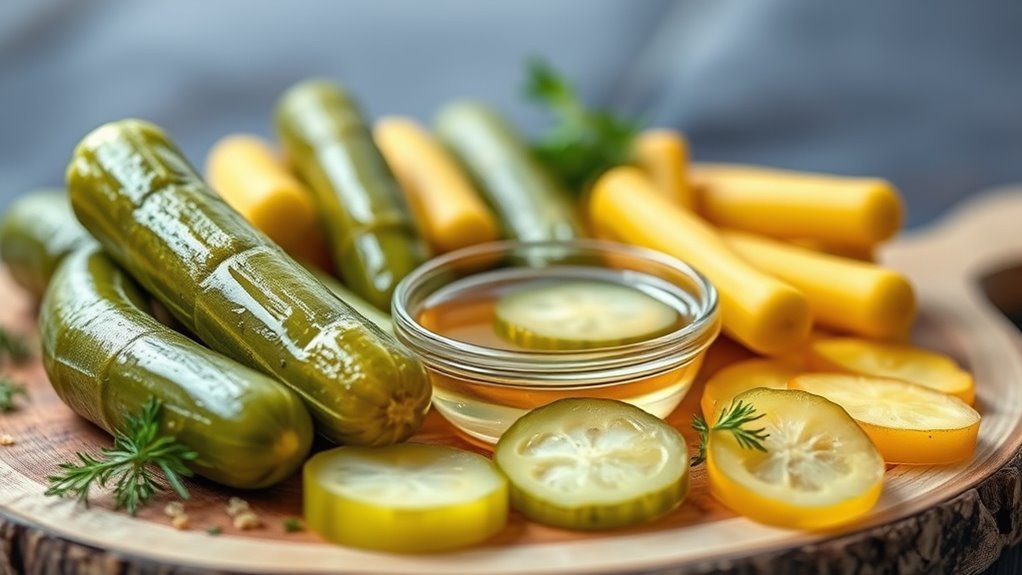
When considering pickles on a keto diet, it’s important to know their carbohydrate content. Dill pickles are a popular choice and typically contain about 1 gram of carbs per serving, making them keto-friendly. In contrast, sweet pickles can pack in considerably more sugar, often exceeding 10 grams of carbs, which may not align with your dietary goals.
Dill Pickles Carbs
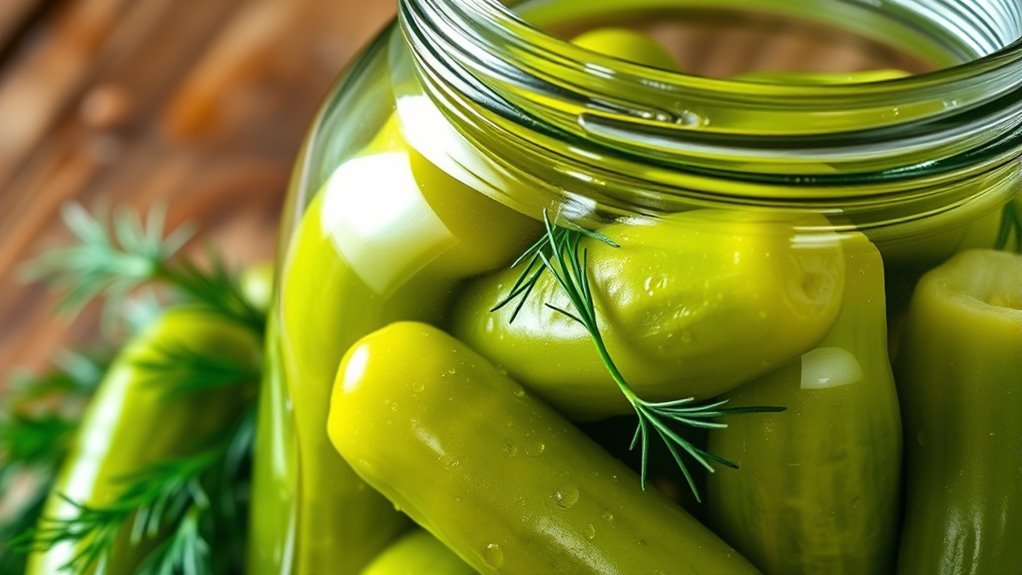
Dill pickles, a popular snack among keto dieters, are low in carbohydrates, making them an ideal choice for those monitoring their carb intake. Typically, a medium dill pickle contains about 1-2 grams of carbs, allowing you to enjoy them without derailing your diet. When considering dill pickles nutrition, you’ll also find they’re packed with vitamins and minerals, such as vitamin K and sodium, which can support your overall health. You can incorporate them into various dill pickles recipes, like salads or as toppings for keto-friendly dishes. This versatility not only enhances flavor but also keeps your meals exciting while adhering to your dietary goals. So go ahead, savor those crunchy dill pickles guilt-free!
Sweet Pickles Carbs
Sweet pickles are markedly different from their dill counterparts regarding carbohydrate content. While dill pickles are low in carbs, sweet pickle varieties typically contain added sugars, increasing their carbohydrate levels considerably. A sugar content analysis reveals that some sweet pickles can have upwards of 5-8 grams of carbohydrates per serving, primarily from the sugar used in their brine. This higher sugar content makes sweet pickles less suitable for a strict keto diet. If you’re looking to enjoy pickles while staying within your carb limits, it’s essential to be mindful of the type you choose. Opting for dill or other low-sugar options can help you stick to your goals while still enjoying the crunch and tang of pickles.
Health Benefits of Pickles on a Keto Diet
Although pickles might seem like a simple snack, they offer several health benefits that align well with the ketogenic diet. One key advantage is their low-carb content, making them an ideal choice for maintaining ketosis. Additionally, pickles are rich in probiotics, which can enhance gut health. These beneficial bacteria support digestion and help balance your microbiome, leading to improved nutrient absorption and overall wellness. Furthermore, pickles are hydrating and can aid in electrolyte balance, especially important for those on a keto diet. The vinegar used in pickling may also help regulate blood sugar levels, adding to their health benefits. Incorporating pickles into your diet can be a flavorful way to boost your health while enjoying your keto lifestyle.
Potential Pitfalls of Eating Pickles
While pickles can be a tasty addition to your keto diet, there are potential pitfalls to contemplate. Their high sodium content can lead to increased blood pressure, and some brands may contain added sugars that conflict with your dietary goals. Additionally, if you have a sensitivity to vinegar, the acidity in pickles might cause digestive discomfort.
High Sodium Content
When considering the potential pitfalls of incorporating pickles into a keto diet, the high sodium content is a significant factor you shouldn’t overlook. Excessive sodium intake can lead to various health issues, including an increased hypertension risk, which is particularly concerning for those sensitive to salt. Here are a few points to keep in mind:
- Blood Pressure: High sodium levels can elevate blood pressure, placing strain on your cardiovascular system.
- Fluid Retention: Pickles may cause water retention, making you feel bloated and uncomfortable.
- Kidney Health: Over time, too much sodium can stress your kidneys, potentially leading to long-term issues.
While pickles can fit into your keto lifestyle, moderation is key to maintaining your overall health.
Added Sugars Concerns
Many people may not realize that some pickles contain added sugars, which can be a concern for those following a keto diet. While pickles are generally low in carbs, it’s crucial to read labels carefully. Added sugars sources can include sweeteners in the brine or flavoring agents. These hidden sugars can greatly increase the carb count, making your pickles less keto-friendly than you thought. Even seemingly healthy options may surprise you with their sugar content. To stay on track, opt for varieties labeled as sugar-free or check for no added sugars. By being vigilant, you can enjoy pickles while maintaining the freedom to indulge in a low-carb lifestyle.
Vinegar Sensitivity Issues
In addition to being mindful of added sugars, those on a keto diet should consider vinegar sensitivity when consuming pickles. Some individuals may experience adverse reactions to certain vinegar types used in pickling. Here are a few key points to keep in mind:
- Common Reactions: Symptoms can include digestive discomfort, headaches, or skin irritations.
- Vinegar Types: Distilled white vinegar and apple cider vinegar are popular but may trigger sensitivities in some.
- Vinegar Substitutes: If you’re sensitive, consider using lemon juice or coconut aminos as alternatives in your recipes.
Understanding how vinegar affects you can help maintain your keto lifestyle while enjoying pickles. Always listen to your body and adjust accordingly for a balanced approach.
How to Incorporate Pickles Into Your Keto Meal Plan
Although pickles might seem like just a crunchy snack, they can play a versatile role in your keto meal plan. You can easily incorporate them into various dishes, enhancing flavor without adding carbs. Try adding pickles to salads for a tangy crunch or blending them into creamy dressings for a unique twist. Explore pickle pairings with meats, like grilled chicken or pork, to elevate your meals. You can also create simple pickle recipes, such as pickle roll-ups with cream cheese and deli meats, that make for satisfying snacks. Don’t forget to experiment with different pickle varieties—dill, bread and butter, or spicy—to keep your meals exciting while staying within your keto goals. Enjoy the freedom of flavor!
Alternatives to Pickles for Keto Snackers
If you’re looking for tasty alternatives to pickles that fit your keto lifestyle, there are plenty of options to explore. Here are three delicious snacks that can satisfy your cravings:
- Cucumber Slices: Crisp and invigorating, cucumber slices can be enjoyed with a sprinkle of salt or a dip like guacamole for added flavor.
- Celery Sticks: Crunchy and low in carbs, celery sticks are perfect for pairing with cream cheese or nut butter for a satisfying snack.
- Olives: Rich in healthy fats, olives provide a savory option that complements your keto diet beautifully.
These alternatives can elevate your snacking game without compromising your dietary goals, allowing you the freedom to enjoy flavorful, low-carb treats.
Frequently Asked Questions
Can Pickles Cause Bloating on a Keto Diet?
Pickles can potentially provoke bloating, particularly if you’re sensitive to sodium or vinegar. Bloating causes can vary, but in a keto diet, the shift in digestion might make you more aware of discomfort. If you’re consuming pickles in moderation, they shouldn’t greatly impact your overall keto journey. However, if bloating becomes bothersome, consider adjusting your intake or opting for lower-sodium options to enjoy freedom in your diet without discomfort.
Are Sweet Pickles Acceptable on a Keto Diet?
Sweet pickles aren’t typically acceptable on a keto diet due to their high sugar content. If you’re looking for keto-friendly snacks, consider alternatives like dill pickles or pickled vegetables without added sugars. These options can satisfy your craving for crunch while keeping carb counts low. Always check labels for hidden sugars, and remember, moderation is key. You can enjoy pickles, but sticking to low-sugar varieties is your best bet for keto success.
How Many Pickles Can I Eat Daily on Keto?
You might think you can munch on pickles all day, but moderation is key! For daily pickle intake on a keto diet, around 1-2 medium-sized dill pickles is a good rule. They’re a great keto snack option, but remember they can be high in sodium. Always check the ingredients, and balance them with other low-carb foods to maintain your health while enjoying your freedom to snack. Keep it tasty, but smart!
Do Homemade Pickles Have Different Carb Counts?
Yes, homemade pickles can have different carb counts based on your ingredients and the fermentation process. If you use low-carb vegetables like cucumbers and avoid sugar in your brine, they’ll generally be keto-friendly. Also, fermentation can affect the carb content, as some sugars are consumed by bacteria. Keep track of what you add, and you’ll enjoy a tasty, low-carb snack that fits your lifestyle!
Can Pickles Affect Ketosis Levels Negatively?
Pickles typically won’t negatively affect your ketosis levels if you choose the right ingredients. The fermentation process can even enhance the health benefits of pickles, promoting gut health. However, watch out for added sugars in some store-bought varieties, which can raise carb counts. Homemade pickles allow you to control ingredients, ensuring they fit your keto lifestyle. Just keep an eye on portions, and you should be just fine enjoying them.
Frequently Asked Questions about Pickles and the Keto Diet
1. Are pickles low in carbohydrates?
Yes, pickles are generally low in carbohydrates, making them a suitable choice for a ketogenic diet. Most dill pickles contain less than 1 gram of carbs per serving (about one medium pickle), which allows you to enjoy them without significantly impacting your daily carb limit on keto. However, it’s essential to check the labels as some varieties, especially sweet pickles, may contain added sugars and higher carb counts.
2. Do pickles have any nutritional benefits?
Yes, pickles can offer several nutritional benefits. They are low in calories and can be a good source of vitamins like vitamin K and antioxidants. Additionally, fermented pickles provide probiotics, which are beneficial for gut health. However, it’s essential to consume them in moderation and check for any additional ingredients that could alter their health benefits.
3. Can pickles fit into a keto meal plan?
Absolutely! Pickles can be a great addition to a keto meal plan due to their low carb content. They can be enjoyed as a snack, added to salads, or used as a topping for burgers and sandwiches in place of bread. Just be cautious of portion sizes, and opt for varieties without added sugars or high-carb ingredients to stay within your daily carb limits.
4. Are there any concerns about eating pickles on a keto diet?
While pickles are generally keto-friendly, there are a few concerns to consider. Many commercially prepared pickles contain added sugars, which can increase the carb count significantly. Additionally, pickles are often high in sodium, which can lead to increased water retention or elevated blood pressure in some individuals. It’s advisable to choose naturally fermented or homemade pickles to control ingredients better.
5. How can I incorporate pickles into my keto diet?
Incorporating pickles into your keto diet can be simple and enjoyable. You can use them as a crunchy snack, add them to salads for an extra zing, incorporate them into wraps instead of bread, or blend them into sauces and dips. You can also experiment with pickle relish in recipes or pair pickles with cheese or meats for a satisfying low-carb snack. Just remember to read labels or make your own to ensure they fit your nutritional goals.
References
- https://www.healthline.com/nutrition/keto-diet-foods#pickles
- https://www.ncbi.nlm.nih.gov/pmc/articles/PMC7072589/
- https://www.washingtonpost.com/food/2020/04/27/pickles-keto-diet/
- https://www.dietdoctor.com/low-carb/keto/pickles
- https://www.verywellfit.com/are-pickles-keto-5199655
- https://www.medicalnewstoday.com/articles/325416
- https://www.livestrong.com/article/474711-are-pickles-good-for-a-keto-diet/
- https://www.ketogenic.com/pickles-on-keto/